Theopolis Logo

Writing

Explore our collection of theological essays, biblical studies, and reflections on faith and culture.

See all
sixteen-miles-out-d40gdcd_-he-unsplash-2
Matthew

Reading Matthew, Identifying Discourses: A Closer Look at the “Six-Discourse” Proposal

In a February blog post for the Theopolis Institute, Benoît Engel offers a thought-provoking challenge to the widely accepted five-discourse structure of Matthew’s Gospel, proposing a sixth discourse in Matthew 21:28–22:14 to reframe the Gospel’s chiastic center. As someone deeply invested in Matthew’s literary design—explored in my book Reading Matthew,…

by Jonathan SedlakJune 26, 2025

getty-images-2cytteec2ng-unsplash
2 Timothy

Avoid Foolish Disputes

Avoid foolish disputes, genealogies, contentions, and strivings about the law, for they are unprofitable and useless. Titus 3:9 Out of a deep love and care for the church, Paul tells Titus and those in the church to avoid four specific things: foolish disputes, genealogies, contentions, and strivings about the law.…

by Grant Van BrimmerJune 24, 2025
yucar-studios-cfr-v1quekw-unsplash-1
Baptism

The Indispensable Mark of Worship: Infant Baptism

Theopolis publishes many polemics, especially on the Sacraments. This piece does not necessarily reflect the views of Theopolis, her board, or her editors. -JW Whoever touches the dead body of any person shall be unclean seven days.He shall cleanse himself with the water on the third day and on the…

by Tommy ThompsonJune 19, 2025
zdenek-machacek-4nsuy3e5nec-unsplash
American Culture

Ecclesiocentric Life is Back

There is in the United States and the Western World some sort of religious revival occurring. Gen Z men—males born between ca 1997 and 2012—are flooding back in to churches. USA Today noted that Gen Z men—and to a lesser degree women—attending churches more than their millennial predecessors and they…

by Miles SmithJune 17, 2025
tanner-mardis-xuxghzhibn4-unsplash-1-2
Biblical Studies

Sceptical Text-Critical Hypotheses

The primary task of many Biblical scholars (as they see it) is to explain how and why the Biblical text acquired its final form—i.e., what source material it used, how that material was expanded/redacted, who expanded/redacted it, why they did so, what the weather was like at the time, etc.…

by James BejonJune 12, 2025
james-coleman-qej5dhl4mwq-unsplash-2
Galatians

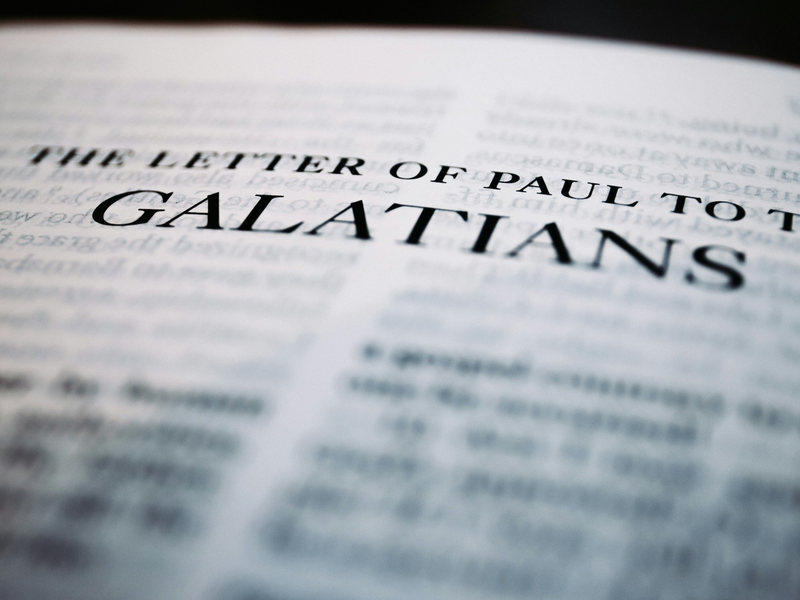
Flesh & Spirit in Galatia

Galatians 5:5-15 For through the Spirit, by faith, we ourselves eagerly wait for the hope of righteousness. For in Christ Jesus neither circumcision nor uncircumcision counts for anything, but only faith working through love. You were running well. Who hindered you from obeying the truth? This persuasion is not from…

by Jeff MeyersJune 10, 2025

Showing page 8 of 309

See all

Showing page 9 of 43

See all
Theology

Privatio boni

Milbank makes a couple of interesting points regarding the import of an Augustinian view of evil. 1) Augustine’s view assumes the goodness of matter, in fact the goodness of all being. This, Milbank claims, seems to excuse evil - it’s some lack, a weakness or finitude, that makes for evil.…

July 11, 2007
Theology

Privatio boni and banal evil

In the view of many, the Holocaust belied the Augustinian description of evil as the privation of good. Something much more insidiously positive was at work in the death camps. Hannah Arendt, however, seems to confirm the Augustinian perspective in her treatment of the banality of evil. According to Milbank,…

July 10, 2007
Philosophy

Argue, or obey?

Kant bristles at the demand that he claims to hear “on all sides”: ” Don’t argue !” Officers tell us to obey, tax-officials to pay, clergy to pray in a certain way. But Kant wants to argue. Or does he? Maybe not: “in some affairs which affect the interests of…

July 10, 2007
Philosophy

The duty of enlightenment

Kant’s appeal in “What Is Enlightenment?” is not primarily intellectual but ethical. Enlightenment, Kant says, “is man’s emergence from his self-incurred immaturity.” Immaturity he defines as “the inability to use one’s own understanding without the guidance of another,” and this immaturity is “self-incurred” when the cause is “lack of resolution…

July 10, 2007
American Religion

Americanism

David Gelernter, Americanism: The Fourth Great Western Religion . New York: Doubleday, 2007. 229 pp. Hardback, $24.95. America, G. K. Chesterton said, is a nation with the soul of a church. David Gelernter, the polymathic computer scientist from Yale, suggests that this doesn’t quite go far enough. For many, both…

July 10, 2007

God’s Whimsy

Wiker and Witt suggest that God created pandas as “comic relief” in a blessed fit of “divine whimsy.” The suggestion is troubling even for Christians who defend creation, because, being engineers, they have swallowed the reductive notion that creation must be functional. Wiker and Witt offer this rejoinder: “To spurn…

July 9, 2007

Showing page 1658 of 2212

Browse by Category

In Medias Res

Your weekly digest for all things Theopolis.

Donate

Theopolis is nearly 100% donor-supported. Consider joining us on our mission.