Theopolis Logo

Writing

Explore our collection of theological essays, biblical studies, and reflections on faith and culture.

See all
tanner-mardis-xuxghzhibn4-unsplash-1-2
Biblical Studies

Tweets-turned-Notes on the Bible’s Chronology

Summary In what follows, I will consider the “year-stamps” employed in Scripture, i.e., statements of the form, “Such-and-such an event took place in the Xth year of Y.” In the process, I will suggest some ways in which the Biblical narrative might relate to events in the extra-Biblical world, though…

by James BejonJuly 16, 2019
durer-prodigal-son-2
Luke

Perspectives on the Prodigal, (Part 2)

In the first essay on the parable of the Prodigal Son, I suggested that the problems commentators and others encounter in interpreting Jesus three-part parable are not accidental. These are not just problems in our ignorance of cultural background. They are intentional features of the stories —stories designed to poke…

by Ralph Allan SmithJuly 11, 2019
durer-prodigal-son-2
Luke

Perspectives on the Prodigal, (Part 1)

The story of the Prodigal Son is perhaps the most well-known story in the Bible. As others have observed, it may also be one of the most misunderstood. In two short essays, I will point out features of this story that are commonly neglected, aspects of Jesus’ parable that might…

by Ralph Allan SmithJuly 9, 2019
de-rijke-man-en-de-arme-lazarus-by-jacopo-da-ponte-16th-century
Luke

Lazarus and the Rich Man

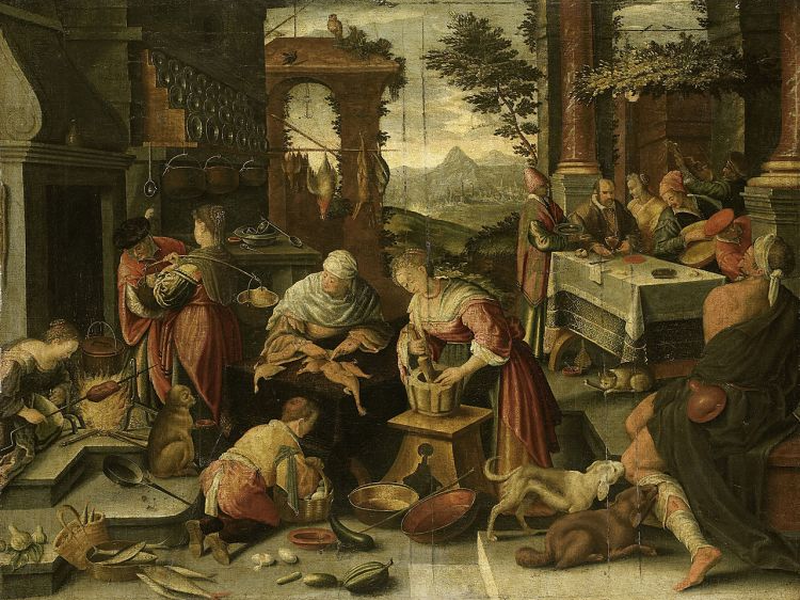
The parable of Lazarus and the nameless rich man is not an independent story. It is part of a long context that begins in Luke 15:1, where Jesus is eating with tax collectors and sinners and the scribes and Pharisees grumble. In response to their hardheartedness, Jesus tells a three-part…

by Ralph Allan SmithJuly 4, 2019
aaron-burden-uynrnfdkjwg-unsplash
Luke

Everybody has Dropsy - Luke 14:1-24

The Bible is written so that even when a reader cannot pick up on what might be deeper or more detailed aspects of a text, there is virtually always a message to be heard. In the ancient world, where the “reader” of Scripture would likely be a church official facing…

by Ralph Allan SmithJuly 2, 2019
communion
Biblical Theology

Fruit Trees and Grain Plants

The distinction between garden (or vineyard) and field begins in Genesis 2. This relates to the ordering of the formless world. Plants of the field are contrasted with the garden planted by God in Genesis 2:5&8. Later on, under the Old Covenant the Israelites will be required to keep their…

by James B. JordanJune 27, 2019

Showing page 77 of 309

See all

Showing page 9 of 43

See all
Media

Mediated

Instead of continuing to quote de Zengotita until I’ve transcribed the whole book, let me summarize: This is the best anthropology of contemporary culture I’ve ever read. Somewhat reductive - I’m not sure that everything is so shaped by media as de Zengotita suggests. Mostly he makes a very compelling…

December 14, 2006
Media

Predictable surprise

De Zengotita again, commenting on how lame action/sci fi movies have become: “There’s this very specific phase in so many of these films, a phase that’s so marked I bet there’s some insider lingo for it. It’s when the suspenseful set-up phase - which is often pretty good, very atmospheric,…

December 14, 2006
Media

Mediating the Other

De Zengotita notes the paradox of modernity/postmodernity’s affirmation of the Other: “instead of treating the Other as an alien something - threatening in some cases, alluring in others, but in all cases an object , whether of conquest, exploitation, proselytizing, study, or tourism - instead of that, you recognize in…

December 13, 2006

Things

De Zengotita gives this lovely description of his grandfather’s (a surgeon) delight in things: “it was his hands that I remember most of all, the care they extended to everything he touched, one by one, no haste, no waste, to each its due. That much was obvious. But subtler internal…

December 13, 2006
Media

Mediated

Mediated by Thomas de Zengotita (Bloomsbury, 2005) comes highly recommended from Ken Myers. No wonder. This is a very thoughtful book, written with great energy. Every paragraph is quotable, and has the effect of holding up a mirror to the way we live now. For instance, comparing our penchant for…

December 12, 2006
Theology

Boundaries and RO

Hans Boersma offers an extended critique of Radical Orthodoxy in the Fall 2006 issue of Pro Ecclesia. Boersma focuses on the issue of boundaries, arguing that Radical Orthodoxy’s ontology of peace is hostile to boundaries, seeing them as fluctuating and humanly constructed, and that this hostility to boundaries undermined RO’s…

December 12, 2006

Showing page 1753 of 2212

Browse by Category

In Medias Res

Your weekly digest for all things Theopolis.

Donate

Theopolis is nearly 100% donor-supported. Consider joining us on our mission.