Theopolis Logo

Writing

Explore our collection of theological essays, biblical studies, and reflections on faith and culture.

See all
ascension-rembrandt
Ascension

Ascension and Eucharist

It’s a simple point, obviously biblical and creedal: Jesus of Nazareth ascended into heaven as the God-man, and He remains the God-man in all his specific particularity from now to the end. He is Jesus the Christ, the same yesterday, today, and forever. Duh! But Douglas Farrow shows in his…

by Peter LeithartMay 27, 2013

markus-winkler-aid-xyrtlec-unsplash
Theopolis News

Register for Trinity Term Class

You can now register for the very first Trinity House intensive class, "How to Read the Bible," taught by James Jordan and Peter Leithart. There will be a kick-off welcome for students on the evening of Sunday, August 25, and the class will be held at Trinity Presbyterian Church ,…

by Peter LeithartMay 22, 2013
chris-bair-ndczc5739ck-unsplash
Deuteronomy

Deuteronomy as Narrative-Law

This series of essays will address the food laws in Deuteronomy 14:1-21. To some, this may seem like a work of supererogation. After all, why should a Christian be interested in outdated “laws” from the book of Deuteronomy? I hope to show that meditation on this portion of Scripture is…

by Ralph Allan SmithMay 20, 2013
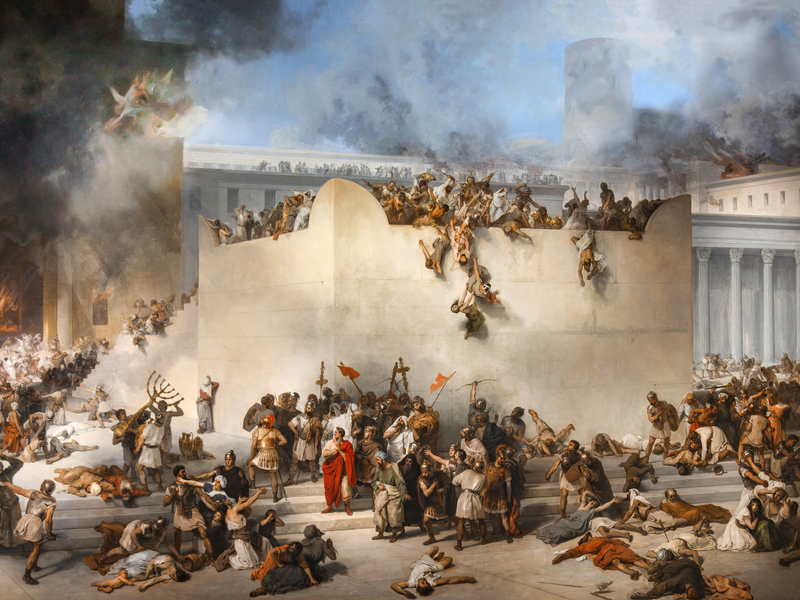
venice-la-distruzione-del-tempio-di-gerusalemme-francesco-hayez-gallerie-accademia-venice
Isaiah

Apocalyptic Patience

This essay was first published in 2011 in Credenda/Agenda . Isaiah 24 begins the section of Isaiah known as the “little apocalypse.” It’s a good name for this chapter. It’s a text of terror. The world is coming apart at the seams. The earth is emptied; and not only that,…

by Peter LeithartMay 15, 2013
sixteen-miles-out-al48tflf4e8-unsplash
Biblical Studies

Anti Anti-Supercessionism

This article was first published in 2010 in Credenda/Agenda . In recent years, mainstream theology has begun to recognize the disaster that followed from the Marcionism of classical liberalism. R. Kendall Soulen is a leading figure in efforts to restore the importance of the Old Testament to Christian theology. In…

by Peter LeithartMay 13, 2013
skyler-gerald-akljfvj5ym4-unsplash
Deuteronomy

Law and History: How to Read the Law of Moses

This is the last in a series of studies on Deuteronomy 22:30-23:8. In this series, I have offered an interpretation of Deuteronomy 22:30-23:8 which suggests that a simple surface reading of the text does not do justice to Moses’ or God’s intention, that the larger historical and legal context in…

by Ralph Allan SmithMay 8, 2013

Showing page 194 of 309

See all

Showing page 9 of 43

See all
Literature

The Politics of Playing

Plays might be promoted as a kind of opiate of the masses: Mass entertainment that keeps them from more violent entertainments like rioting and pillaging. This could be problematic, if the entertainments were too heady for most people to follow. Thomas Heywood (1612) suggested that playwrights should “ayme . .…

September 28, 2006
Literature

Shakespeare regulated

How regulated was Shakespeare’s own theater? And for what reasons? Patterson highlights various reasons for closing or permitting theaters: audience composition, including the fear that a large collection of workers might be distruptive; public health; economic concerns; religious and moral concerns, especially Sabbatarian; and “a shifting and elusive imperative to…

September 28, 2006
Literature

American Shakespeare

Shakespeare’s fortunes in the US were, understandably, different from in England. Initially, Shakespeare was America’s most popular playwright, appealing to a wide sector of the American populace. Patterson notes that “by the end of the nineteenth century ‘Shakespeare’ had become a cultural icon, the property only of the ‘legitimate theater,’…

September 28, 2006
Literature

Popular Shakespeare

Annabel Patterson notes ( Shakespeare and the Popular Voice ) that contemporary critics, whatever their own political outlook, assume that Shakespeare was an advocate of Elizabethan hierarchy. This view, however, is a product of the 19th century. Dryden, Johnson, and others criticize Shakespeare for violating the conventions of his genre,…

September 28, 2006
Literature

Courtly Shakespeare, IV

By the 18th century, acting styles also invested Shakespeare with “courtly” virtues of control, dignity, stateliness. Dobson writes, “Shakespearian acting . . . in the decades following Betterton’s death in 1710, seems to have settled into a grandiloquent vein of static declamation, best exemplified by the stout James Quin (1693-1766)…

September 28, 2006
Literature

Courtly Shakespeare, III

Dobson again: “after Charles II’s death in 1685 England would never again have another monarch with such an informed interest in the drama (or, mercifully, such a lascivious one), and deprived of royal patronage and protection the playhouses came under renewed attack from the moralists (led by the redoubtable clergyman…

September 28, 2006

Showing page 1785 of 2212

Browse by Category

In Medias Res

Your weekly digest for all things Theopolis.

Donate

Theopolis is nearly 100% donor-supported. Consider joining us on our mission.