Theopolis Logo

Writing

Explore our collection of theological essays, biblical studies, and reflections on faith and culture.

See all
tanner-mardis-xuxghzhibn4-unsplash-1-2
Biblical Studies

Tweets-turned-Notes on the Bible’s Chronology

Summary In what follows, I will consider the “year-stamps” employed in Scripture, i.e., statements of the form, “Such-and-such an event took place in the Xth year of Y.” In the process, I will suggest some ways in which the Biblical narrative might relate to events in the extra-Biblical world, though…

by James BejonJuly 16, 2019
durer-prodigal-son-2
Luke

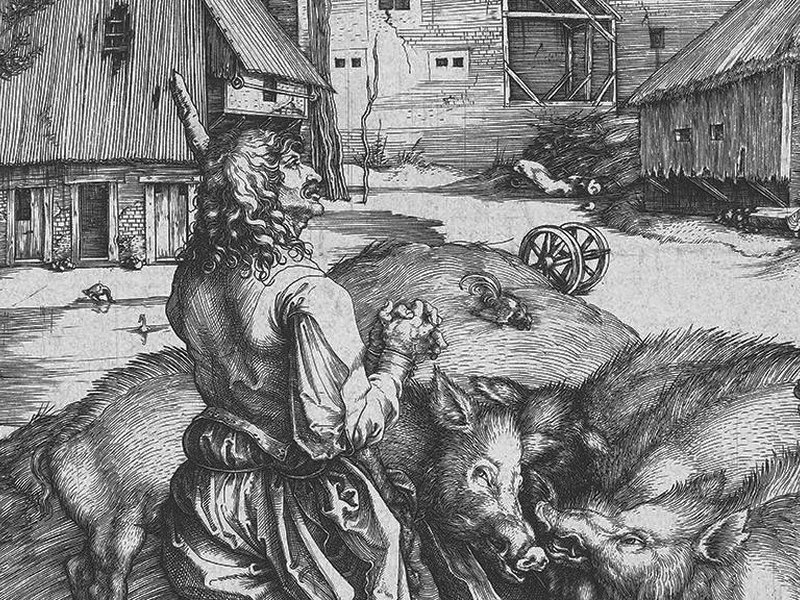
Perspectives on the Prodigal, (Part 2)

In the first essay on the parable of the Prodigal Son, I suggested that the problems commentators and others encounter in interpreting Jesus three-part parable are not accidental. These are not just problems in our ignorance of cultural background. They are intentional features of the stories —stories designed to poke…

by Ralph Allan SmithJuly 11, 2019
durer-prodigal-son-2
Luke

Perspectives on the Prodigal, (Part 1)

The story of the Prodigal Son is perhaps the most well-known story in the Bible. As others have observed, it may also be one of the most misunderstood. In two short essays, I will point out features of this story that are commonly neglected, aspects of Jesus’ parable that might…

by Ralph Allan SmithJuly 9, 2019
de-rijke-man-en-de-arme-lazarus-by-jacopo-da-ponte-16th-century
Luke

Lazarus and the Rich Man

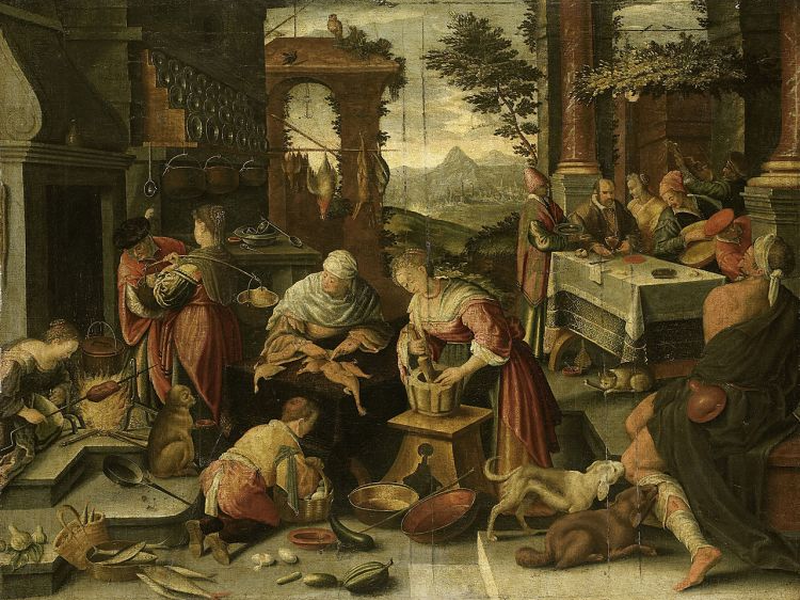
The parable of Lazarus and the nameless rich man is not an independent story. It is part of a long context that begins in Luke 15:1, where Jesus is eating with tax collectors and sinners and the scribes and Pharisees grumble. In response to their hardheartedness, Jesus tells a three-part…

by Ralph Allan SmithJuly 4, 2019
aaron-burden-uynrnfdkjwg-unsplash
Luke

Everybody has Dropsy - Luke 14:1-24

The Bible is written so that even when a reader cannot pick up on what might be deeper or more detailed aspects of a text, there is virtually always a message to be heard. In the ancient world, where the “reader” of Scripture would likely be a church official facing…

by Ralph Allan SmithJuly 2, 2019
communion
Biblical Theology

Fruit Trees and Grain Plants

The distinction between garden (or vineyard) and field begins in Genesis 2. This relates to the ordering of the formless world. Plants of the field are contrasted with the garden planted by God in Genesis 2:5&8. Later on, under the Old Covenant the Israelites will be required to keep their…

by James B. JordanJune 27, 2019

Showing page 77 of 309

See all

Showing page 9 of 43

See all
Science

Bacon’s Program

Antonio Perez-Ramos argues in his contribution to the Cambridge Companion to Bacon that while Bacon’s method has been severely criticized, Bacon’s program of human improvement through scientific and technological progress has not been, until the early part of the 20th century (he references Hans Jonas, Adorno and Horkheimer as skeptics…

August 24, 2006
Science

Bacon’s Program

Antonio Perez-Ramos argues in his contribution to the Cambridge Companion to Bacon that while Bacon’s method has been severely criticized, Bacon’s program of human improvement through scientific and technological progress has not been, until the early part of the 20th century (he references Hans Jonas, Adorno and Horkheimer as skeptics…

August 24, 2006
History

Pre-Socratics

Bacon says in a number of places that Western history is like a stream that carries everything light and airy on the surface (like Plato and Aristotle) while submerging all the heavy stuff (Hermes and the Pre-Socratics). Intriguing that one of the “fathers of modernity” should make this Heideggerian kind…

August 23, 2006
History

Be the Bee

Aphorism 95 from Part I of Bacon’s New Organon says: “Those who have handled sciences have been either men of experiment or men of dogmas. The men of experiment are like the ant, they only collect and use; the reasoners resemble spiders, who make cobwebs out of their own substance.…

August 23, 2006

Boyish Greeks

Stephen McKnight points out in his recent The Religious Foundations of Francis Bacon’s Thought (University of Missouri, 2006) that Bacon dismissed classical Greek thought in favor of a knowledge both more ancient and more recent: “Bacon introduces another memorable image when he likens classical philosophy to an adolescent boy: both…

August 23, 2006

Fiction and creation

Reflecting on Rosendale’s treatment of sacramental kingship in Henry V, it occurs to me that a sacramental theology that highlights the effective fictionality of the sacramental signs is more consistent with the doctrine of creation than the notion that sacramental signs have some inherent virtue of their own or the…

August 21, 2006

Showing page 1805 of 2212

Browse by Category

In Medias Res

Your weekly digest for all things Theopolis.

Donate

Theopolis is nearly 100% donor-supported. Consider joining us on our mission.