Theopolis Logo

Writing

Explore our collection of theological essays, biblical studies, and reflections on faith and culture.

See all
screen-shot-2023-05-02-at-1-14-25-pm
Poetry

Seed-bearing Fruit

Ten-thousand ‘yeses’ and a single ‘no.’ From bough it dangles, beauty to the eyes, For belly, food, a fruit to make one wise. Too soon, they eat; they know; the leaves they sew, But, oh! the Love who asks, “Where did you go?” Confessions flow from under leaf’s disguise; A…

by Marc HaysAugust 16, 2023

screenshot-2023-08-15-at-8-22-28-am
Augustine

Eternal Life Chiasm in John's Gospel

In his masterful work, De Doctrina Christiana , Augustine of Hippo writes: I would have learned men to know that the authors of our Scriptures use all those forms of expression which grammarians call by the Greek name tropes, and use them more freely and in greater variety than people…

by Doug PonderAugust 15, 2023
screenshot-2023-08-08-at-11-13-28-am
Ruth

Lot, Ruth, and the Work of New Creation

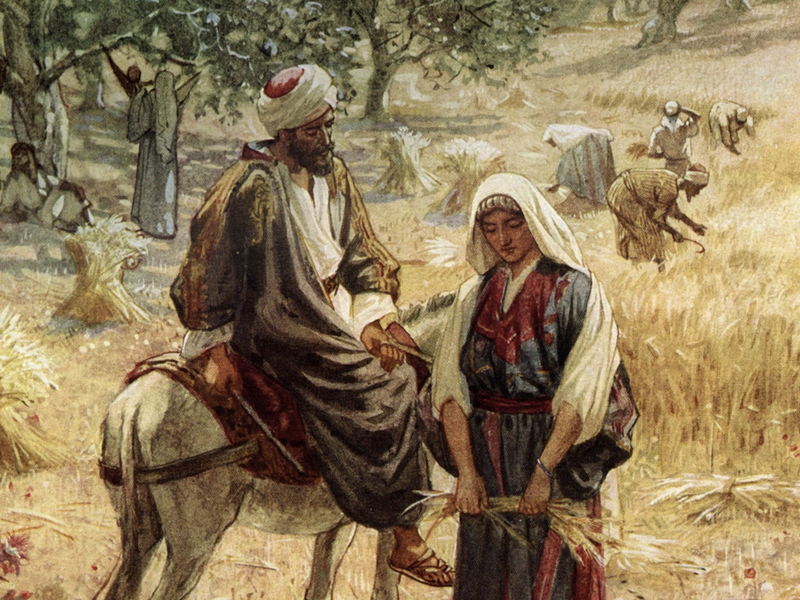
“In accordance with the creation pattern, God sovereignly took hold of Adam and put him to sleep. Then God divided Adam by removing flesh and bone from his side, and restructured humanity into male and female. When Adam awoke, God distributed the woman to him. Adam gazed upon her and…

by Josh JensenAugust 8, 2023
rev-1-barbie-tp-0002-high-res-jpeg-647e152f50df6-2
Culture

The Barbie Movie

Greta Gerwig’s new film, Barbie, has been criticized, probably rightly, for having too many ideas and layers to properly bring in any for a landing. Gerwig herself thought the script was so “ wild and anarchic ” that she was surprised WB agreed to make it. Many see it as…

by Robin HarrisAugust 1, 2023
mariam-soliman-ht5xmeulydg-unsplash-2
Matthew

Why Does John the Baptizer Look Like a Camel?

“Now John wore a garment of camel’s hair and a leather belt around his waist, and his food was locusts and wild honey” (Matt. 3:4). Why is John the Baptizer clothed with camel’s hair? Why does he want to look like a camel? Or at least: what does he expect…

by Jeff MeyersJuly 26, 2023
darwin
Literature

Stinking, Rotten Ministers of the Gospel

In the second greatest story ever told, The Brothers Karamazov , Fyodor Dostoyevsky tells the story of a family plagued by the lasting legacy of sin’s destructive power and the all-surpassing truth that God is Light and in Him is no darkness. The young protagonist, Alyosha, is a monk committed…

by Garrett SoucyJuly 18, 2023

Showing page 29 of 309

See all

Showing page 9 of 43

See all

Conference

If you’re in the vicinity of Duke, you might be interested in a conference sponsored by the Center for Catholic and Evangelical Theology, in cooperation with the Duke Divinity School, on May 21-23, at Duke. The theme is “Preaching, Teaching, and Living the Bible.” Speakers include Robert Jenson, Rusty Reno,…

March 30, 2006
Literature

Garber on Merchant

Marjorie Garber has, as usual, some insightful things to say about Merchant of Venice: 1) She describes the play as “Shakespeare’s great play about difference,” pointing to the apparent stark contrasts of Christian and Jew, Venice and Belmont, male and female. Yet, she also notes that the play is busy…

March 29, 2006
Literature

Biblical echoes in Merchant of Venice

A.R. Braunmuller offers some suggestive comments in his introduction to the Merchant of Venice in the Pelican Shakespeare. Having summarized Portia’s speech (which he suggests might be a “setup that turns on a technicality” that “turns back on Shylock a legal rigidity he had been duped into demanding”), he notes…

March 29, 2006

Hypostatic union

Thomas argues that “if the human nature is not united to God the Word in person, it is not united to him in any way, and thus belief in the incarnation is altogether done away with, which subverts the entire Christian faith.” But since there is a union, it must…

March 29, 2006

Aquinas and Chalcedon

Frederick Bauerschmidt claims that “Aquinas is in fact the first medieval theologian in the West to quote directly from the Council of Chalcedon.” This is remarkable on all sorts of levels, not least because of the questions it raises about the authority of the ecumenical councils in medieval thought.

March 29, 2006
Theology

Gift and Gratitude in the Middle Ages

INTRODUCTION Seneca’s de Beneficiis was known to the Christian Middle Ages, as were some of the gift and gratitude customs of the Roman world. We’ll examine the use that Aquinas makes of Seneca when we get to the Summa later this week. But in addition to these ancient sources, medieval…

March 28, 2006

Showing page 1865 of 2212

Browse by Category

In Medias Res

Your weekly digest for all things Theopolis.

Donate

Theopolis is nearly 100% donor-supported. Consider joining us on our mission.