Theopolis Logo

Writing

Explore our collection of theological essays, biblical studies, and reflections on faith and culture.

See all
georgewhitefield-71901184-de237affa7764d6e95818a589190adf7
Biblical Horizons

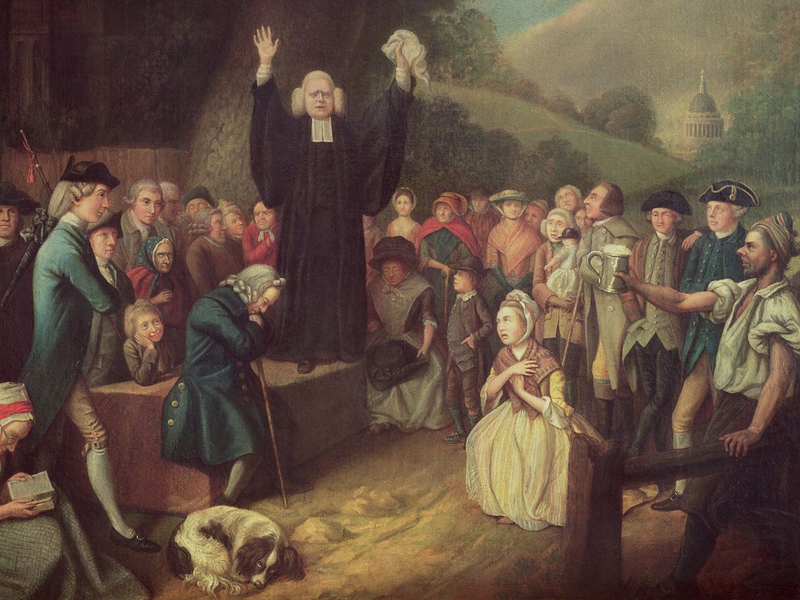
The Great Awakening: A Critique

The following material was published in 1984 in Christianity and Civilization No. 4: The Reconstruction of the Church, pages 6-9, and are reprinted here as grist for the mill of the discussion of “evangelicalism.” Footnotes have not come through, of course. Though this material is offered in connection with a…

by James B. JordanJune 19, 2012

aaron-burden-1ebsmyrau-s-unsplash
Biblical Horizons

Concerning Regeneration

I wrote my beef about “regeneration” a decade ago, and I don’t really see the need to reopen what I think now. (Jordan, Thoughts on Sovereign Grace and Regeneration: Some Tentative Explorations. Biblical Horizons Occasional Paper No. 32) But. My pal Doug Wilson has been writing a series of essays…

by James B. JordanJune 19, 2012

jelleke-vanooteghem-gnxb59lgu1m-unsplash
John

Born From Above: Some Notes on John 3

Nicodemus’s conversation with Jesus in John 3:1-15 is sometimes regarded as an illustration of the tremendous stupidity of the Jews of our Lord’s day. Nicodemus is treated as just some guy who comes to Jesus at night because he doesn’t want to get into trouble by being seen with Him.…

by James B. JordanJune 18, 2012
screen-shot-2020-12-03-at-1-47-33-pm
Biblical Horizons

Is James B. Jordan an “Evangelical”?

During the last couple of weeks, Douglas Wilson has issued several posts over on his Blog and Mablog blog that deal with “evangelicalism” and who is and who is not an “evangelical.” In the course of these postings, Doug has written that while I am a fine Christian who has…

by James B. JordanJune 18, 2012
karsten-wurth-imegmbunara-unsplash
Biblical Horizons

Three Issues in Regard to Eastern Orthodoxy

Here are three issues in regard to the Eastern Church. First, here is the quote from Bavinck’s The Doctrine of God, page 317, Banner of Truth edition (1977) under the heading of Inter-Personal Relations. The Greeks derived the unity of God’s essence and the unity of the persons not from…

by Richard BledsoeJune 14, 2012
screen-shot-2020-12-03-at-1-47-33-pm
Biblical Horizons

Clerical Garb

Elsewhere on the blogosphere men are mocking the wearing of collars and albs to lead in worship. When it is pointed out that historically Reformed ministers have worn daily uniforms and robes in worship, it is replied that that was then and this is now. We ought to conform to…

by James B. JordanJune 9, 2012

Showing page 200 of 309

See all

Showing page 9 of 43

See all

Proverbs 12:8-14

INTRODUCTION This section of Proverbs focuses on issues of image, wealth, work, and treatment of employees (vv. 8-12), and ends with two verses that deal again with the use of the tongue (vv. 13-14). The final verses connect this section to the preceding section of this chapter (12:1-7). Thus, the…

January 6, 2006
Literature

Hamlet in Prufrock

The influence of Hamlet, the play and the character, on modern literature is vast. Consider Hamlet as model for Prufrock: Zulfikar Ghose says the “I am not Hamlet” in Eliot’s Prufrock may be literal or ironic, but then adds: “the more one ponders the language of ‘Prufrock’ and of Hamlet…

January 5, 2006
Literature

Pierre

Herman Melville’s Pierre (1852) was, to put it mildly, not warmly received by critics. One newspaper headlined its review with “HERMAN MELVILLE CRAZY” and another reviewer complained that Melville’s fancy was diseased. Critics are divided over whether it is a grand failure or simply a failure. Updike caught the tone…

January 5, 2006

Schleiermacher

Bauman distinguishes between the “legislative” notion of reason found in Kant and other Enlightenment figures and the “interpretive” rationality that characterizes much postmodern thought. The shift from the former to the latter was not accomplished all at once. Schleiermacher, for all importance in the rise of hermeneutics, was still aiming…

January 5, 2006
Philosophy

Foundations and Tribunals

The architectural model of building a structure of thought on “foundations” is among the metaphors employed by modern thinkers, and in this as in other areas there was a close alliance of philosophy and political action. Bauman notes that this was particularly evident in various utopian writers of the modern…

January 5, 2006
History

Postmodern critique, postmodern re-enchantment

“Postmodernity,” writes Zygmunt Bauman in his 1992 Intimations of Postmodernity , “means many different things to many different people. It may mean a building that arrogantly flaunts the ‘orders’ prescribing what fits what and what should be kept strictly out to preserve the functional logic of steel, glass and concrete.…

January 5, 2006

Showing page 1903 of 2212

Browse by Category

In Medias Res

Your weekly digest for all things Theopolis.

Donate

Theopolis is nearly 100% donor-supported. Consider joining us on our mission.