Theopolis Logo

Writing

Explore our collection of theological essays, biblical studies, and reflections on faith and culture.

See all
tanner-mardis-xuxghzhibn4-unsplash-1-2
Biblical Studies

Tweets-turned-Notes on the Bible’s Chronology

Summary In what follows, I will consider the “year-stamps” employed in Scripture, i.e., statements of the form, “Such-and-such an event took place in the Xth year of Y.” In the process, I will suggest some ways in which the Biblical narrative might relate to events in the extra-Biblical world, though…

by James BejonJuly 16, 2019
durer-prodigal-son-2
Luke

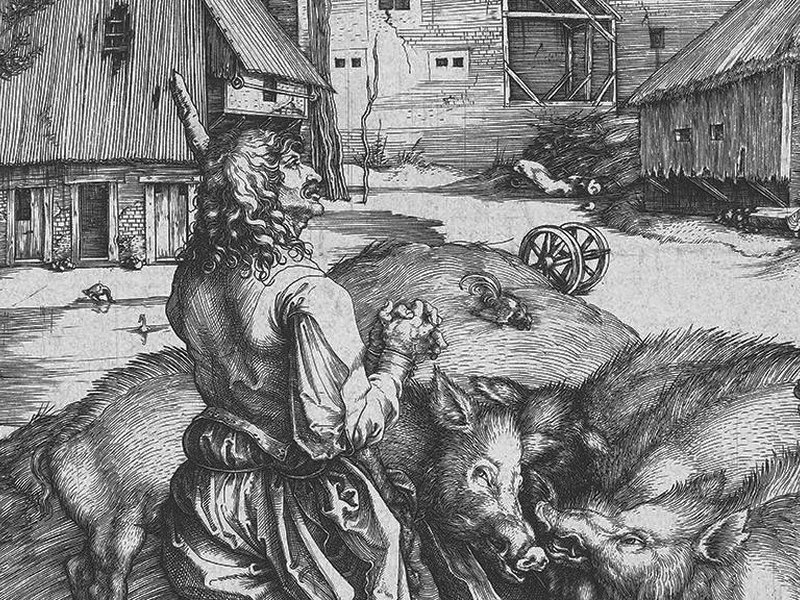
Perspectives on the Prodigal, (Part 2)

In the first essay on the parable of the Prodigal Son, I suggested that the problems commentators and others encounter in interpreting Jesus three-part parable are not accidental. These are not just problems in our ignorance of cultural background. They are intentional features of the stories —stories designed to poke…

by Ralph Allan SmithJuly 11, 2019
durer-prodigal-son-2
Luke

Perspectives on the Prodigal, (Part 1)

The story of the Prodigal Son is perhaps the most well-known story in the Bible. As others have observed, it may also be one of the most misunderstood. In two short essays, I will point out features of this story that are commonly neglected, aspects of Jesus’ parable that might…

by Ralph Allan SmithJuly 9, 2019
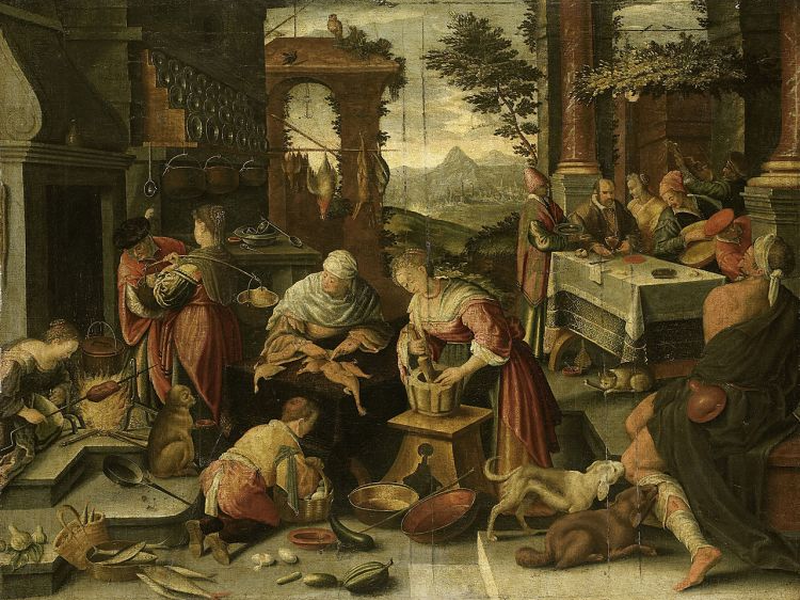
de-rijke-man-en-de-arme-lazarus-by-jacopo-da-ponte-16th-century
Luke

Lazarus and the Rich Man

The parable of Lazarus and the nameless rich man is not an independent story. It is part of a long context that begins in Luke 15:1, where Jesus is eating with tax collectors and sinners and the scribes and Pharisees grumble. In response to their hardheartedness, Jesus tells a three-part…

by Ralph Allan SmithJuly 4, 2019
aaron-burden-uynrnfdkjwg-unsplash
Luke

Everybody has Dropsy - Luke 14:1-24

The Bible is written so that even when a reader cannot pick up on what might be deeper or more detailed aspects of a text, there is virtually always a message to be heard. In the ancient world, where the “reader” of Scripture would likely be a church official facing…

by Ralph Allan SmithJuly 2, 2019
communion
Biblical Theology

Fruit Trees and Grain Plants

The distinction between garden (or vineyard) and field begins in Genesis 2. This relates to the ordering of the formless world. Plants of the field are contrasted with the garden planted by God in Genesis 2:5&8. Later on, under the Old Covenant the Israelites will be required to keep their…

by James B. JordanJune 27, 2019

Showing page 77 of 309

See all

Showing page 9 of 43

See all

Translation, 2 Kings 10

Now to ‘Achav [were] seventy sons in Shomron And wrote Jehu’ scrolls And he sent [to] Shomron to the princes of Yizre’e’l, the elders And to the trustees of ‘Achav, saying, “Now you yourselves according to the entering of this scroll to you And with you [are] the sons of…

June 30, 2005

Anthropology and soteriology

Explaining the meaning of the image of God, Calvin writes, “there is no solidity in Augustine’s speculation, that the soul is a mirror of the Trinity, inasmuch as it comprehends within itself, intellect, will, and memory. Nor is there any probability in the opinion of those who place likeness to…

June 29, 2005
History

Delayed Globalization

In his account of the beginning of World War I, Europe’s Last Summer , David Fromkin notes that globalization was already well underway prior to 1914, and in fact was in some ways more advanced than at any time since: “You could go to practically anywhere in the world without…

June 29, 2005

Modernity thesis revisited

I have been deeply skeptical about the arguments of Jacques Ellul and others concerning our enslavement to technology, as well as the arguments of Peter Berger about the “heretical imperative” that modernity imposes on us. Technological modernity tempts us, as Craig Gay has argued, to act as if God does…

June 29, 2005

High Context Societies

Ronald Simkins has distinguished between “high context” and “low context” societies. In the former, the members of the society share many cultural assumptions and meanings; in the latter, the shared meanings are much thinner and more sporadic. Of course, the distinction is not absolute, since within a relatively “low context”…

June 28, 2005

Eucharistic meditation, June 26

2 Kings 5:17: Naaman said to Elisha, “Your servant will no more offer burnt offering nor will he sacrifice to other gods, but to Yahweh.” Naaman, we noted in the exhortation, was a baptized Gentile convert. That baptism in the Jordan healed him of his leprosy. That baptism was an…

June 26, 2005

Showing page 1967 of 2212

Browse by Category

In Medias Res

Your weekly digest for all things Theopolis.

Donate

Theopolis is nearly 100% donor-supported. Consider joining us on our mission.