Theopolis Logo

Writing

Explore our collection of theological essays, biblical studies, and reflections on faith and culture.

See all
e99a2191
Theopolis News

New Season & New Relationships

We have moved from death to new life, from Lenten darkness to Easter light. And while Easter Sunday may have come and gone, it's effects are continually with us. This season has brought with it several new relationships, events, and signs of growth for Theopolis. We have been networking with…

by Peter LeithartMay 9, 2016

eucharist-2
Eucharist

Social Eucharist in the Middle Ages

In The People's Work , a social history of Christian Worship, Frank Senn summarizes the developments of the medieval period with regard to the Eucharist. He begins by challenging the assumption that medieval society was held together by “the church.” He notes that the church was often divided and conflicted,…

by Peter LeithartMay 5, 2016
turing-machine
Biblical Theology

What Is Systematic Typology? Part 4: Wheels Within Wheels

The structure of the Bible resembles something which was grown rather than built, composed rather than assembled. Its employment of “structure-as-sign” at every level from micro- to macrocosmic leads to the conclusion that a hermeneutic worthy of Scripture requires not only training in history, art and music but also the…

by Mike BullMay 3, 2016
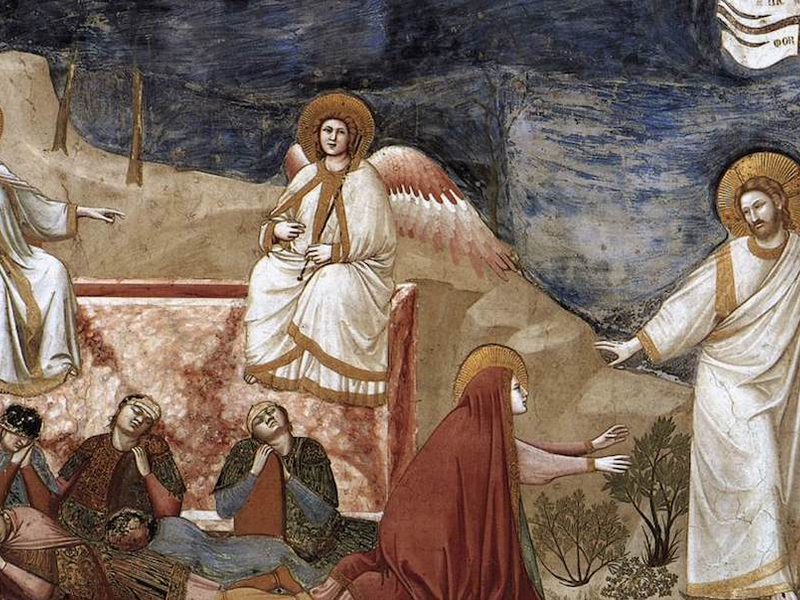
giotto-noli-me-3
Luke

Eighth Day, Eighth Verdict

For some in first-century Israel, Easter was anything but good news. It was a terrifying surprise. For the rulers and powers that put Jesus to death, the idea that He had been raised by some power beyond their control was chilling. Early in Luke’s gospel, we're told that Herod thought…

by Peter LeithartApril 28, 2016
sebastian-pena-lambarri-yv593oymkmo-unsplash
Hermeneutics

153 Large Fish

Simon Peter went up, and drew the net to land, full of large fish, a hundred and fifty-three; and although there were so many, the net was not torn. (John 21:11) This is one of those texts in the Bible that many people puzzle over. It is not a puzzle…

by James B. JordanApril 26, 2016
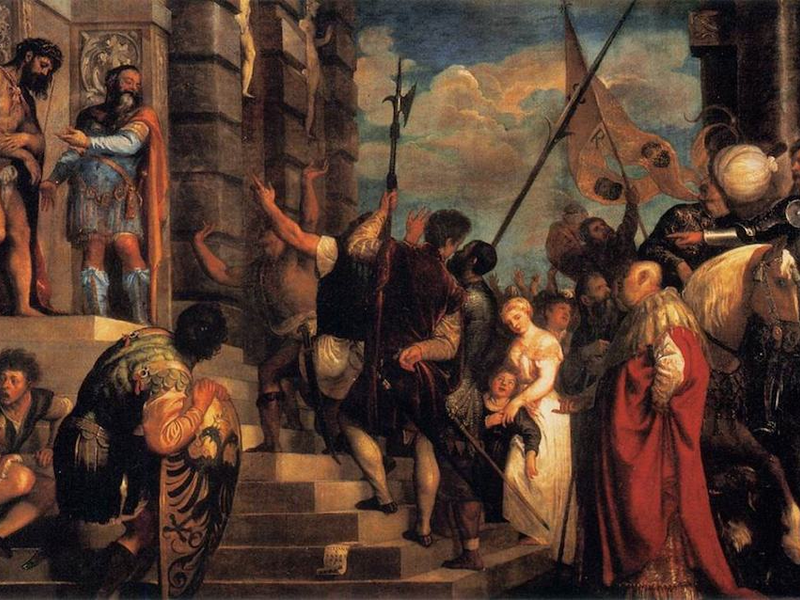
jesus-on-trial
Philemon

Pilate the Kingmaker

God is not mocked, Paul says. God is mocked, says Matthew. Who’s right? The two are in perfect harmony, but to see that, we need to run through the passage again. We’ll see that at every point, the mockery is being turned against the mockers. At every point, mockery is…

by Peter LeithartApril 21, 2016

Showing page 132 of 309

See all

Showing page 9 of 43

See all

Stuhlmacher on Hilasterion (Rom. 3:25)

Peter Stuhlmacher interprets HILASTERION in Rom 3:25 as the KAPPORET of the ark of the covenant, the place where atonement is made. From the cross on, the place of atonement was no longer in the temple but in Jesus. He links this with the critique of the temple and temple…

January 25, 2004

Chiasm in Romans 3:27-30

There looks to be some chiastic action going on in Romans 3:27-30: A. Where is boasting? Excluded B. By law of works? C. No: Law of faith C. justification is by faith B. not by works of law (reversing word order of previous verse) A. God is God of Jews…

January 24, 2004

Romans 3:21-31

Most commentaries I’ve examined assume that Paul’s discussion of the work of Jesus in Romans 3:21-31 centers in the cross. The reference to blood and to propitiation (or propitiating sacrifice) in v 25 justifies this, but this doesn’t mean that Paul’s focus is exclusively on the cross. Several things support…

January 24, 2004

Paul on God’s Righteousness

Romans 3:21 begins a section where Paul expounds, for the first time in Romans, on the revelation of the righteousness of God. One of the ways to characterize current debates about this passage, and about the righteousness of God and justification in general, is to ask whether this is about…

January 22, 2004

Paul on God’s Righteousness

Romans 3:21 begins a section where Paul expounds, for the first time in Romans, on the revelation of the righteousness of God. One of the ways to characterize current debates about this passage, and about the righteousness of God and justification in general, is to ask whether this is about…

January 22, 2004
Literature

Kelly on Tragedy

Henry Ansgar Kelly’s Ideas and Forms of Tragedy from Aristotle to the Middle Ages (Cambridge, 1993) is a careful and useful study of the use of the word “tragedy” from the ancients through the 14th century. He narrowly focuses on the uses of the word-group itself, and shows that the…

January 22, 2004

Showing page 2133 of 2212

Browse by Category

In Medias Res

Your weekly digest for all things Theopolis.

Donate

Theopolis is nearly 100% donor-supported. Consider joining us on our mission.