Theopolis Logo

Writing

Explore our collection of theological essays, biblical studies, and reflections on faith and culture.

See all
screen-shot-2023-02-24-at-1-48-41-pm
Biblical Chronology

Chronologies and Kings: Part 3

The chronology of the Kings of Judah and Israel can be divided into three periods with clearly defined boundaries. The first period begins with the death of Solomon and the accessions of Rehoboam in the south (Judah) and Jeroboam in the north (Israel). It ends with the deaths of Ahaziah…

by James B. JordanSeptember 22, 1991

johann-walter-bantz-clv9dfjlwac-unsplash-1-5
Art

Arts & Play, Part 1

Most modern people regard the arts as essentially decorative. They are hardly very important, as compared to business, politics, or religion. Yet, from a Biblical point of view, the arts lie close to the heart of human life. The universe that God created is itself an artistic masterpiece by the…

by James B. JordanSeptember 22, 1991
6273e95e0f5ac766258d8cf3_joshuasconquestoftheland-2
Exodus

Chronologies and Kings, Part 2

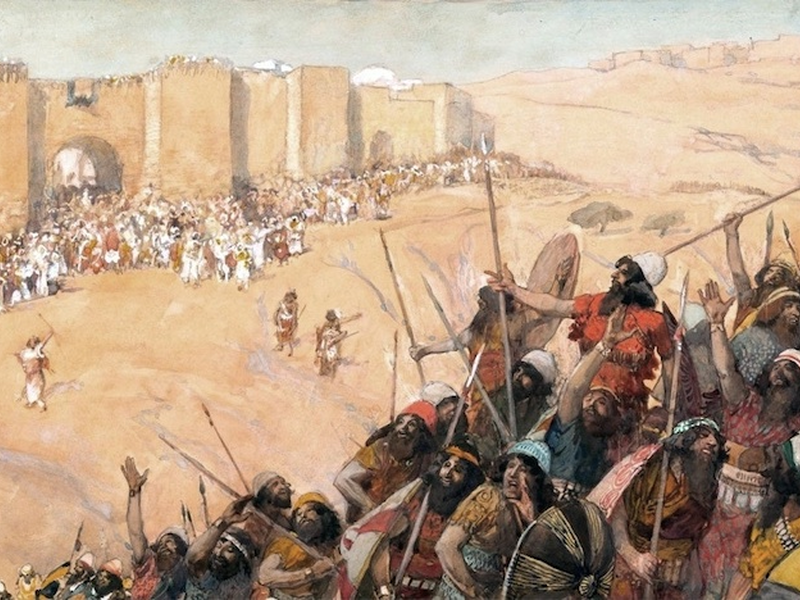
Before we move into a detailed survey of the history and chronology of the kings of Israel and Judah, let us review the chronological information that leads from creation to the kingdom. This will be helpful both to new readers of these essays, and a reminder for those who have…

by James B. JordanAugust 22, 1991
screen-shot-2023-02-24-at-1-48-41-pm
Biblical Chronology

Chronologies and Kings, Part 1

We have completed our overall survey of Biblical chronology, and now turn to a detailed examination of the Biblical information regarding the chronology of Israel’s kings. The first piece of chronological information we have regarding Israel’s kings is very cryptic, and it serves as an guide to the interpretation of…

by James B. JordanJuly 22, 1991
screenshot-2023-08-09-at-2-13-32-pm
Biblical Horizons

Book Review - To Take Place: Toward Theory in Ritual

Jonathan Z. Smith, To Take Place: Toward Theory in Ritual (Chicago: University of Chicago Press, 1987). Reviewed by Peter J. Leithart. The philosophes of the 18th century often attacked Christendom using the tools of anthropology and comparative religion. Rousseau contrasted the idyllic equality of primitive, natural peoples with the bondage…

by Peter LeithartJuly 6, 1991
screenshot-2023-08-09-at-1-47-41-pm
Biblical Horizons

Book Review: The Rise of Magic in Early Medieval Europe

Valerie I. J. Flint, The Rise of Magic in Early Medieval Europe (Princeton University Press, 1991). Reviewed by Peter J. Leithart. Valerie I. J. Flint, Professor of History at the University of Auckland, New Zealand, is refreshingly candid about her reasons for undertaking a study of The Rise of Magic…

by Peter LeithartJuly 6, 1991

Showing page 295 of 309

See all

Showing page 9 of 43

See all

Restraining blood

Four angels at the four corners of the land hold back the winds that destroy (Revelation 7:1-3). Altars have corners, and at each corner is a “horn” that “stands” at attention. In the purification offering, blood is smeared on the four horns of the altar, turning the altar into a…

September 2, 2014

Sea-born

In a National Geographic interview , Marcus Rediker explains how ships provided the setting for developing some of the distinctive institutions and ideas of the modern world: “Large northern European seagoing vessels, which emerge in the 16th and 17th centuries, become by the 18th century the most important technology in…

September 2, 2014

Richard III, Black or White

Shakespeare’s Richard III is a black-hearted hunchbacked murderer. But there has been another legend of Richard III, as a gallant ruler, the victim of Tudor propaganda. Over the past century, the white legend has often prevailed over the black. Desmond Seward’s Richard III is mostly black, and that’s because he…

September 2, 2014

Fours

When John ascends to heaven, he sees four ( tessares ) living creatures, and in the scene in heaven they are mentioned five times (4:6, 8; 5:6, 8, 14). Then the Lamb begins to open the seals, and the four living creatures cry out. The sixth seal reveals four angels…

September 1, 2014

Winged Earth

This is an addendum to my reflections on wings a few weeks ago. Israel is sometimes conceived as a four-cornered land (Ezekiel 7:2), modeled after the four-cornered altar (Exodus 27:2; 38:2) or a four-cornered house (Job 1:19). Israelites are priests; their land is an altar where they make their daily,…

September 1, 2014

In God’s Path

Several factors need to be put back into the standard account of the Arab conquests of the seventh and eighth centuries, says Robert Hoyland in his forthcoming In God’s Path . The first is process. Speed plays such a large role in the standard accounts that we miss the variability,…

September 1, 2014

Showing page 538 of 2212

Browse by Category

In Medias Res

Your weekly digest for all things Theopolis.

Donate

Theopolis is nearly 100% donor-supported. Consider joining us on our mission.