Theopolis Logo

Writing

Explore our collection of theological essays, biblical studies, and reflections on faith and culture.

See all
or
Abortion

Political Hermeneutics: The Argument From Silence, Part 2

Click HERE for part 1. III This leads to a further question. I have argued that silence cannot by itself establish a Scriptural principle, but does Scripture’s silence carry any weight in itself? Does the fact that something is unbiblical in a weak sense tell us anything at all? In…

by Peter LeithartMarch 13, 1990
hebrew-manuscript-6
Biblical Chronology

Groping Through the Gaps

Although nowadays gap theories are associated with dispensationalism, it was not always so. In the nineteenth century, scholars from a variety of backgrounds (Anglican, Reformed, and proto-fundamentalist) seem to have become fascinated by gaps. If you are not familiar with what I am talking about, this newsletter will acquaint you…

by James B. JordanFebruary 26, 1990
or
Abortion

Political Hermeneutics: The Argument from Silence, Part 1

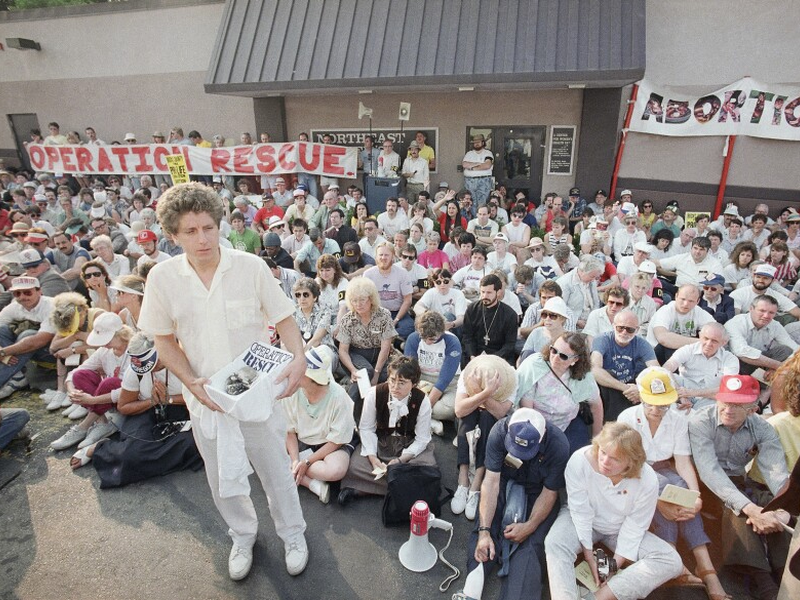
If the debate over Operation Rescue has proven anything, it has proven that there is absolutely no consensus among evangelicals in general, or among "reconstructionists" in particular, about how to use the Bible to judge political actions and movements. Each side of the debate claims biblical authority for its position,…

by Peter LeithartFebruary 13, 1990
49980-nicolas_poussin_-_the_judgment_of_solomon_-_wga18330-800w-tn
Biblical Studies

Advice From a Sojourner, Part 4

Two things I asked of Thee, Do not refuse me before I die: Keep deception and words of falsehood far from me, Give me neither poverty nor riches, Feed me with the food that it my portion, Lest I be full and deny Thee, And say, "Who is the LORD?"…

by James B. JordanFebruary 2, 1990
image-2
Biblical Horizons

Foucault’s Pendulum

Umberto Eco’s "The Name of the Rose" was certainly one of the best literary works of the past decade, though the film version hardly measured up to it. Now Eco has given us a new novel, "Foucault’s Pendulum." Like Rose, Foucault’s Pendulum reflects on the limitations of human knowledge, and…

by James B. JordanJanuary 26, 1990
tanner-mardis-xuxghzhibn4-unsplash-1-2
Biblical Studies

What Is “Interpretive Maximalism”?

From time to time people ask me about "interpretive maximalism." They want to know what it is, and sometimes want to know if it represents some departure from the Reformed grammatico-historical, Biblico-theological approach to the Bible. I have something of a problem with these questions, because "interpretive maximalism" is not…

by James B. JordanJanuary 26, 1990

Showing page 305 of 309

See all

Showing page 9 of 43

See all
Pentecost

Pentecost and Public Life

What has Pentecost to do with public life? As Paul would say, much in every way. The Bible does not permit us to confine the work of the Spirit to the inner man or to private experience. Through Isaiah (44:3), the Lord promised to pour out water on the land…

May 15, 2018
Pentecost

Pentecostal Enlightenment

It’s the season of the Spirit, a time to muse on the politics of Pentecost. When Israel’s prophets predict the future coming of the Spirit, their next thought is almost always about the renewal of creation. According to Joel, the Spirit’s coming will turn Israel into Big Rock Candy Mountain”wine…

May 14, 2018

Anarchy and the Second Word

In Discourses on Livy , Machiavelli exposes the ruse of Roman law. Numa, the true founder of Rome, "mistrusted his own authority, lest it should prove insufficient to enable him to introduce new and unaccustomed ordinances in Rome." And so he claimed that the law came from the gods. All…

May 11, 2018
rembrandt-main

How To Pray

Pamela Tamarkin Reis ("Seeing Moses Plain," VT 55 [2005] 207-31) thinks that Moses' response to Yahweh in Numbers 11 is a model prayer. First, Moses refers to Israel as "this people," which is "a disdainful, arms-length usage employed frequently in the Bible to distance oneself from and to denigrate the…

May 11, 2018

Moses' Missing Repentance

Benjamin Sommer ("Reflecting on Moses," JBL 18 [1999] 601-624) thinks that Numbers 11 weaves together two sources, with very different descriptions of Moses. In narrative A, Moses is petulant, angry, despises his role as leader of Israel, wishes for death. According to B, he is an exemplary prophet, concerned for…

May 11, 2018

Image and Icon

Israel’s sanctuaries were dramatically different from those of other nations. There was no image of Yahweh. The priests maintained Yahweh’s house, but His presence was either invisible or so intense that it was unapproachable. The aniconic worship of Israel was a standing reminder that their God is a different sort…

May 10, 2018

Showing page 70 of 2212

Browse by Category

In Medias Res

Your weekly digest for all things Theopolis.

Donate

Theopolis is nearly 100% donor-supported. Consider joining us on our mission.