Theopolis Logo

Writing

Explore our collection of theological essays, biblical studies, and reflections on faith and culture.

See all
screen-shot-2023-05-02-at-1-14-25-pm
Poetry

Seed-bearing Fruit

Ten-thousand ‘yeses’ and a single ‘no.’ From bough it dangles, beauty to the eyes, For belly, food, a fruit to make one wise. Too soon, they eat; they know; the leaves they sew, But, oh! the Love who asks, “Where did you go?” Confessions flow from under leaf’s disguise; A…

by Marc HaysAugust 16, 2023

screenshot-2023-08-15-at-8-22-28-am
Augustine

Eternal Life Chiasm in John's Gospel

In his masterful work, De Doctrina Christiana , Augustine of Hippo writes: I would have learned men to know that the authors of our Scriptures use all those forms of expression which grammarians call by the Greek name tropes, and use them more freely and in greater variety than people…

by Doug PonderAugust 15, 2023
screenshot-2023-08-08-at-11-13-28-am
Ruth

Lot, Ruth, and the Work of New Creation

“In accordance with the creation pattern, God sovereignly took hold of Adam and put him to sleep. Then God divided Adam by removing flesh and bone from his side, and restructured humanity into male and female. When Adam awoke, God distributed the woman to him. Adam gazed upon her and…

by Josh JensenAugust 8, 2023
rev-1-barbie-tp-0002-high-res-jpeg-647e152f50df6-2
Culture

The Barbie Movie

Greta Gerwig’s new film, Barbie, has been criticized, probably rightly, for having too many ideas and layers to properly bring in any for a landing. Gerwig herself thought the script was so “ wild and anarchic ” that she was surprised WB agreed to make it. Many see it as…

by Robin HarrisAugust 1, 2023
mariam-soliman-ht5xmeulydg-unsplash-2
Matthew

Why Does John the Baptizer Look Like a Camel?

“Now John wore a garment of camel’s hair and a leather belt around his waist, and his food was locusts and wild honey” (Matt. 3:4). Why is John the Baptizer clothed with camel’s hair? Why does he want to look like a camel? Or at least: what does he expect…

by Jeff MeyersJuly 26, 2023
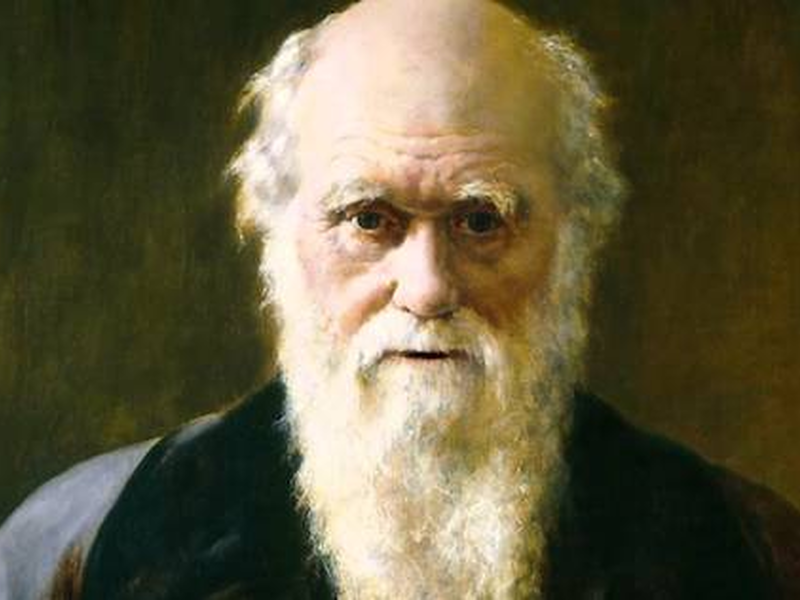
darwin
Literature

Stinking, Rotten Ministers of the Gospel

In the second greatest story ever told, The Brothers Karamazov , Fyodor Dostoyevsky tells the story of a family plagued by the lasting legacy of sin’s destructive power and the all-surpassing truth that God is Light and in Him is no darkness. The young protagonist, Alyosha, is a monk committed…

by Garrett SoucyJuly 18, 2023

Showing page 29 of 309

See all
See all
Uncategorized

Apsethus the god

Hippolytus tells the story that Apsethus of Libya trained parrots to fly over North Africa crying out “Apsethus is a god,” and Libyans were taken in and began to offer sacrifices to him. Then a “clever Greek” caught one of the parrots, and retrained it to cry out: “Apsethus, having…

June 25, 2009
Uncategorized

Failure of the Church

In his encyclopedic Later Roman Empire , A. H. M. Jones explains that the church after Constantine failed to transform ordinary social behavior and culture not because it was too lax but because it was too rigorist. Ordinary Christians felt they couldn’t live up to the standards, and responded by…

June 25, 2009

Moses and Christ

Michael Hollerich, who has done some superb revisionist work on Eusebius of Caesarea, explains in a 1990 article from Church History that Eusebius employed a “similar situation” form of typology that focuses on similarities rather than differences between type and antitype, and draws out the similarities in great detail. He…

June 24, 2009
Politics

Truth and Freedom

Milbank, discussing the possibility of educative coercion: “although Christianity . . . certainly requires in the end free consent to the truth, it does not fetishize this freedom merely as a correct mode of approach: truth is what most matters, and moreover a collective commitment to truth, since truth itself…

June 22, 2009
Art

What Rough Beast?

Milbank notes that “science and art have always first mimed the horrors to come.” Darwinian evolution and avant-garde prepared the way, for foreshadowed, twentieth-century horrors. He asks, “what may the far more shocking interventions of 1990s art and science . . . betoken for the present century?’

June 22, 2009
Theology

Privatio and Radical Evil

Milbank opens Being Reconciled: Ontology and Pardon (Radical Orthodoxy) with a discussion of neo-Kantian arguments concerning radical evil. In the light of the Holocaust and twentieth-century totalitarianism, they argue, the traditional Augustinian privatio is deeply inadequate. In response, Milbank relativizes totalitarianism by arguing that “European and American liberal democracy has…

June 22, 2009

Showing page 1367 of 2212

Browse by Category

In Medias Res

Your weekly digest for all things Theopolis.

Donate

Theopolis is nearly 100% donor-supported. Consider joining us on our mission.