Theopolis Logo

Writing

Explore our collection of theological essays, biblical studies, and reflections on faith and culture.

See all
e99a9334
Advent

Stretching Christmas

For many people Christmas comes on December 25 and is over December 26. The tree is taken down along with the lights and the other decorations, and everyone begins setting the house in order for the new year. No more Christmas hymns. No more celebrations (well, until New Year’s Eve).…

by Steve WilkinsDecember 24, 2016
ascension
Advent

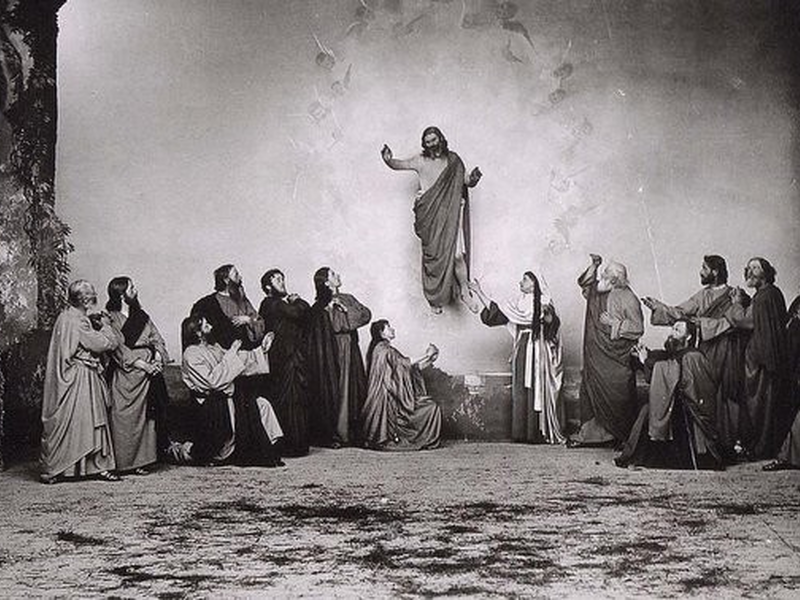
Ascension and Incarnation

The Ascension and the Incarnation should not be disconnected in our Christmas thinking or celebrations. As N.T. Wright notes, the ascension is "a central and vital feature without which all sorts of other things start to go demonstrably wrong. . . . where the ascension has been ignored or misunderstood,…

by Roy AtwoodDecember 23, 2016
nativity-rembrandt
Advent

Christmas Light

“In the Word was life, and the life was the light of men. And the light shines in the darkness.” Thus John describes the incarnation of the Son. He comes as the living and life-giving light of the world. That’s good news. In the beginning, God spoke and light shone…

by Peter LeithartDecember 23, 2016
nativity-chagall
Advent

The Spirit of Christmas

Christmas is all about Jesus. The angels announce Jesus’ birth, shepherds and wise men come to see Jesus, Herod wants to kill Jesus. We occasionally think of the Father who sent the Son, but we keep returning to the Son made flesh in Bethlehem’s manger. Meanwhile, as always, the Spirit…

by Peter LeithartDecember 22, 2016
nativity
Advent

The Humility of God

Christmas is about many things, but one of the chief things revealed in the gospel of Christmas is the humility of God. We don't often think of humility as an attribute of God. If God is glorious and exalted, we think, He must be haughty and proud and self-centered. We…

by Peter LeithartDecember 21, 2016
screenshot-2025-12-15-at-8-35-45-am
Advent

Advent of Unity

John famously begins his Gospel with a piece of theology: “In the beginning was the Word, and the Word was with God, and the Word was God.” Matthew starts with a genealogy. John celebrates Advent with a hymn, Matthew with a list. For John, Jesus is the Word of creation…

by Peter LeithartDecember 20, 2016

Showing page 120 of 309

See all
See all
History

Between Burckhardt and Baynes

H.A. Drake’s Constantine and the Bishops: The Politics of Intolerance (Ancient Society and History) is a remarkable piece of work. One of his opening moves is to show how, despite clear and overt differences, both Burckhardt’s pure-political Constantine and Baynes’s sincere-Christian Constantine share common assumptions about politics and religion. He…

May 27, 2009

Blessed are the poor

Niebuhr has this nice harmonization of the Matthean and Lukan beatitude to the poor: “Both versions are necessary to catch the full flavor of the beatitude. For the Lukan version alone would make poverty a guarantee of virtue, particularly of the virtue of humility, which it is not. The Matthean…

May 27, 2009
Theology

Christian irony

Niebuhr claims that irony is inherent in the Christian view of history: Christianity’s “interpretation of the nature of evil in human history is consistently ironic. This consistency is achieved on the basis of the belief that the whole drama of human history is under the scrutiny of a divine judge…

May 27, 2009
History

American idealism

Niebuhr ( Irony ) quotes an unnamed European statesman who expresses gratitude for America’s help in resisting tyranny, but fear “that we might become an American ally.” America’s idealism doesn’t reassure him: “The idealism does indeed prevent America from a gross abuse of its power. But it might well accentuate…

May 26, 2009
History

Having and Being Empire

Charles Maier’s comparative study Among Empires: American Ascendancy and Its Predecessors reaches the waffly but accurate conclusion that the “United States reveals many, but not all - at least not yet - of the traits that distinguished empires.” Early on, he makes the helpful distinction between “being” and “having” an…

May 26, 2009
Uncategorized

Demoting the Emperor

Van Dam ( Roman Revolution of Constantine ) suggests that Eusebius’s Life was simultaneously a political tract celebrating the elevation of a Christian emperor and a theological apology promoting Eusebius’s Christological subordinationism. The afterlife of Eusebius’s treatise, though, put the emperors in their place. Rufinus’s translation/paraphrase of Eusebius’s Church History…

May 26, 2009

Showing page 1377 of 2212

Browse by Category

In Medias Res

Your weekly digest for all things Theopolis.

Donate

Theopolis is nearly 100% donor-supported. Consider joining us on our mission.