Theopolis Logo

Writing

Explore our collection of theological essays, biblical studies, and reflections on faith and culture.

See all
or
Abortion

Political Hermeneutics: The Argument From Silence, Part 2

Click HERE for part 1. III This leads to a further question. I have argued that silence cannot by itself establish a Scriptural principle, but does Scripture’s silence carry any weight in itself? Does the fact that something is unbiblical in a weak sense tell us anything at all? In…

by Peter LeithartMarch 13, 1990

hebrew-manuscript-6
Biblical Chronology

Groping Through the Gaps

Although nowadays gap theories are associated with dispensationalism, it was not always so. In the nineteenth century, scholars from a variety of backgrounds (Anglican, Reformed, and proto-fundamentalist) seem to have become fascinated by gaps. If you are not familiar with what I am talking about, this newsletter will acquaint you…

by James B. JordanFebruary 26, 1990
or
Abortion

Political Hermeneutics: The Argument from Silence, Part 1

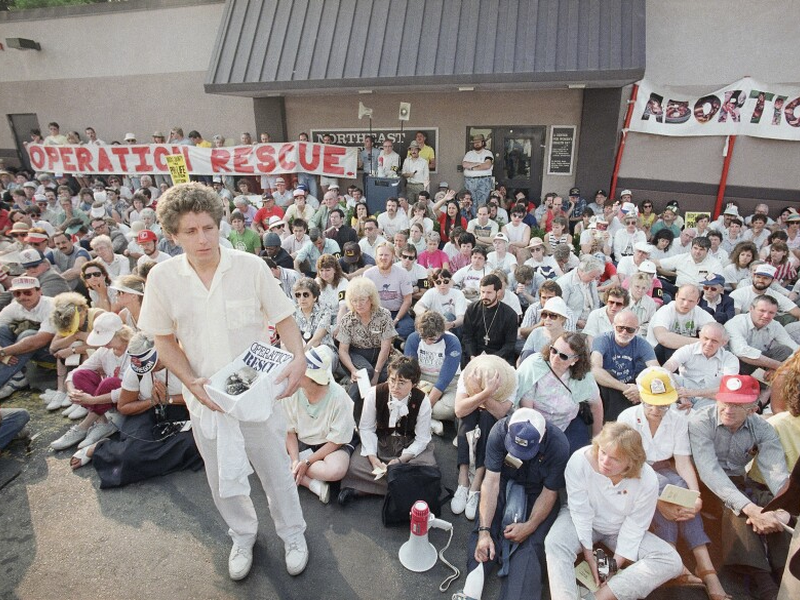
If the debate over Operation Rescue has proven anything, it has proven that there is absolutely no consensus among evangelicals in general, or among "reconstructionists" in particular, about how to use the Bible to judge political actions and movements. Each side of the debate claims biblical authority for its position,…

by Peter LeithartFebruary 13, 1990
49980-nicolas_poussin_-_the_judgment_of_solomon_-_wga18330-800w-tn
Biblical Studies

Advice From a Sojourner, Part 4

Two things I asked of Thee, Do not refuse me before I die: Keep deception and words of falsehood far from me, Give me neither poverty nor riches, Feed me with the food that it my portion, Lest I be full and deny Thee, And say, "Who is the LORD?"…

by James B. JordanFebruary 2, 1990
image-2
Biblical Horizons

Foucault’s Pendulum

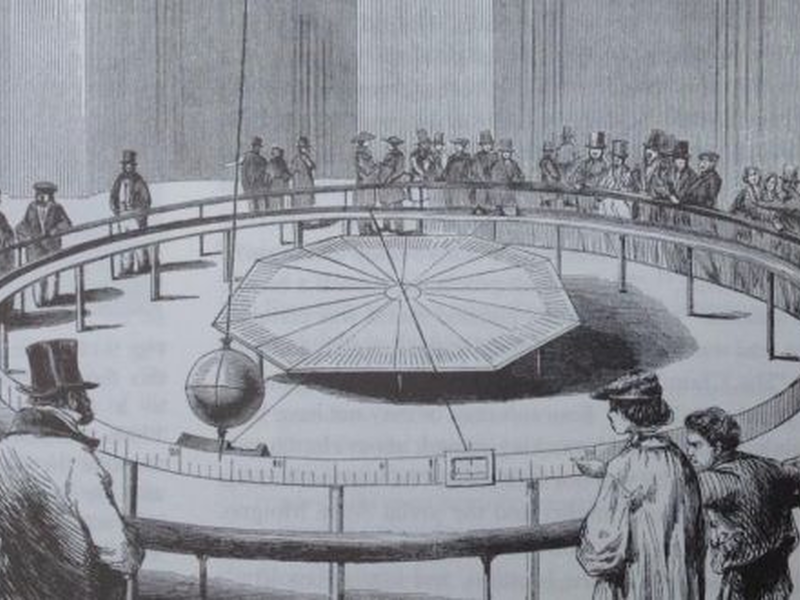
Umberto Eco’s "The Name of the Rose" was certainly one of the best literary works of the past decade, though the film version hardly measured up to it. Now Eco has given us a new novel, "Foucault’s Pendulum." Like Rose, Foucault’s Pendulum reflects on the limitations of human knowledge, and…

by James B. JordanJanuary 26, 1990
tanner-mardis-xuxghzhibn4-unsplash-1-2
Biblical Studies

What Is “Interpretive Maximalism”?

From time to time people ask me about "interpretive maximalism." They want to know what it is, and sometimes want to know if it represents some departure from the Reformed grammatico-historical, Biblico-theological approach to the Bible. I have something of a problem with these questions, because "interpretive maximalism" is not…

by James B. JordanJanuary 26, 1990

Showing page 305 of 309

See all
See all

Eucharistic mediatation

Ruth 1:22: So Naomi returned and with her Ruth the Moabitess, her daughter-in-law, who returned from the land of Moab. And they came to Bethlehem at the beginning of the barley harvest. Ruth begins tragically. Elimelech flees from famine in Bethlehem by taking his wife and sons to Moab, where…

November 2, 2008

Baptismal exhortation

Ruth 1:21: Naomi said, I went out full, but Yahweh has brought me back empty. Why do you call me Naomi, since Yahweh has witnessed against me and the Almighty has afflicted me? Ruth’s statement of faith is one of the most memorable and moving in Scripture. It is a…

November 2, 2008
Politics

Exhortation

Modern politics, we often think, is secular politics. Alexis de Tocqueville knew better. He observed that the French Revolution “took on the appearance of a religious revolution.” It was, he admitted, “a new kind of religion, an incomplete religion . . . without God, without ritual, and without life after…

November 2, 2008

Divine-Human Operation

In a lecture on incarnation and kenosis, Princeton’s Bruce McCormack asks John of Damascus how he can say that every act of the God-Man is “100% human and 100% divine.” Won’t the omnipotent divine act overwhelm the human act? That’s an odd question, I think. For, given divine concurrence, the…

November 1, 2008

Church and state

Wise cautions from de Lubac on any effort to ease the tensions that have historically existed between church and civil order: “We can without difficulty concede the point that whichever side the absorption were effected from, everything would become infinitely simpler and much more practicable - in theory, at any…

November 1, 2008

Beyond sacraments

De Lubac quotes Thomas a Kempis to the effect that “when the consummation comes, the sacraments will be employed no more,” and explains: “Human mediation, now indispensable and of primary importance, will have no raison d’etre in the Heavenly Jerusalem; there, everyone will hear God’s voice directly and everyone will…

November 1, 2008

Showing page 1454 of 2212

Browse by Category

In Medias Res

Your weekly digest for all things Theopolis.

Donate

Theopolis is nearly 100% donor-supported. Consider joining us on our mission.