Theopolis Logo

Writing

Explore our collection of theological essays, biblical studies, and reflections on faith and culture.

See all
kristina-flour-bcjdbykwquw-unsplash
Culture

On Foul Language

The Stranger: Do you have to use so many cuss words? The Dude: What the f*ck you talking about? - The Big Lebowski There was a man I knew, an elder at his church, who, whenever he was called upon to announce a pregnancy, preferred the euphemism “with child” because…

by Remy WilkinsJanuary 12, 2016

organ-pipes
How to Worship

Pipes Worth Playing

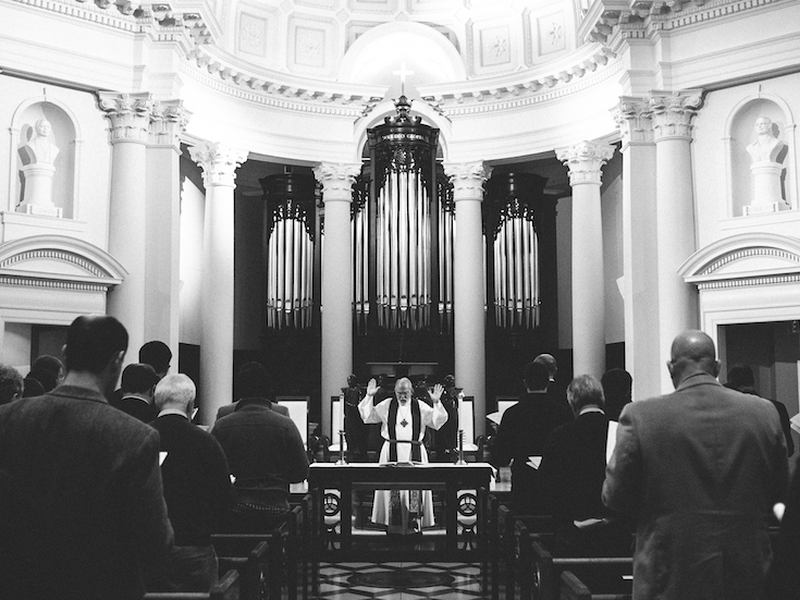
I know what you’re thinking. Organ: funeral, ball game, grand dusty cathedral. Why should modern Christians of such a technological age revisit a thousand year-old instrument? Don’t worry, I will not be trying to punch another hole in my Weird Music Preferences and Opinions card here. The truth is, our…

by Jarrod RicheyJanuary 7, 2016
tree-2
James

Do Things Have Natures?

Do things have natures? As I am posing the question, it is not simply a question of whether there are particular kinds of things in the world that have characteristic features, patterns of behavior, trajectories of growth and development. If that is what the word means, then the answer is…

by Peter LeithartJanuary 5, 2016
jim-leading-worship
Theopolis News

2016 Nevin Lectures with Father John Behr

We are excited to announce our 2016 Nevin Lectures featuring Father John Behr. Fr. John is the Dean of St. Vladimir's Seminary and Professor of Patristics, as well as the author of multiple works. He will be delivering three lectures over the course of two days dealing with "What Protestants…

by Brian MoatsJanuary 4, 2016
times-square
Creation

Time, Curse or Gift?

New Year's Day makes one reflective, at least about the past year, perhaps about life, perhaps, more broadly, about time itself. Many view time as a curse. Some see it as a curse because of missed chances. As one day or year moves on to the next, all we can…

by Peter LeithartDecember 31, 2015
nativity-2
Advent

The Manger

It seems a truism to say that we live in the world: that the world is outside of us. In reality the world is very much inside of us too. In fact the world passes through us as much as we pass through it. We breathe in its air, using…

by Arthur KayDecember 29, 2015

Showing page 138 of 309

See all
See all
Politics

Liberalism, again

Jim Rogers of Texas A&M responds to my posts about liberalism, where I quoted a couple of passages from a recent essay by John Milbank. Rogers writes: “I do think that there is probably a liberal anthropology that can be criticized in a way similar to Milbank. But sometimes I…

October 13, 2008

Ville des expiations

When Jesus tells Peter to forgive “seventy times seven” times, He is only alluding to the climax of God’s dealings with Israel that Daniel prophesied; he is He is also is alluding to Lamech, who threatened to avenge himself “seventy-sevenfold” (Genesis 4:22-23). Lamech was the descendant of Cain. Cain was…

October 12, 2008

Seventy times seven

In the first year of Darius, Daniel was studying the book of Jeremiah’s prophecies when he came upon the prophecy that Israel would be released from captivity after 70 years. The 70th year of exile was coming, and so Daniel began fasting in sackcloth and ashes, and be began confessing…

October 12, 2008
Philosophy

Getting Hamann Wrong

Frederick Beiser’s ( Fate of Reason ) account of Hamann is a mess. He gets the history right (so far as I know it), but his summary of Hamann’s thought is not only mistaken; it’s incoherent. For Hamann, Beiser says, “faith is an immediate experience,” like sense experience, but on…

October 10, 2008
Uncategorized

Outsidelessness

Hamann does believe, as many postmoderns do, that we have no access to reality without language. But for Hamann this does not mean that we suffer “linguistic claustropobia,” or “outsidelessness.” Dickson again: “the fact that perceiving and understanding are inseparable from speaking is commonsensical; one no more need despair over…

October 10, 2008

Honoring the author

Hamann says that the historical-critical method of biblical interpretation does not, despite its apparent attention to the human author, really honor the author. This is because historical-critical interpretation is “castrated,” removing all passion and kerygmatic intention. Dickson writes, “The desires and kerygmatic intentions of the biblical authors are appreciated, and…

October 10, 2008

Showing page 1461 of 2212

Browse by Category

In Medias Res

Your weekly digest for all things Theopolis.

Donate

Theopolis is nearly 100% donor-supported. Consider joining us on our mission.