Theopolis Logo

Writing

Explore our collection of theological essays, biblical studies, and reflections on faith and culture.

See all
nativity
Advent

The Rough Places Plain

“What’s the fastest route” he asks me as we quickly come to a stop behind a sea of red brake lights. I pull out my phone and map all the options. Every way is red with traffic backed up. Deep down I must be a small town girl because traffic…

by Lindsey TollefsonDecember 24, 2015

markus-winkler-aid-xyrtlec-unsplash
Theopolis News

2015 Letter from the President

Dear Friend of Theopolis, I have signed a stack of documents in the years since we started Theopolis, but my heart jumped a few beats as I looked at the thick lease contract. “This is real,” I thought. “This makes it really real.” Theopolis has been real for nearly three…

by Brian MoatsDecember 23, 2015
trinity-1-3
Books

Headship of Christ and Queens

In the Edenic world of Perelandra, from C.S. Lewis’s Space Trilogy, Ransom notices something about how the Green Lady treats the animals: [1] “There was in her face an authority, in her caresses a condescension, [2] which by taking seriously the inferiority of her adorers made them somehow less inferior…

by Remy WilkinsDecember 22, 2015
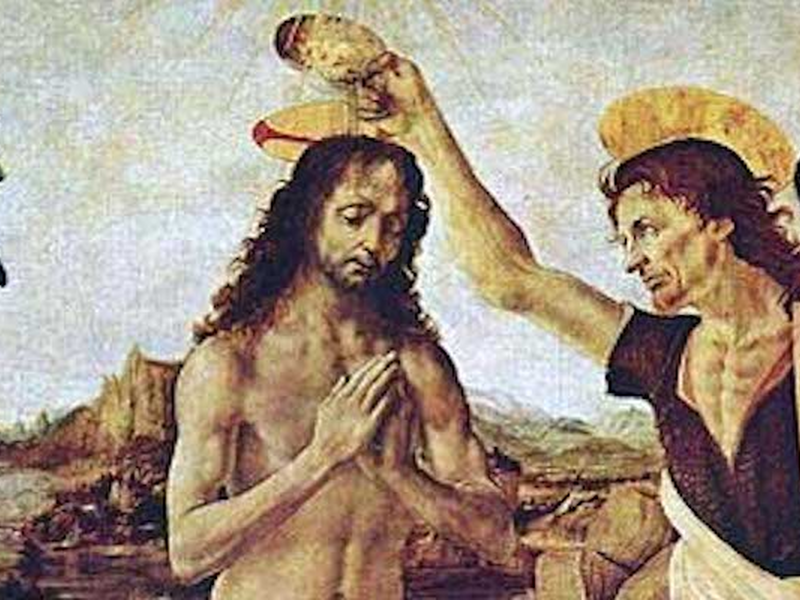
baptism-of-christ
Baptism

Embracing Embodiment: Baptism and the Nuptial Meaning of the Body

In my previous two articles, I argued for the significance of the fact that baptism addresses our bodies in their objectivity. In the body, the self has an existence that runs deeper than our consciousness, decision, self-expression, and action. In washing our passive bodies, baptism seals us with an anticipatory…

by Alastair RobertsDecember 17, 2015
holy-family
Advent

A Child Is Born

Judah is a sinful nation, weighed down with iniquity. They are not the seed of Abraham, but the seed of iniquity. Their worship is abominable to Yahweh, because their hands are covered with innocent blood. They have not done good, or sought justice, or reproved the ruthless, or defended the…

by Peter LeithartDecember 15, 2015
baptism-2
Baptism

Presenting Limbs and Organs: Baptism and Sacrificial Ethics

Although we tend to define ourselves by our subjectivity —our perceptions, thoughts, feelings, decisions, actions—we are frequently forgetful of the objectivity of the self as body, the reality of the self that underlies and precedes all of our subjectivity. The body is the site of our ‘givenness’, where we are…

by Alastair RobertsDecember 10, 2015

Showing page 139 of 309

See all
See all
Politics

Liberalism, again

Jim Rogers of Texas A&M responds to my posts about liberalism, where I quoted a couple of passages from a recent essay by John Milbank. Rogers writes: “I do think that there is probably a liberal anthropology that can be criticized in a way similar to Milbank. But sometimes I…

October 13, 2008

Ville des expiations

When Jesus tells Peter to forgive “seventy times seven” times, He is only alluding to the climax of God’s dealings with Israel that Daniel prophesied; he is He is also is alluding to Lamech, who threatened to avenge himself “seventy-sevenfold” (Genesis 4:22-23). Lamech was the descendant of Cain. Cain was…

October 12, 2008

Seventy times seven

In the first year of Darius, Daniel was studying the book of Jeremiah’s prophecies when he came upon the prophecy that Israel would be released from captivity after 70 years. The 70th year of exile was coming, and so Daniel began fasting in sackcloth and ashes, and be began confessing…

October 12, 2008
Philosophy

Getting Hamann Wrong

Frederick Beiser’s ( Fate of Reason ) account of Hamann is a mess. He gets the history right (so far as I know it), but his summary of Hamann’s thought is not only mistaken; it’s incoherent. For Hamann, Beiser says, “faith is an immediate experience,” like sense experience, but on…

October 10, 2008
Uncategorized

Outsidelessness

Hamann does believe, as many postmoderns do, that we have no access to reality without language. But for Hamann this does not mean that we suffer “linguistic claustropobia,” or “outsidelessness.” Dickson again: “the fact that perceiving and understanding are inseparable from speaking is commonsensical; one no more need despair over…

October 10, 2008

Honoring the author

Hamann says that the historical-critical method of biblical interpretation does not, despite its apparent attention to the human author, really honor the author. This is because historical-critical interpretation is “castrated,” removing all passion and kerygmatic intention. Dickson writes, “The desires and kerygmatic intentions of the biblical authors are appreciated, and…

October 10, 2008

Showing page 1461 of 2212

Browse by Category

In Medias Res

Your weekly digest for all things Theopolis.

Donate

Theopolis is nearly 100% donor-supported. Consider joining us on our mission.