Theopolis Logo

Writing

Explore our collection of theological essays, biblical studies, and reflections on faith and culture.

See all
night-sky
Astral imagery

The Lady and Her Jewels: An Epiphany Meditation

And a great portent appeared in heaven, a woman clothed with the sun, with the moon under her feet, and on her head a crown of twelve stars; she was with child and she cried out in her pangs of birth, in anguish for delivery (Revelation 12:1-2). Then Joshua spoke…

by Richard BledsoeJanuary 6, 2015
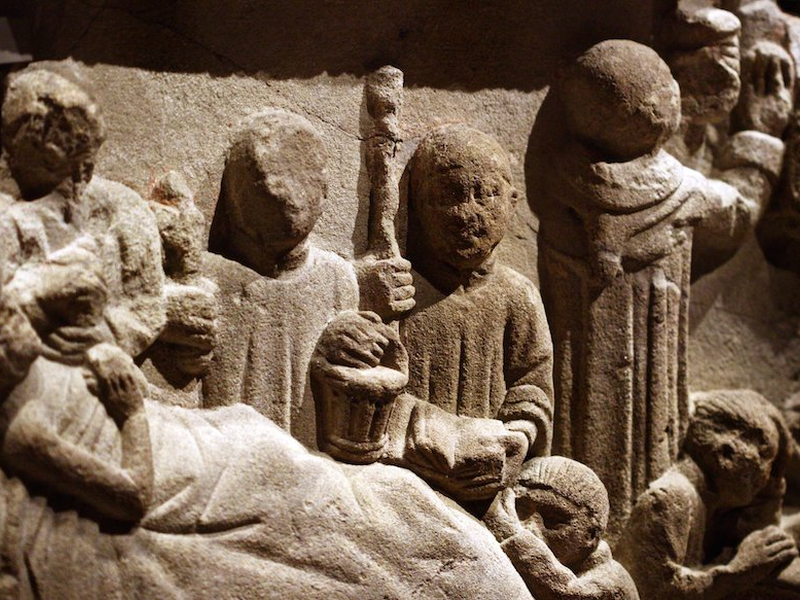
extreme-unction
Anointing

Fattening Our Suffering

In his post asking Ought we Anoint the Dying? Peter Leithart makes an excellent and important point about our suffering as members of Christ. However, he only parenthetically mentions that the verb in question in James 5 is not chrio but aleipho . By assuming that these words are interchangeable,…

by Robert MaddoxDecember 30, 2014
sacre-bleu-r__kixb0i5m-unsplash
James

Death as Frenemy

We spend a lot of time in the church talking about what it means to live like a Christian. But what does it mean to die like a Christian? If we are to follow Christ in life, what does it mean for us to follow him in death as well?…

by Rich LuskDecember 23, 2014
giammarco-zeh-ljawhtg-unsplash
Literature

Was Shakespeare A Christian?

How would one go about answering the question posed by my title? That depends on what the question means. Obviously, different definitions of the question would require different approaches to an answer. Right off hand, I can think of at least three possible — though not necessarily mutually exclusive —…

by Ralph Allan SmithDecember 23, 2014
day-2-ferguson-protests-nationwide
American Culture

Phobophobia

In recent weeks and months, we have seen events that are not the event. The drama around these events is not the events themselves, but the anxiety about the events, and then even the anxiety about the anxiety about the events. That is the real event. The events in Ferguson,…

by Richard BledsoeDecember 22, 2014
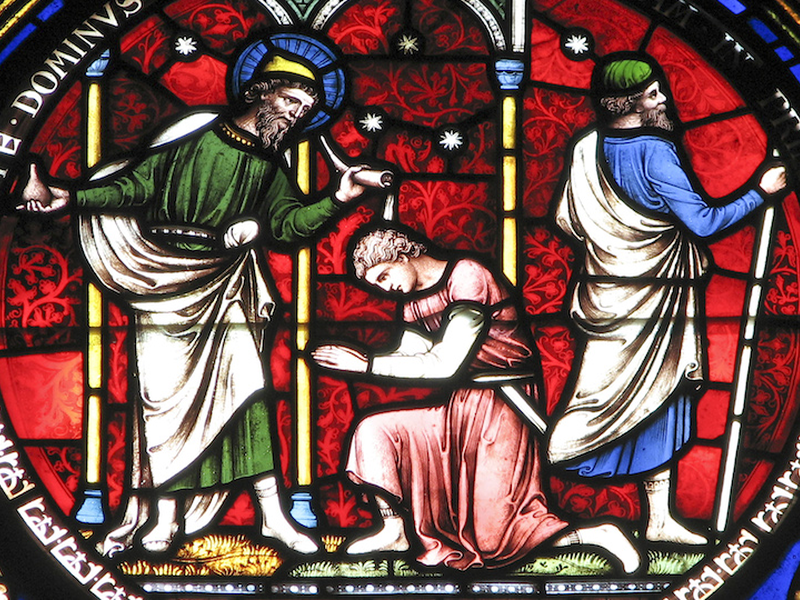
anointing-david
Anointing

Ought We Anoint the Dying?

Anointing the sick, including the dying, is one of the traditional seven sacraments of the Catholic Church. The Reformers denied that the rite qualified as a sacrament. Formally, this was because anointing did not have a direct authorization from Jesus; more theologically, it was not one of the marks that…

by Peter LeithartDecember 18, 2014

Showing page 163 of 309

See all
See all
Politics

Liberalism, again

Jim Rogers of Texas A&M responds to my posts about liberalism, where I quoted a couple of passages from a recent essay by John Milbank. Rogers writes: “I do think that there is probably a liberal anthropology that can be criticized in a way similar to Milbank. But sometimes I…

October 13, 2008

Ville des expiations

When Jesus tells Peter to forgive “seventy times seven” times, He is only alluding to the climax of God’s dealings with Israel that Daniel prophesied; he is He is also is alluding to Lamech, who threatened to avenge himself “seventy-sevenfold” (Genesis 4:22-23). Lamech was the descendant of Cain. Cain was…

October 12, 2008

Seventy times seven

In the first year of Darius, Daniel was studying the book of Jeremiah’s prophecies when he came upon the prophecy that Israel would be released from captivity after 70 years. The 70th year of exile was coming, and so Daniel began fasting in sackcloth and ashes, and be began confessing…

October 12, 2008
Philosophy

Getting Hamann Wrong

Frederick Beiser’s ( Fate of Reason ) account of Hamann is a mess. He gets the history right (so far as I know it), but his summary of Hamann’s thought is not only mistaken; it’s incoherent. For Hamann, Beiser says, “faith is an immediate experience,” like sense experience, but on…

October 10, 2008
Uncategorized

Outsidelessness

Hamann does believe, as many postmoderns do, that we have no access to reality without language. But for Hamann this does not mean that we suffer “linguistic claustropobia,” or “outsidelessness.” Dickson again: “the fact that perceiving and understanding are inseparable from speaking is commonsensical; one no more need despair over…

October 10, 2008

Honoring the author

Hamann says that the historical-critical method of biblical interpretation does not, despite its apparent attention to the human author, really honor the author. This is because historical-critical interpretation is “castrated,” removing all passion and kerygmatic intention. Dickson writes, “The desires and kerygmatic intentions of the biblical authors are appreciated, and…

October 10, 2008

Showing page 1461 of 2212

Browse by Category

In Medias Res

Your weekly digest for all things Theopolis.

Donate

Theopolis is nearly 100% donor-supported. Consider joining us on our mission.