Theopolis Logo

Writing

Explore our collection of theological essays, biblical studies, and reflections on faith and culture.

See all
49980-nicolas_poussin_-_the_judgment_of_solomon_-_wga18330-800w-tn
Biblical Studies

Advice From a Sojourner, Part 2

In our first essay in this series ( part 1 ), we saw that Proverbs 30 opens with a puzzle, a cryptic sentence that challenges the reader to search out a matter in order to gain understanding. "It is the glory of God to conceal a matter, but the glory…

by James B. JordanOctober 26, 1989
hezekiahs-prayer-2
Isaiah

Hezekiah’s Sign

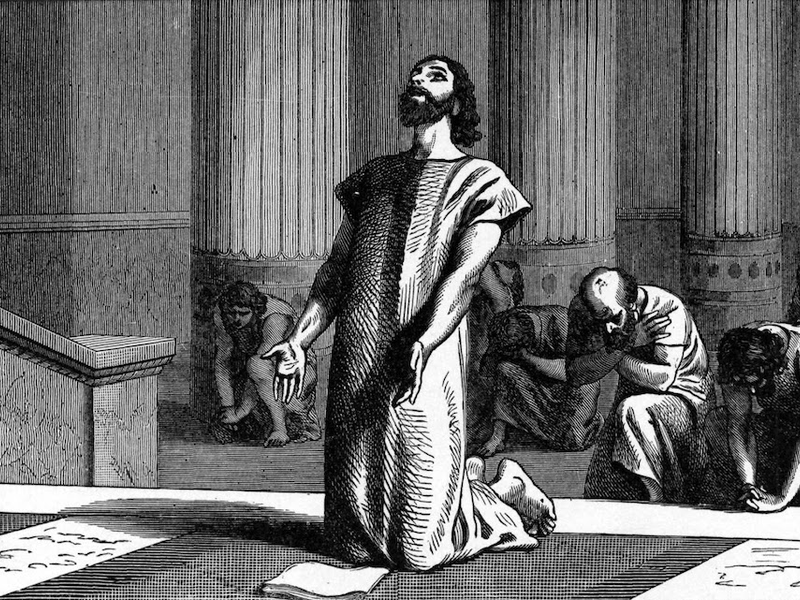
The story of Hezekiah’s illness and recovery is familiar to every child who has attended Sunday School. Informed that he would die, faithful King Hezekiah pleaded in tears for a longer life. God heard his prayers and saw his tears, and promised fifteen more years. As a sign that He…

by Peter LeithartOctober 13, 1989
screen-shot-2021-08-12-at-2-57-54-pm
Proverbs

An Antidote for Yuppie Postmillennialism

1. The Blessed Hope "Looking for the blessed hope and the appearing of the glory of our great God and Savior, Christ Jesus." Titus 2:13 I was recently asked how I as a postmillennialist would preach on "The Blessed Hope." This is often a sticky question, because postmillennialists believe that…

by James B. JordanAugust 26, 1989
screen-shot-2022-01-10-at-5-52-39-pm
American Culture

Elijah’s War with Baal

1. Jeroboam and Ahab After Solomon died, the people came to his son, King Rehoboam, and asked for tax relief. Rehoboam refused to give it, and indeed told the people that he was going to tax them even more severely than his father had. At that point, with the blessing…

by James B. JordanJuly 26, 1989
screen-shot-2020-08-31-at-10-35-03-am
Biblical Horizons

The Love Feast

One aspect of truth is unity. It was Truth Incarnate who prayed for the unity of His people in John 17, which certainly makes unity a priority for them as well. In one sense, we know by faith that the Church is always invisibly unified in Christ, but there is…

by James B. JordanJune 16, 1989
screen-shot-2022-01-07-at-6-38-22-pm
Biblical Studies

The Son of Joseph, Revisited

Mr. Paul Miller of Vancouver writes that he is not persuaded by my remarks on Luke 4 on " The Son of Joseph ." He calls attention to Mark 6:1-6, where Jesus came "to His own part of the country," taught in the synagogue, and astonished many. The people said,…

by James B. JordanMay 16, 1989
See all
See all
Politics

Liberalism, again

Jim Rogers of Texas A&M responds to my posts about liberalism, where I quoted a couple of passages from a recent essay by John Milbank. Rogers writes: “I do think that there is probably a liberal anthropology that can be criticized in a way similar to Milbank. But sometimes I…

October 13, 2008

Ville des expiations

When Jesus tells Peter to forgive “seventy times seven” times, He is only alluding to the climax of God’s dealings with Israel that Daniel prophesied; he is He is also is alluding to Lamech, who threatened to avenge himself “seventy-sevenfold” (Genesis 4:22-23). Lamech was the descendant of Cain. Cain was…

October 12, 2008

Seventy times seven

In the first year of Darius, Daniel was studying the book of Jeremiah’s prophecies when he came upon the prophecy that Israel would be released from captivity after 70 years. The 70th year of exile was coming, and so Daniel began fasting in sackcloth and ashes, and be began confessing…

October 12, 2008
Philosophy

Getting Hamann Wrong

Frederick Beiser’s ( Fate of Reason ) account of Hamann is a mess. He gets the history right (so far as I know it), but his summary of Hamann’s thought is not only mistaken; it’s incoherent. For Hamann, Beiser says, “faith is an immediate experience,” like sense experience, but on…

October 10, 2008
Uncategorized

Outsidelessness

Hamann does believe, as many postmoderns do, that we have no access to reality without language. But for Hamann this does not mean that we suffer “linguistic claustropobia,” or “outsidelessness.” Dickson again: “the fact that perceiving and understanding are inseparable from speaking is commonsensical; one no more need despair over…

October 10, 2008

Honoring the author

Hamann says that the historical-critical method of biblical interpretation does not, despite its apparent attention to the human author, really honor the author. This is because historical-critical interpretation is “castrated,” removing all passion and kerygmatic intention. Dickson writes, “The desires and kerygmatic intentions of the biblical authors are appreciated, and…

October 10, 2008

Showing page 1461 of 2212

Browse by Category

In Medias Res

Your weekly digest for all things Theopolis.

Donate

Theopolis is nearly 100% donor-supported. Consider joining us on our mission.