Theopolis Logo

Writing

Explore our collection of theological essays, biblical studies, and reflections on faith and culture.

See all
img_0166-2
How to Worship

How Liturgy Simplifies Worship for the Cognitively Impaired

Suffer little children, and forbid them not, to come unto Me. In 2005, God blessed our family with our third child, our second daughter, whom we named Bethany. As soon as Bethany was born, we knew there was something different about her. Unlike her two older siblings, who were born…

by Gregory LaughlinMay 4, 2017

screen-shot-2017-05-01-at-1-09-10-pm
Creeds

How Pastors Can Incorporate the Creeds in their Churches

Christian, what is it that we believe? While Creeds like the Nicene and Apostle’s have been fundamental pieces of Christian liturgy and life, the American Church is highly unattached to these classic statements. From this creedal phobia has arisen the popular “No Creed, but Christ” slogan. Such slogan, of course,…

by Uri BritoMay 2, 2017
wars-of-religion
Books

Myth of Religious Violence

Revisiting William Cavanaugh’s devastating 2009 The Myth of Religious Violence . The myth of Cavanaugh’s title is a well-known one. According to the myth, religion is a distinct sphere of human life and practice from the rest of human social life, a universal impulse in human beings, and is dogmatic,…

by Peter LeithartApril 27, 2017
resurrection
Church Calendar

A Glad New Day

19 Then the same day at evening, being the first day of the week, when the doors were shut where the disciples were assembled for fear of the Jews, came Jesus and stood in the midst, and saith unto them, Peace be unto you. 20 And when he had so…

by Arthur KayApril 25, 2017
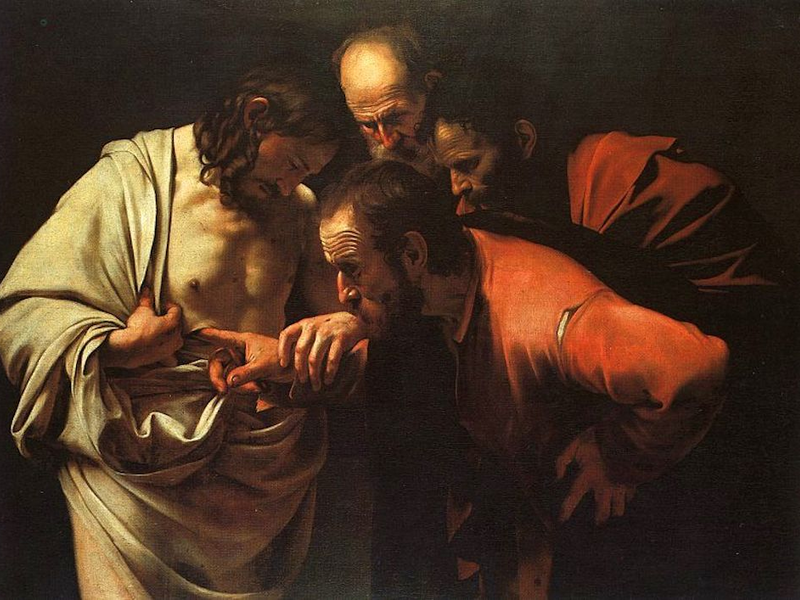
doubting-thomas
John

Thomas and Us

An octave is a repetition, a repetition with a difference. It’s not the first note played again , but the first note played at a higher pitch. Octaves have always marked new beginnings. Hebrew boys were circumcised on the eighth day. Firstborn sheep were dedicated to Yahweh on the eighth…

by Peter LeithartApril 21, 2017
sky-from-bridge
Church Calendar

Resurrection: The Best and Worst News

We say Jesus’ resurrection is good news. It wasn’t good news for the disciples on the first Easter. More like perplexing, bewildering news. For others, it wasn’t perplexing, and it certainly wasn’t good. It was plain old bad news. Early in Luke’s gospel, Herod is terrified that Jesus might be…

by Peter LeithartApril 20, 2017

Showing page 113 of 309

See all
See all

Expression and content

Umberto Eco ( Limits of Interpretation ) criticizes Barthes’s notion that connotation occurs when “a sign function (Expression plus Content) becomes in turn the expression of a further content.” He argues that “in order to have a connotation, that is, a second meaning of a sign, the whole underlying first…

August 14, 2008

Fat Heart

Isaiah 6:10 says that Isaiah’s ministry will make the hearts of Israel “fat” and their ears “heavy” ( kabad ). The phrasing is unique to Isaiah 6, but the combination of heavy and fat conjures up Eli, who also was going blind. Isaiah 6 is a new Samuel, and like…

August 13, 2008
History

From Creator-creature to Subject-object

MH Abrams notes that at the heart of Romanticism was a transfer of Christian concepts into a new, subjectivist, context: “Much of what distinguishes writers I call ‘Romantic’ derives from the fact that they undertook, whatever their religious creed or lack of creed, to save traditional concepts, schemes, and values…

August 13, 2008

God-like Hirsch

Frank Lentricchia argues that there is “no unmediated historical knowledge,” and adds: “That is reserved for God, or for theorists like Hirsch who believe that objective knowledge can be acquired in a massive act of dispossessing ourselves of the only route to knowledge that we have: the historicized self. What…

August 13, 2008

Sacraments and texts

Roger Lundin notes that modern interpretation often seeks an unmediated encounter with the text, and then adds: “Both Keith Thomas and Charles Taylor trace it, in part, to the Reformation’s anti-sacramental impulses, which fed into the desacralizing of nature that seventeenth-century science and commerce eagerly promoted. The process accelerated through…

August 13, 2008

Another hermeneutical parable

For centuries, piano virtuosos had thrilled audiences with audacious performances of Liszt’s seventh Etude (in G minor, “Eroica”). Liszt scholars had written analyses of the music, and critics had compared various performances to one another and to what they believed was Liszt’s original intention for the music. An industrious Liszt…

August 13, 2008

Showing page 1482 of 2212

Browse by Category

In Medias Res

Your weekly digest for all things Theopolis.

Donate

Theopolis is nearly 100% donor-supported. Consider joining us on our mission.