Theopolis Logo

Writing

Explore our collection of theological essays, biblical studies, and reflections on faith and culture.

See all
andriy-nestruiev-gdbrwwh6doc-unsplash
Biblical Studies

Funerals and Flutes

Matthew 8-9 records three clusters of miracles, interspersed with snatches of Jesus’ teaching about various aspects of discipleship. Just as the Sermon on the Mount displays the authority of Jesus’ Word in teaching, these chapters display the authority of Jesus’ Word over sickness, uncleanness, the creation, demons, and death. In…

by Peter LeithartApril 17, 1992

michal-parzuchowski-w9uljjwg2fa-unsplash
Baptism

Daddy, Why Was I Excommunicated?

Since the early 1980s, several of the conservative Reformed Churches have debated and wrestled with the issue of paedocommunion (infant communion). The PCA and the OPC assigned study committees to examine the question, both of which produced useful reports both in support of and against the position. Though the debate…

by Peter LeithartApril 13, 1992
skyler-gerald-akljfvj5ym4-unsplash
Biblical Chronology

Chronologies and Kings, Part 9: Jehu, Hazael, and Assyria

(This issue of Biblical Chronology concludes a discussion of the Biblical and Assyrian chronologies, begun in previous posts. Click on the category link of "Biblical Chronology" above to see previous issues. Did Shalmaneser Know Jehu? Allis writes: "The Black Obelisk of Shalmaneser contains, in addition to brief accounts of the…

by James B. JordanMarch 23, 1992
denise-jans-dpemksg59la-unsplash
American Culture

Arts and Play, Part 4

Movies Movies as an art form have a powerful impact because they take place in a dark room, on a large screen, with no distractions, and because they entail many of the arts: music, acting, choreography, design and color, etc. A movie can be an overwhelming experience for a young…

by James B. JordanMarch 23, 1992
sincerely-media-bhaswrjttzw-unsplash-2
Leviticus

The Ecology of the Tribute Offering

The Hebrew word translated as "grain offering" or "cereal offering" is minchah . Like the translation of `olah as "burnt offering," the translation of minchah as "grain offering" is somewhat deceiving, since minchah does not refer to grain or cereal. In liturgical contexts outside of Leviticus, in fact, the word…

by Peter LeithartMarch 13, 1992
sincerely-media-bhaswrjttzw-unsplash-2
Ascension

Skinned and Cut

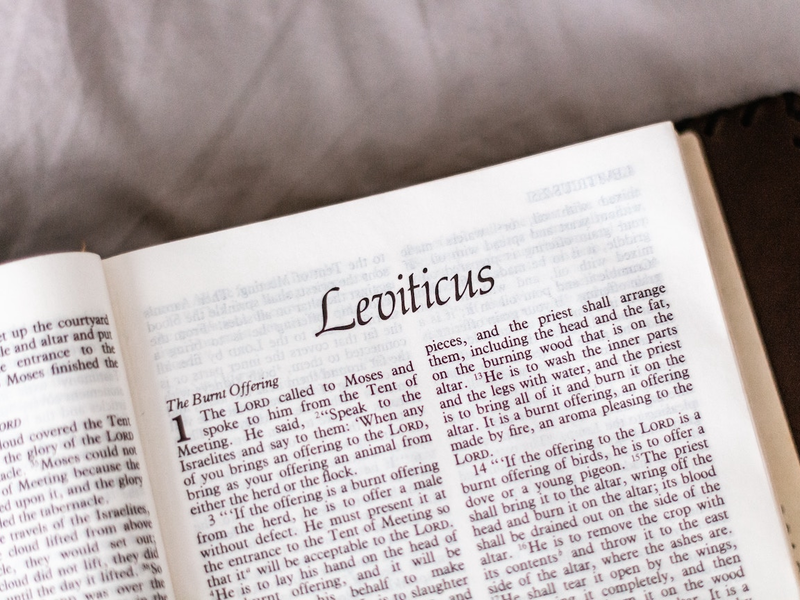
"He shall then skin the burnt offering and cut it into its pieces" (Leviticus 1:6). The normal word ( `olah ) that is translated as "burnt offering" and "whole burnt offering" has nothing to do with either burning or wholeness. It is the noun form of a verb meaning "to…

by Peter LeithartMarch 13, 1992

Showing page 291 of 309

See all
See all

Torah and Christ

Thomas writes in his commentary on John that “things were written in the Old Testament because they would be fulfilled by Christ. If we say that Christ acted because the scriptures foretold it, it would follow that the New Testament existed for the sake of the Old Testament and for…

May 30, 2008

Jacob Limping

Matthew Levering wisely rejects von Balthasar’s notion that Ezra-Nehemiah is “like a brook in the process of drying up”: “Why should the rebuilding of the temple and the renewal of obedience to the Torah, despite the diminishment of the splendor of the temple and the continuing failure fully to observe…

May 30, 2008
History

Bible and intellect

In a review of George Steiner’s latest book in the May 2 TLS, David Martin speculates on the connection between biblical exegesis and the development of intellectual toughness. For Jews and Scots, he says, “there are the intellectual resources built up by strenuous exercises, in wresting sense from sometimes recalcitrant…

May 28, 2008
Music

Music and mysticism

Music is often considered the most mystical, ephemeral, ethereal of all arts. For some, music is for this reason the most perfect, the most purely artistic, of all arts. Maybe. But think: When Bach wants to “comment” (Calvin Stapert’s term) on the chorale “Wachet auf” in Cantata 140, he gives…

May 28, 2008

Matthew’s Angels

The distribution of angelic appearances in Matthew is significant. Angels actually appear as characters in the story only in chapters 1-4 and 28. In total, there are seven uses of “angel” in passages that describe angels as characters (1:20, 24; 2:13, 19; 4:11; 28:2, 5; there is also Satan’s quotation…

May 28, 2008

They sat down

When the fisherman in the dragnet parable (Matthew 13:47-50) pull the net to the beach, they “sat down” in order to gather the good fish and throw the bad away. Why sit? Comfort? I doubt it. Jesus is talking about the end of the age, when the Twelve, made fishers…

May 28, 2008

Showing page 1512 of 2212

Browse by Category

In Medias Res

Your weekly digest for all things Theopolis.

Donate

Theopolis is nearly 100% donor-supported. Consider joining us on our mission.