
Theopolis Logo

Writing

Explore our collection of theological essays, biblical studies, and reflections on faith and culture.

See all
freysteinn-g-jonsson-2baa-syyptk-unsplash
American Religion

Protestantism's Lost Soul

D. G. Hart’s The Lost Soul of American Protestantism vividly clarifies the differences between evangelical and Confessional Protestantism. In part the book is a manifesto for historians of American religion. Hart argues that historians of American Protestantism have operated with a simplistic binary contrast of evangelical/conservative v. liberal/progressive. At best,…

by Peter LeithartAugust 18, 2015
dostoyevsky
Books

The Idiot and the Limits of Compassion

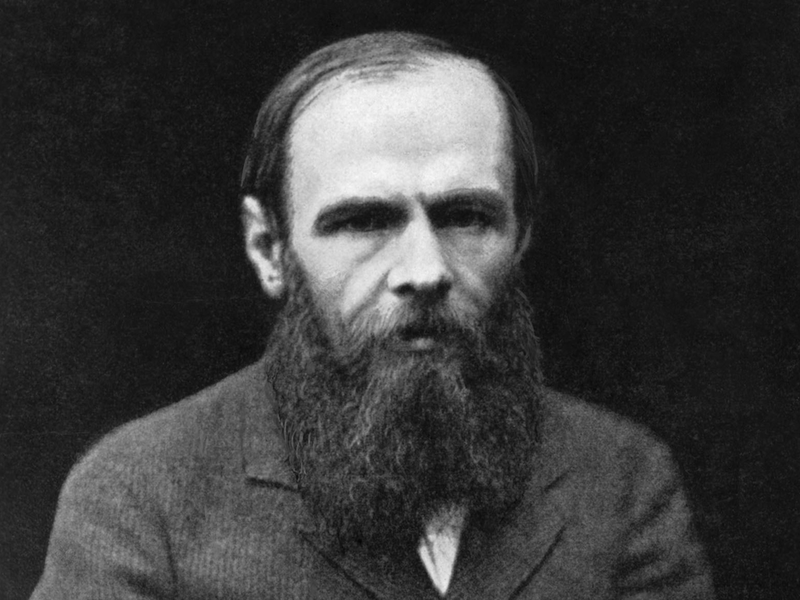
Dostoyevsky’s novel, The Idiot , like his other major works, is a complex evaluation of the human condition—a juxtaposition of the innate goodness and innate evil that resides within every human heart. There is much one can say about The Idiot . I am no specialist of Russian literature, or…

by Gerald HiestandAugust 13, 2015
same-sex-celebrations-2
Homosexuality

If There is “Natural Law” How Can People Believe in Same-Sex Marriage?

At risk of violating some secret handshake agreement on some important nuance to “natural law,” I will sum up what I understand in my own words. As far as I can tell natural law is supposed to be an area of knowledge that all people should be able to agree…

by Mark HorneAugust 11, 2015
falling-star
Biblical Studies

Cosmic Language, 2

The first installment of this article may be found here . The Image of Man This brings us to a substitutionary atonement which we do understand, the fulfilment of the cruciform Tabernacle in the cross of Christ. Although Jesus’ execution was Physical and Social, it was primarily Personal . Beginning…

by Mike BullAugust 6, 2015
branagh-macbeth
Genesis

Every Noise Appalls

The first two essays in this series drew attention to the structure of the first part of Macbeth and to the way Shakespeare incorporates the Garden of Eden into his story. Macbeth , we saw, is a temptation story in which, compared to the Biblical story, the temptation itself is…

by Ralph Allan SmithAugust 4, 2015
new-jerusalem
Revelation

The Warrior and the City: A Wedding Homily

Revelation 19:6-9 Then I heard something like the voice of a great multitude and like the sound of many waters and like the sound of mighty peals of thunder, saying, “Hallelujah! For theLord our God, the Almighty, reigns. Let us rejoice and be glad and give the glory to Him,…

by Peter LeithartAugust 3, 2015

Showing page 146 of 309

See all
See all
Uncategorized

Augustine, Secularist?

O’Donovan makes the point, against Markus, that Augustine does not describe the earthly city as a combination of private ends and public or common utility. This would be a secular system, which leaves ends to individual citizens as they make use of common goods. O’Donovan says Augustine does something like…

February 28, 2008

Analogia Entis

Von Balthasar again: Creation is God’s free decision. There need not be a world. “But if he decides to create a world, then of course this decision can only take the form of the analogy of being, which is grounded in God’s very ‘essence’ itself. Created being must be by…

February 27, 2008

Revelation and nature

Von Balthasar says that grace presupposes a nature that is free from revelation: “If there is to be revelation, then it can only proceed from God to a creature - to a creature that precisely as a creature does not include revelation in its conceptual range.” Van Til is much…

February 27, 2008

Servant and friend

Von Balthasar puts the nature/grace distinction in simple terms, and ones that resonate with certain strains of Reformed theology: “It belongs to the very essence of the creature that it must indeed be creature, but not a creature who has been exalted to a new order of grace: by nature…

February 27, 2008

Gratuity and creatureliness

Rahner says that God’s self-gift “can and must” be an “ever astounding wonder, the unexpected, the unexacted gift.” In an extended footnote, he explains that this “can and must” means both that God’s self-communication is in fact unexacted, and that it must be of necessity . On the latter point:…

February 27, 2008

Self-communication

Rahner re-describes the nature/grace problem in terms of God’s self-communicating love, which is the final cause of creation and the first intention of God: “Everything else exists so that this one thing might be: the eternal miracle of infinite Love.” (Good Edwardsian supralapsarian, he.) But for Rahner, as for every…

February 27, 2008

Showing page 1560 of 2212

Browse by Category

In Medias Res

Your weekly digest for all things Theopolis.

Donate

Theopolis is nearly 100% donor-supported. Consider joining us on our mission.