Theopolis Logo

Writing

Explore our collection of theological essays, biblical studies, and reflections on faith and culture.

See all
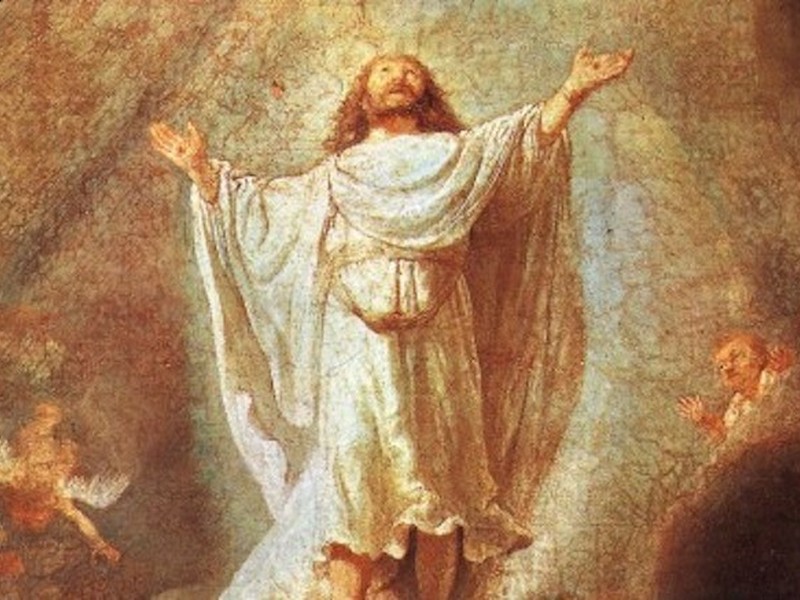
ascension-rembrandt
Ascension

Ascension and Eucharist

It’s a simple point, obviously biblical and creedal: Jesus of Nazareth ascended into heaven as the God-man, and He remains the God-man in all his specific particularity from now to the end. He is Jesus the Christ, the same yesterday, today, and forever. Duh! But Douglas Farrow shows in his…

by Peter LeithartMay 27, 2013

markus-winkler-aid-xyrtlec-unsplash
Theopolis News

Register for Trinity Term Class

You can now register for the very first Trinity House intensive class, "How to Read the Bible," taught by James Jordan and Peter Leithart. There will be a kick-off welcome for students on the evening of Sunday, August 25, and the class will be held at Trinity Presbyterian Church ,…

by Peter LeithartMay 22, 2013
chris-bair-ndczc5739ck-unsplash
Deuteronomy

Deuteronomy as Narrative-Law

This series of essays will address the food laws in Deuteronomy 14:1-21. To some, this may seem like a work of supererogation. After all, why should a Christian be interested in outdated “laws” from the book of Deuteronomy? I hope to show that meditation on this portion of Scripture is…

by Ralph Allan SmithMay 20, 2013
venice-la-distruzione-del-tempio-di-gerusalemme-francesco-hayez-gallerie-accademia-venice
Isaiah

Apocalyptic Patience

This essay was first published in 2011 in Credenda/Agenda . Isaiah 24 begins the section of Isaiah known as the “little apocalypse.” It’s a good name for this chapter. It’s a text of terror. The world is coming apart at the seams. The earth is emptied; and not only that,…

by Peter LeithartMay 15, 2013
sixteen-miles-out-al48tflf4e8-unsplash
Biblical Studies

Anti Anti-Supercessionism

This article was first published in 2010 in Credenda/Agenda . In recent years, mainstream theology has begun to recognize the disaster that followed from the Marcionism of classical liberalism. R. Kendall Soulen is a leading figure in efforts to restore the importance of the Old Testament to Christian theology. In…

by Peter LeithartMay 13, 2013
skyler-gerald-akljfvj5ym4-unsplash
Deuteronomy

Law and History: How to Read the Law of Moses

This is the last in a series of studies on Deuteronomy 22:30-23:8. In this series, I have offered an interpretation of Deuteronomy 22:30-23:8 which suggests that a simple surface reading of the text does not do justice to Moses’ or God’s intention, that the larger historical and legal context in…

by Ralph Allan SmithMay 8, 2013

Showing page 194 of 309

See all
See all
History

Liminality and the sacred

Milbank sums up Victor Turner by saying that “the sublime is no longer outside the social, at the margin of individuality [as in Weber’s charisma], and nor is it the social whole [as in Durkheim]: instead it is situated within society in the constant negotiation of dangerous passages. Paradoxically, it…

February 12, 2008

Cur Deus Homo

City of God 10.6 is a rich and important, though obscure, explanation of what might be called the sociology of sacrifice. At the beginning of the chapter, Augustine defines sacrifice as any act we perform in order to be united to God in holy society. Acts of mercy are sacrifices,…

February 11, 2008

Augustine against envy

Dodaro again: “Only when it is understood by believers that God mediates goodness to human beings directly, without intermediary spiritual beings such as angels - and certainly not through priests - is it possible to put an end to spiritual rivalries.”

February 11, 2008

High Church Donatists

The Donatists are usually seen as the sectarians of the early church but Robert Dodaro points out that for Augustine their sectarianism derived from their clericalism: “Augustine explains that cultic acts which remit sins, such as baptism, are in reality performed by Christ, who acts through Christian priests. Augustine’s frequent…

February 11, 2008

Sermon notes, Second Sunday of Lent

INTRODUCTION Like Moses (Numbers 27:17), Jesus sees that Israel is like sheep without a shepherd (Matthew 9:36), a field white to harvest. Moses gave authority to Joshua to lead Israel in and out in conquest; Jesus gives authority to the Twelve to carry out another conquest (10:1). THE TEXT “And…

February 11, 2008

Eucharistic exhortation, First Sunday of Lent

Matthew 9:36: And seeing the multitudes, He felt compassion for them, because they were harassed and thrown down like sheep having no shepherd. I mentioned in the sermon that the phrase “sheep without a shepherd” appears in the prophecy of Micaiah who warns Ahab that he will die if he…

February 10, 2008

Showing page 1570 of 2212

Browse by Category

In Medias Res

Your weekly digest for all things Theopolis.

Donate

Theopolis is nearly 100% donor-supported. Consider joining us on our mission.









