Theopolis Logo

Writing

Explore our collection of theological essays, biblical studies, and reflections on faith and culture.

See all
medievalilluminatedmanuscript
Biblical Studies

The Art of Why

“We have a God who hides things because He loves to be sought out, chewed out and found out.” As Christians, we are rightly taught that we must not question God’s Word. The problem is that the Scriptures record many things which appear to have been given to us for…

by Mike BullMay 12, 2015

last-supper
Revelation

Eucharistic Harvest

The book of Revelation is a liturgy. John begins “in the Spirit” on the “Lord’s day” (1:10). Jesus appears, and Jesus tells him to record messages to seven churches, words of encouragement and rebuke, like the call to worship and confession at the beginning of a Christian liturgy. In chapter…

by Peter LeithartMay 7, 2015
sunrise-2
Creation

Maker of Heaven and Earth, (Part 5)

In my previous posts, I looked at the theme of creation as it is found in a sequence of psalms devoted to Yahweh’s Kingship (Psalms 93-100). Among other matters, these psalms declare that when the Kingdom of Israel’s God comes, it is the Kingdom of the world’s own Creator .…

by Stephen LongMay 7, 2015
13071-probablyvalentindeboulogne-saintpaulwritinghi-1
Deuteronomy

Paul the Levir

The church in Corinth was a pastoral nightmare. Factionalism, sexual immorality, incipient syncretism, using the church as a stage for self-promotion, and denial of the final resurrection were just some of the problems. In Paul’s first letter to the Corinthian church, he confronts each of these problems directly and in…

by Bill SmithMay 5, 2015
creation-eve
Covenant

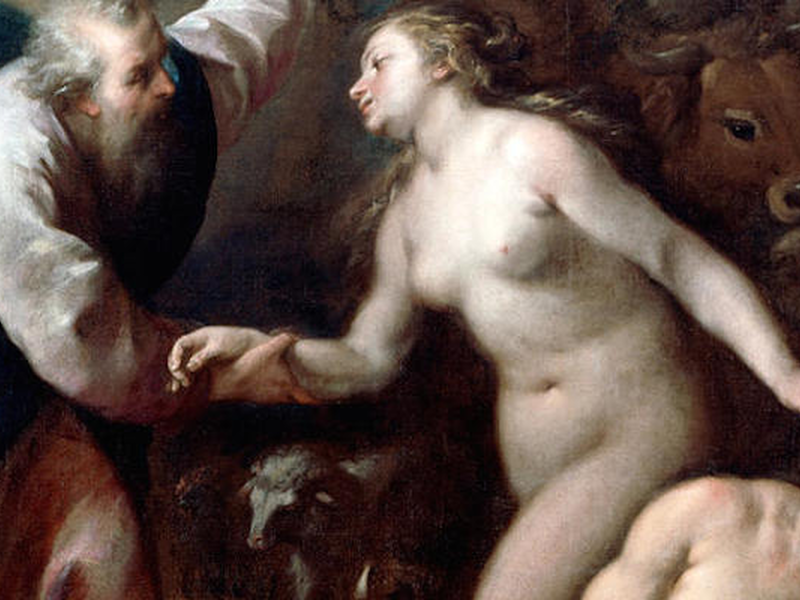
Covenant Structure in Genesis 2

The first chapters of the Word of God have a poetic rhythm. This is used to discredit their accuracy as historical narrative, but the truth is that these same rhythms continue far beyond the book of Genesis. In fact, the later texts shed light on the frustratingly succinct account of…

by Mike BullApril 30, 2015
light-bulb
Creation

Must A Light Bulb Be "Oriented Toward Illumination"?

Mr. Martian: What’s that there? Mr. Edison: (Edison holds up a standard, 60 watt lightbulb). It’s a lightbulb. Mr. Martian: A “lightbulb” you say? What exactly is a “lightbulb”? Mr. Edison: A lightbulb is an object used to illuminate a dark area, say a room. It’s made primarily of filament…

by Gerald HiestandApril 28, 2015

Showing page 154 of 309

See all
See all
History

Jewish/Non-Jewish Gnosis

In his history of Christianity, August Neander distinguished between gnostics who arose from within Judaism and those whose inspiration came from “Oriental” modes of thought. Here is his description of the Jewish sources of gnosticism: In the following respect, all these Gnostics agree ; they all held . . .…

December 21, 2007
History

Gnosticism and Samaritan theology

A few scattered notes from Jarl Fossum’s book examining the links between the figure of the “angel of Yahweh” in Samaritan theology and the “demiurge” of gnosticism. 1) Fossum points out that Simon Magus, legendarily the fountain of Gnosticism, venerated the Torah, and that some of the church Fathers said…

December 21, 2007
History

Gnosticism and Jewish Revolt

In a 2006 book on the origins of gnosticism, Carl B. Smith offers an alternative account of the connections of Judaism and gnosticism. According to the JETS reviewer: Smith “proposes that gnosticism arose in a social context of ‘alienated Judaism’ influenced by Greco-Roman and early Christian ideas in the aftermath…

December 21, 2007

Gnosticism and AD 70

In a book published in 1959, R. M. Grant attempted “to explain Gnosticism as arising out of the debris of apocalyptic-eschatological hopes which resulted from the fall or falls of Jerusalem.” According to a reviewer in Theology T0day , “Grant stresses the Jewish element which, as he rightly says, has…

December 21, 2007
History

Yahweh/Kronos

Origen says that the Ophite demiurge had the face of a lion and was connected with Saturn, and this has led some scholars to conclude that Jaldabaoth was a combination of Baal and Kronos. John of Damascus says that the Phoenicians held Kronos to be a kind of demiurge, and…

December 21, 2007
History

Jaldabaoth

According to Alfred Honig (writing in the late 19th century), the Ophite name for the demiurge, Jaldabaoth, comes from a Hebrew phrase meaning “child of chaos,” and the etymology goes back at least to the 1820s. Scholem argued, however, that the name was invented by a Jew and is a…

December 21, 2007

Showing page 1592 of 2212

Browse by Category

In Medias Res

Your weekly digest for all things Theopolis.

Donate

Theopolis is nearly 100% donor-supported. Consider joining us on our mission.