Theopolis Logo

Writing

Explore our collection of theological essays, biblical studies, and reflections on faith and culture.

See all
timothy-eberly-djj49s6ud2o-unsplash
Biblical Studies

Whom Shall We Believe? Evangelicals and Scholarship

As we move into the Persian period of ancient history, and try to reconcile it with Daniel’s prophecies, we need to ask some hard questions about the interpretation of the data before us. One question concerns the reliability of the Biblical witness, and beyond that a second question concerns the…

by James B. JordanJanuary 30, 1991

a2-118606403-jpg
Biblical Horizons

Understanding Russia

Ewa Majewska Thompson: Understanding Russia: The Holy Fool in Russian Culture Ewa M. Thompson is Professor and Chairman of the Department of German and Slavic Studies at Rice University. In this seminal study, she investigates the concept of the "holy fool" as it exists in Russian culture and civilization. While…

by James B. JordanJanuary 30, 1991
alfons-morales-ylswjsy7stw-unsplash-1
Biblical Studies

The Bible and Western Literature

The most cursory glance at the history of Western literature reveals that it has been deeply influenced by the Bible. Some of the greatest classics of Western literature draw their plots, characters, and ideas largely from Scripture; Dante’s Divine Comedy and Milton’s Paradise Lost are two of the most notable…

by Peter LeithartJanuary 23, 1991
screen-shot-2022-04-28-at-4-57-36-pm
Exodus

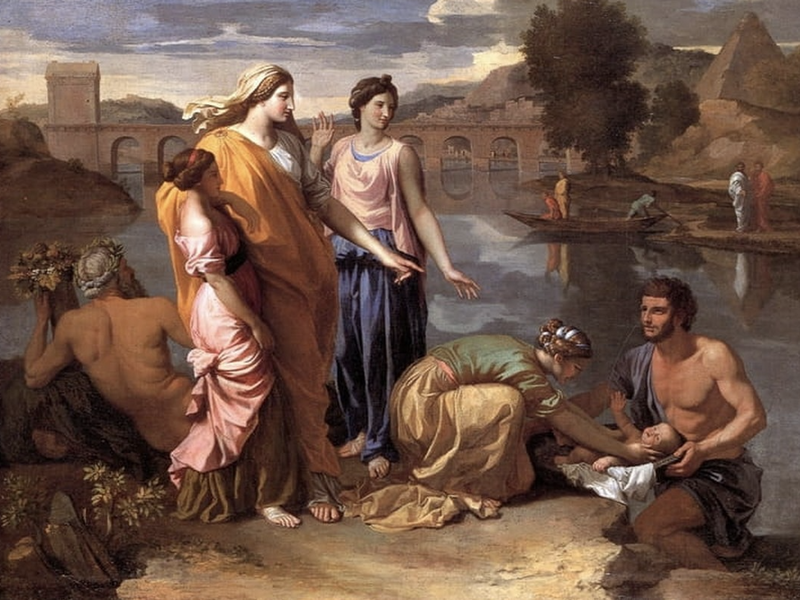
The Beautiful Child

Each time the Scriptures recount the story of Moses’ birth and deliverance from Pharaoh, reference is made to two facts about that event. First, each text points out that Moses was "beautiful." Second, each text points out that Amram and Jochebed, his parents, hid him for three months (cf. Ex.…

by Peter LeithartJanuary 23, 1991
501819ld-2
Romans

Who Rules the Land? The Meaning of the Noahic Covenant, Part 2

Click HERE for Part 1. The Message of the Covenant Can we really say that the saints presently rule the world, and always have since Noah? Look around and you can see that the wicked rule in virtually every country on earth. There are wicked civilizations that rise Babelically age…

by James B. JordanDecember 30, 1990
hebrew-manuscript-6
Hermeneutics

Daniel’s 70 Weeks

As we saw last time , we have come to the place in the study of Biblical chronology where it seems that we are forced to abandon the Bible itself as our primary source of information. If we assume that the seventy sevens of Daniel 9:24-27 are in fact weeks…

by James B. JordanDecember 23, 1990

Showing page 300 of 309

See all
See all
History

Jewish/Non-Jewish Gnosis

In his history of Christianity, August Neander distinguished between gnostics who arose from within Judaism and those whose inspiration came from “Oriental” modes of thought. Here is his description of the Jewish sources of gnosticism: In the following respect, all these Gnostics agree ; they all held . . .…

December 21, 2007
History

Gnosticism and Samaritan theology

A few scattered notes from Jarl Fossum’s book examining the links between the figure of the “angel of Yahweh” in Samaritan theology and the “demiurge” of gnosticism. 1) Fossum points out that Simon Magus, legendarily the fountain of Gnosticism, venerated the Torah, and that some of the church Fathers said…

December 21, 2007
History

Gnosticism and Jewish Revolt

In a 2006 book on the origins of gnosticism, Carl B. Smith offers an alternative account of the connections of Judaism and gnosticism. According to the JETS reviewer: Smith “proposes that gnosticism arose in a social context of ‘alienated Judaism’ influenced by Greco-Roman and early Christian ideas in the aftermath…

December 21, 2007

Gnosticism and AD 70

In a book published in 1959, R. M. Grant attempted “to explain Gnosticism as arising out of the debris of apocalyptic-eschatological hopes which resulted from the fall or falls of Jerusalem.” According to a reviewer in Theology T0day , “Grant stresses the Jewish element which, as he rightly says, has…

December 21, 2007
History

Yahweh/Kronos

Origen says that the Ophite demiurge had the face of a lion and was connected with Saturn, and this has led some scholars to conclude that Jaldabaoth was a combination of Baal and Kronos. John of Damascus says that the Phoenicians held Kronos to be a kind of demiurge, and…

December 21, 2007
History

Jaldabaoth

According to Alfred Honig (writing in the late 19th century), the Ophite name for the demiurge, Jaldabaoth, comes from a Hebrew phrase meaning “child of chaos,” and the etymology goes back at least to the 1820s. Scholem argued, however, that the name was invented by a Jew and is a…

December 21, 2007

Showing page 1592 of 2212

Browse by Category

In Medias Res

Your weekly digest for all things Theopolis.

Donate

Theopolis is nearly 100% donor-supported. Consider joining us on our mission.