Theopolis Logo

Writing

Explore our collection of theological essays, biblical studies, and reflections on faith and culture.

See all
or
Abortion

Political Hermeneutics: The Argument From Silence, Part 2

Click HERE for part 1. III This leads to a further question. I have argued that silence cannot by itself establish a Scriptural principle, but does Scripture’s silence carry any weight in itself? Does the fact that something is unbiblical in a weak sense tell us anything at all? In…

by Peter LeithartMarch 13, 1990

hebrew-manuscript-6
Biblical Chronology

Groping Through the Gaps

Although nowadays gap theories are associated with dispensationalism, it was not always so. In the nineteenth century, scholars from a variety of backgrounds (Anglican, Reformed, and proto-fundamentalist) seem to have become fascinated by gaps. If you are not familiar with what I am talking about, this newsletter will acquaint you…

by James B. JordanFebruary 26, 1990
or
Abortion

Political Hermeneutics: The Argument from Silence, Part 1

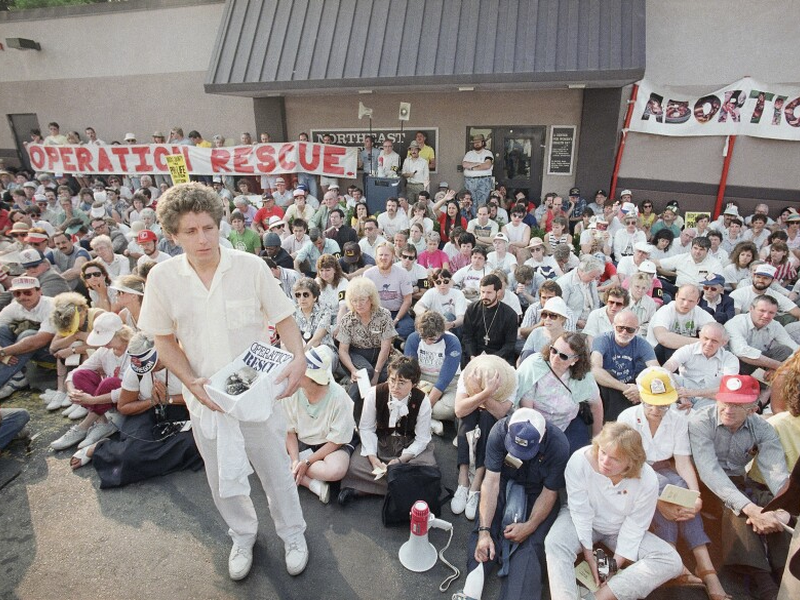
If the debate over Operation Rescue has proven anything, it has proven that there is absolutely no consensus among evangelicals in general, or among "reconstructionists" in particular, about how to use the Bible to judge political actions and movements. Each side of the debate claims biblical authority for its position,…

by Peter LeithartFebruary 13, 1990
49980-nicolas_poussin_-_the_judgment_of_solomon_-_wga18330-800w-tn
Biblical Studies

Advice From a Sojourner, Part 4

Two things I asked of Thee, Do not refuse me before I die: Keep deception and words of falsehood far from me, Give me neither poverty nor riches, Feed me with the food that it my portion, Lest I be full and deny Thee, And say, "Who is the LORD?"…

by James B. JordanFebruary 2, 1990
image-2
Biblical Horizons

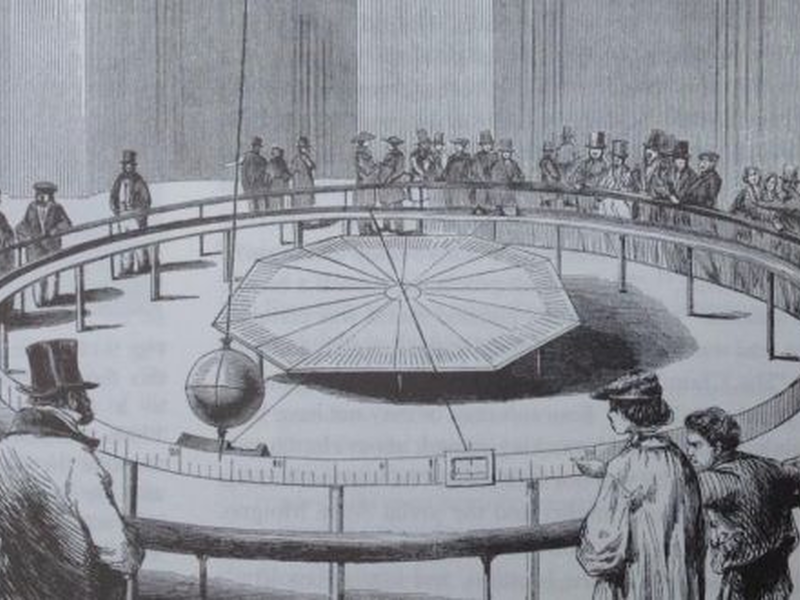
Foucault’s Pendulum

Umberto Eco’s "The Name of the Rose" was certainly one of the best literary works of the past decade, though the film version hardly measured up to it. Now Eco has given us a new novel, "Foucault’s Pendulum." Like Rose, Foucault’s Pendulum reflects on the limitations of human knowledge, and…

by James B. JordanJanuary 26, 1990
tanner-mardis-xuxghzhibn4-unsplash-1-2
Biblical Studies

What Is “Interpretive Maximalism”?

From time to time people ask me about "interpretive maximalism." They want to know what it is, and sometimes want to know if it represents some departure from the Reformed grammatico-historical, Biblico-theological approach to the Bible. I have something of a problem with these questions, because "interpretive maximalism" is not…

by James B. JordanJanuary 26, 1990

Showing page 305 of 309

See all
See all
Theology

Calvin, Milbank, and Gifts

J. Todd Billings compares Milbank’s theology of gift with Calvin’s theology of grace in a 2005 article from Modern Theology . He focuses attention on Milbank’s criticism that the Reformation put such emphasis on the unilateral character of grace and so highlighted the passivity of the reception of grace that…

November 14, 2007
Philosophy

Derrida on Gifts

Stephen Webb has an illuminating discussion of Derrida’s views on giving in his book The Gifting God . Webb begins by saying that “deconstructionist has always been a critique of the event of the gift.” Derrida’s musings on the gift parallel his discussions of the history of metaphysics. According to…

November 14, 2007

Ontology of Personhood

John Zizioulas summarizes his “ontology of personhood” in an article in Christoph Schwobel’s volume, Persons – Divine and Human . Zizioulas begins with the question of the relation between being and personal identity: “It is all too often assumed that people ‘have’ personhood rather than ‘being’ persons,” so that personhood…

November 14, 2007

Knowing God Twice

Barth has a stimulating discussion of Israel’s double-knowledge of Yahweh in the first volume of the Church Dogmatics. He begins with a discussion of what he calls the “hypostases” of God, a usage he takes from “religious science” rather than dogmatics per se. In this context, “hypostases” are anthropomorphic descriptions…

November 14, 2007

Unity or Revelation

Barth says that non-Trinitarian theology inevitably deny either the unity of God or His revelation. If it maintains the unity of God “it has to call revelation in question as the act of the real presence of the real God. The unity of God in which there are no distinct…

November 12, 2007
Theology

Engaging Barth

Barth’s influence continues to grow, among evangelicals no less than others. David Gibson and Daniel Strange have edited a new book, Engaging With Barth (IVP, UK), that collects critical essays on Barth’s theology. The publicity information says, “This volume engages critically and courteously with Barth on a range of vital…

November 12, 2007

Showing page 1607 of 2212

Browse by Category

In Medias Res

Your weekly digest for all things Theopolis.

Donate

Theopolis is nearly 100% donor-supported. Consider joining us on our mission.