Theopolis Logo

Writing

Explore our collection of theological essays, biblical studies, and reflections on faith and culture.

See all
e99a2191
Theopolis News

New Season & New Relationships

We have moved from death to new life, from Lenten darkness to Easter light. And while Easter Sunday may have come and gone, it's effects are continually with us. This season has brought with it several new relationships, events, and signs of growth for Theopolis. We have been networking with…

by Peter LeithartMay 9, 2016
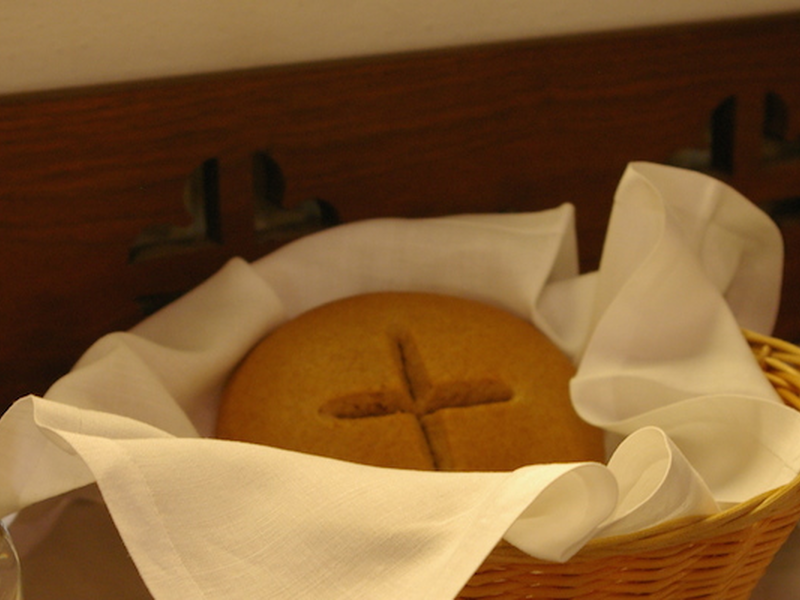
eucharist-2
Eucharist

Social Eucharist in the Middle Ages

In The People's Work , a social history of Christian Worship, Frank Senn summarizes the developments of the medieval period with regard to the Eucharist. He begins by challenging the assumption that medieval society was held together by “the church.” He notes that the church was often divided and conflicted,…

by Peter LeithartMay 5, 2016
turing-machine
Biblical Theology

What Is Systematic Typology? Part 4: Wheels Within Wheels

The structure of the Bible resembles something which was grown rather than built, composed rather than assembled. Its employment of “structure-as-sign” at every level from micro- to macrocosmic leads to the conclusion that a hermeneutic worthy of Scripture requires not only training in history, art and music but also the…

by Mike BullMay 3, 2016
giotto-noli-me-3
Luke

Eighth Day, Eighth Verdict

For some in first-century Israel, Easter was anything but good news. It was a terrifying surprise. For the rulers and powers that put Jesus to death, the idea that He had been raised by some power beyond their control was chilling. Early in Luke’s gospel, we're told that Herod thought…

by Peter LeithartApril 28, 2016
sebastian-pena-lambarri-yv593oymkmo-unsplash
Hermeneutics

153 Large Fish

Simon Peter went up, and drew the net to land, full of large fish, a hundred and fifty-three; and although there were so many, the net was not torn. (John 21:11) This is one of those texts in the Bible that many people puzzle over. It is not a puzzle…

by James B. JordanApril 26, 2016
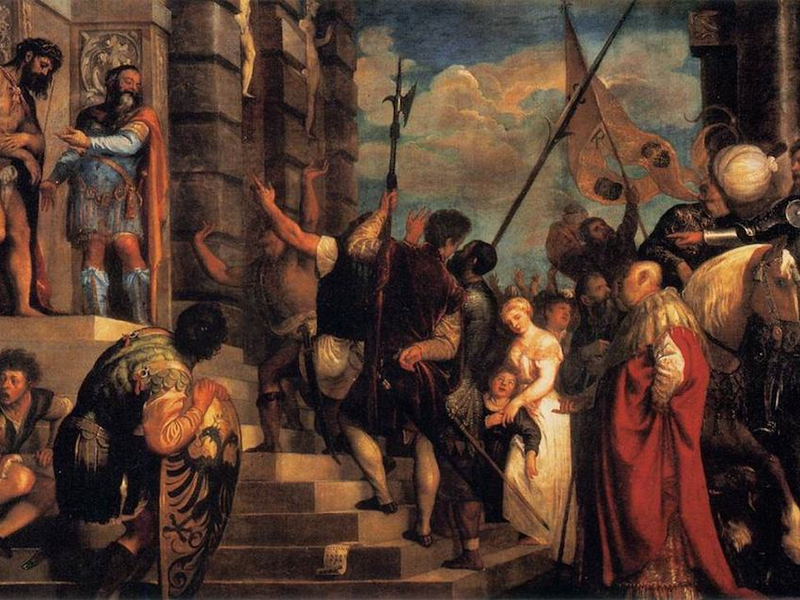
jesus-on-trial
Philemon

Pilate the Kingmaker

God is not mocked, Paul says. God is mocked, says Matthew. Who’s right? The two are in perfect harmony, but to see that, we need to run through the passage again. We’ll see that at every point, the mockery is being turned against the mockers. At every point, mockery is…

by Peter LeithartApril 21, 2016

Showing page 132 of 309

See all
See all
Literature

Seneca’s failure

Wallace again on Timon of Athens . Wallace argues that Shakespeare has written a play to explore Seneca’s society of benefits and gratitude, and shows that the classical model of social order is impossible: “the cast would appear to have been designed to test the Senecan hypothesis about the nature…

November 1, 2007
Philosophy

Elizabethan Seneca

Wallace again on Seneca in Shakespeare: “The first separat e publication of De Benficiis in an English translation was Nicholas Haward’s The Line of Liberalitie in 1569, which included only the first three books, but William Baldwin’s popular Treatise of Morall Philosophie had appeared in 1547 and contained one chapter…

November 1, 2007
Literature

Senecan Shakespeare

In a 1986 article in Modern Philology , John Wallace argues that Timon of Athens is “Shakespeare’s Senecan Study,” reflecting on the issues raised by Seneca’s de Beneficiis : “Shakespeare must have been thinking of Seneca, but a safer argument could have been constructed on the premise that Shakespeare was…

November 1, 2007
Literature

Roman trilogy

Paul Cantor describes three of Shakespeare’s Roman plays as a trilogy, moving from the Republic ( Coriolanus ) to the early empire ( Julius Caesar ) to the decadence of Octavian ( Antony and Cleopatra ). Together they form “a kind of historical trilogy, dramatizing the rise and fall of…

November 1, 2007

Fat, Body Parts, Liver Lobes

In her Leviticus as Literature , the late Mary Douglas offers some interesting possibilities for interpreting the prohibition of eating fat and for the arrangement of animal portions on the altar. Her interpretation is guided by her recognition of analogies between Sinai, the tabernacle, and the body, both of the…

November 1, 2007

Showing page 1612 of 2212

Browse by Category

In Medias Res

Your weekly digest for all things Theopolis.

Donate

Theopolis is nearly 100% donor-supported. Consider joining us on our mission.