Theopolis Logo

Writing

Explore our collection of theological essays, biblical studies, and reflections on faith and culture.

See all
james-coleman-qej5dhl4mwq-unsplash
Galatians

Getting the Galatian Heresy Right

Misunderstanding “Galatianism” has caused several problems in the Reformed church. Because circumcision is at issue in the Galatian epistle, some have fallen into thinking that ritual per se, rather than anything uniquely Mosaic or Jewish, is the object of Paul’s critique. Likewise, his polemic against “works of the law” is…

by Rich LuskJune 6, 2003

screenshot-2023-09-21-at-3-59-23-pm
Romans

Jewish Rejection of the Gospel

Many texts in the NT become more perspicuous if we keep in mind the possibility — and indeed ubiquity — of Gentile God-fearers in the Old Covenant. After the special covenant with Israel is set up, Gentiles are not altogether excluded from the hope of salvation. Israel’s special status in…

by Rich LuskJune 6, 2003
aaron-burden-1ebsmyrau-s-unsplash
Ephesians

An X-File

I was once trying to get a sermon out of Ephesians 1.12-14 and it seemed obvious that I should look for two parallel statements both ending with the phrase, “to the praise of his glory.” Paul here begins talking about two groups of people (“you” and “we”), and he later…

by Mark HorneJune 5, 2003
screenshot-2023-12-12-at-10-36-28-am-2
New Perspective on Paul

The PCA and the New Perspective on Paul

WHY A DENOMINATION WITH SOUTHERN PRESBYTERIAN ROOTS SHOULD CAREFULLY CONSIDER THE “NEW PERSPECTIVE ON PAUL” In my denomination, the PCA, we are continually haunted by the sins of our racist Southern past. It has become an annual rite at General Assembly for the issue to be addressed one way or…

by Rich LuskJune 5, 2003
screenshot-2023-09-21-at-3-59-23-pm
Justification

The Centrality of Justification

Recent debates over whether or not, “justification is central” to Paul’s theology have reminded me of a sermon I once heard by a Presbyterian seminary student. This African American student challenged his audience on the sin of racism and the ways it might manifest itself among us. Like any good…

by Mark HorneJune 5, 2003
charles-hodge-islandora6062_crop_0
Ecclesiology

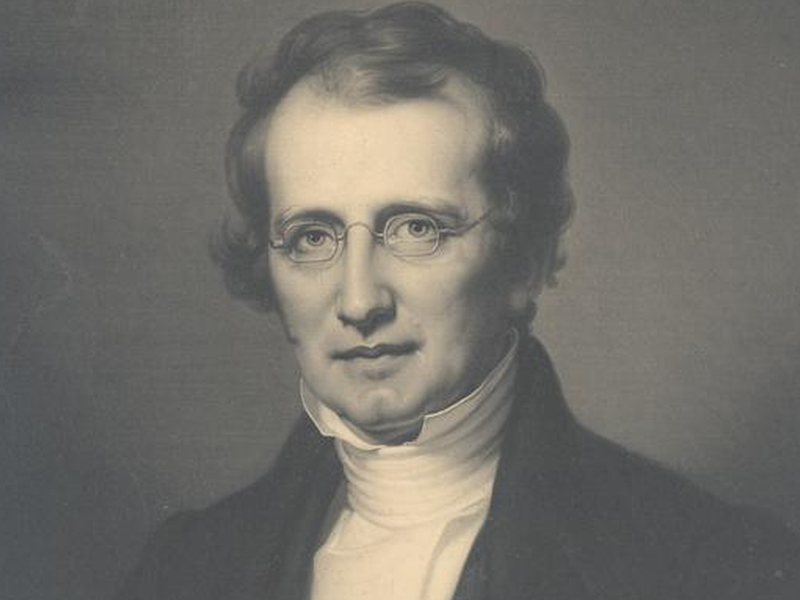
Charles Hodge’s Deficient Idea of the Church

In Charles Hodge’s 1853 article, “Idea of the Church,” his stated aim is to analyze the idea of the Church proposed in the Apostles’ Creed, in which, “the Church is declared to be “the Communion of the Saints.” He writes: The conception of the Church as the communion of saints…

by Mark HorneJune 5, 2003

Showing page 231 of 309

See all
See all
Literature

Seneca’s failure

Wallace again on Timon of Athens . Wallace argues that Shakespeare has written a play to explore Seneca’s society of benefits and gratitude, and shows that the classical model of social order is impossible: “the cast would appear to have been designed to test the Senecan hypothesis about the nature…

November 1, 2007
Philosophy

Elizabethan Seneca

Wallace again on Seneca in Shakespeare: “The first separat e publication of De Benficiis in an English translation was Nicholas Haward’s The Line of Liberalitie in 1569, which included only the first three books, but William Baldwin’s popular Treatise of Morall Philosophie had appeared in 1547 and contained one chapter…

November 1, 2007
Literature

Senecan Shakespeare

In a 1986 article in Modern Philology , John Wallace argues that Timon of Athens is “Shakespeare’s Senecan Study,” reflecting on the issues raised by Seneca’s de Beneficiis : “Shakespeare must have been thinking of Seneca, but a safer argument could have been constructed on the premise that Shakespeare was…

November 1, 2007
Literature

Roman trilogy

Paul Cantor describes three of Shakespeare’s Roman plays as a trilogy, moving from the Republic ( Coriolanus ) to the early empire ( Julius Caesar ) to the decadence of Octavian ( Antony and Cleopatra ). Together they form “a kind of historical trilogy, dramatizing the rise and fall of…

November 1, 2007

Fat, Body Parts, Liver Lobes

In her Leviticus as Literature , the late Mary Douglas offers some interesting possibilities for interpreting the prohibition of eating fat and for the arrangement of animal portions on the altar. Her interpretation is guided by her recognition of analogies between Sinai, the tabernacle, and the body, both of the…

November 1, 2007

Showing page 1612 of 2212

Browse by Category

In Medias Res

Your weekly digest for all things Theopolis.

Donate

Theopolis is nearly 100% donor-supported. Consider joining us on our mission.