
Theopolis Logo

Writing

Explore our collection of theological essays, biblical studies, and reflections on faith and culture.

See all
2001_a_space_odyssey_1-970x545
Biblical Horizons

2001: A Space Odyssey

In the November 1993 issue of Open Book Peter Leithart commented briefly on gnosticism. The film 2001 is a great specimen of gnosticism, and is worth viewing as a Sunday School project for an adult class. The author of the basic story was Arthur C. Clarke, an old-school science fiction…

by James B. JordanJanuary 6, 1994
alfred-hitchcock
Biblical Horizons

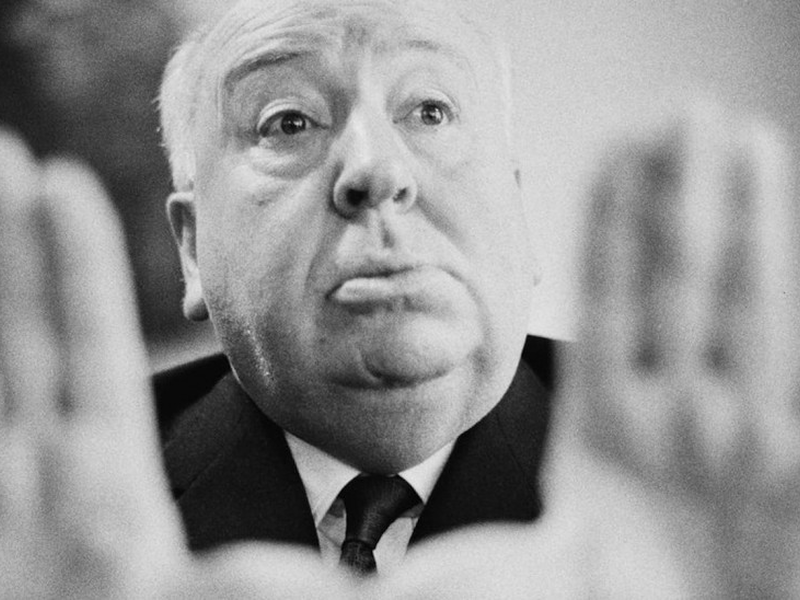
Two Films by Alfred Hitchcock

Alfred Hitchcock’s earlier movies display a strongly moral, even Christian, point of view, and certainly can be enjoyed by Christian viewers. His later works, such as Psycho , The Birds , and his television series, are not as clearly moral in tone. In these later efforts, Hitchcock brought humorous or…

by James B. JordanJanuary 6, 1994

david-weber-fwuo_zluhnw-unsplash
Leviticus

Cult and Communication

“What art thou, thou idol ceremony?” asked Henry V during his midnight rounds of the English camp near Agincourt. His answer was that ceremony was both nothing and everything. It was nothing in the sense that it offered no guarantee that the king would be fit for office. Contrary to…

by Peter LeithartDecember 20, 1993
screenshot-2023-07-27-at-10-25-35-am
Biblical Studies

Which Sacred Writings?

You, however, continue in the things you have learned and become convinced of, knowing from whom you have learned them; and that from childhood you have known the sacred writings which are able to give you the wisdom that leads to salvation through faith which is in Christ Jesus. All…

by Peter LeithartDecember 20, 1993
daniel-day-media-bzkf1nk-vpq-unsplash
Biblical Horizons

The Production of the New Testament Canon: A Revisionist Suggestion

My research has led me to the conviction that there are three major periods of Biblical history, which lead to a fourth. These are the Ages of the Father, the Word, and the Spirit. The First Age, that of the Father, is recorded in the book of Genesis. It focuses…

by James B. JordanDecember 6, 1993
Exodus

Egypt in Biblical History

Both Bible history and the current consensus chronology of the ancient world are tied up intimately with Egyptian history and chronology. Thus, as we broaden Biblical Chronology beyond the matter of adding up numbers and try to integrate Biblical chronology with the ancient world, the place to start would seem…

by James B. JordanDecember 6, 1993

Showing page 282 of 309

See all
See all
Literature

Seneca’s failure

Wallace again on Timon of Athens . Wallace argues that Shakespeare has written a play to explore Seneca’s society of benefits and gratitude, and shows that the classical model of social order is impossible: “the cast would appear to have been designed to test the Senecan hypothesis about the nature…

November 1, 2007
Philosophy

Elizabethan Seneca

Wallace again on Seneca in Shakespeare: “The first separat e publication of De Benficiis in an English translation was Nicholas Haward’s The Line of Liberalitie in 1569, which included only the first three books, but William Baldwin’s popular Treatise of Morall Philosophie had appeared in 1547 and contained one chapter…

November 1, 2007
Literature

Senecan Shakespeare

In a 1986 article in Modern Philology , John Wallace argues that Timon of Athens is “Shakespeare’s Senecan Study,” reflecting on the issues raised by Seneca’s de Beneficiis : “Shakespeare must have been thinking of Seneca, but a safer argument could have been constructed on the premise that Shakespeare was…

November 1, 2007
Literature

Roman trilogy

Paul Cantor describes three of Shakespeare’s Roman plays as a trilogy, moving from the Republic ( Coriolanus ) to the early empire ( Julius Caesar ) to the decadence of Octavian ( Antony and Cleopatra ). Together they form “a kind of historical trilogy, dramatizing the rise and fall of…

November 1, 2007

Fat, Body Parts, Liver Lobes

In her Leviticus as Literature , the late Mary Douglas offers some interesting possibilities for interpreting the prohibition of eating fat and for the arrangement of animal portions on the altar. Her interpretation is guided by her recognition of analogies between Sinai, the tabernacle, and the body, both of the…

November 1, 2007

Showing page 1612 of 2212

Browse by Category

In Medias Res

Your weekly digest for all things Theopolis.

Donate

Theopolis is nearly 100% donor-supported. Consider joining us on our mission.