Theopolis Logo

Writing

Explore our collection of theological essays, biblical studies, and reflections on faith and culture.

See all
joe-biden
American Politics

“Not our President”?

I think I want to respectfully disagree with Doug Wilson here . I understand him to be saying that if a candidate for elective office won that office through election fraud, that he would not really hold that office even if he was installed. I don’t have any comment to…

by Mark HorneDecember 2, 2020

jessica-delp-twxhbwesxwe-unsplash
Advent

Peace on Earth

When I was a young girl, each Christmas my grandmother would send us a sweet little ornament to hang on the tree. I still have many of those ornaments decorating my home. For a few years in a row, she selected ornaments with people from around the globe smiling or…

by Lindsey TollefsonDecember 1, 2020
screen-shot-2020-11-24-at-9-44-31-am
Manhood

The Paradox of Masculinity

I am a man. I came from a man. I have been around many men. I read books about men. Occasionally I have the opportunity to directly disciple men. And now that I have a son I have the great responsibility of teaching him to be a man. One may…

by Brian G DaigleNovember 24, 2020
unnamed-4
Architecture

Bodies and Architecture

It seems at least sane to believe that past societies experienced upheaval and disarray quite like what we are experiencing today. Perhaps we are witnessing something altogether new or greater in degree than what peoples witnessed in the past, but it doesn’t seem likely. History is filled with fissures and…

by Joe McCulleyNovember 17, 2020
kelsey-knight-udj2td3wksy-unsplash
Feast

The Church Potluck and the Biopolitical

“But for those of us to whom urban life is necessary and who cannot forego eating men, it is to our advantage to frequent the countries where one finds the most of them.” -Rousseau At All Saints Anglican in Honolulu, where I serve as rector, it has been our practice…

by Mark BriansNovember 10, 2020
screen-shot-2020-11-03-at-11-19-21-am
Biblical Studies

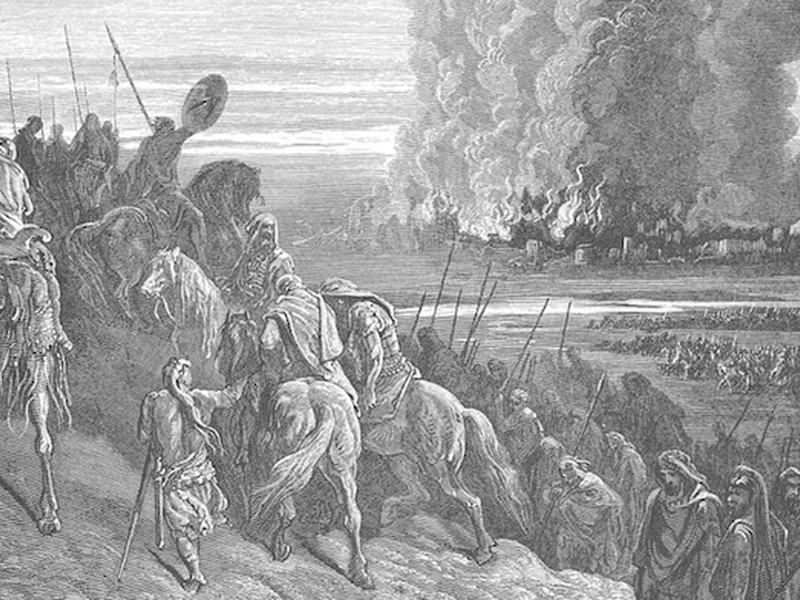
The Heel of Joshua

The Scriptures are replete with stories of deception. And often, strangely, it is those who we regard as righteous who are doing the deceiving. And, even more strangely, their deception is often rewarded, or even praised. Consider Jacob, Tamar, the Egyptian midwives, Rahab, to name just a few. Frustratingly for…

by Rhys LavertyNovember 3, 2020

Showing page 61 of 309

See all
See all
Theology

Abraham

Kant viewed Judaism as a narrow, particular, hostile political entity. The fact that God promised that He would bless the nations through Abraham seems not to have registered with Kant. Kant’s treatment of Judaism has central importance in his construction of modern, Enlightened religion. And in this context, recent work…

September 12, 2007
Philosophy

Kant’s eschatology

Postmodernism is rigorous disbelief in eschatology, in final judgment. And this arises from and is a reaction to Kant, who (as Hamann recognized) believed he had somehow arrived at the eschaton ahead of schedule and spend his life sending back reports.

September 12, 2007
Theology

Barth on post-Kantian Theology

Barth’s includes an extensive treatment of Kant in his history of 19th century Protestant theology. According to Barth, Kant represents the 18th-century’s coming to self-consciousness. He saw both the possibilities and the limits of the Enlightenment’s obsessions with reason. He announces that his age is the age of criticism, but…

September 12, 2007

Kant’s impossible atonement

Nicholas Wolterstorff analyzes the “conundrum” of atonement in Kant’s treatment of rational religion. We need to be forgiven for the evil we’ve done, and we are incapable of doing this ourselves. God has to do it. Yet, Kant assumes a radical form of autonomy, which makes our moral value depend…

September 11, 2007

Showing page 1631 of 2212

Browse by Category

In Medias Res

Your weekly digest for all things Theopolis.

Donate

Theopolis is nearly 100% donor-supported. Consider joining us on our mission.