Theopolis Logo

Writing

Explore our collection of theological essays, biblical studies, and reflections on faith and culture.

See all
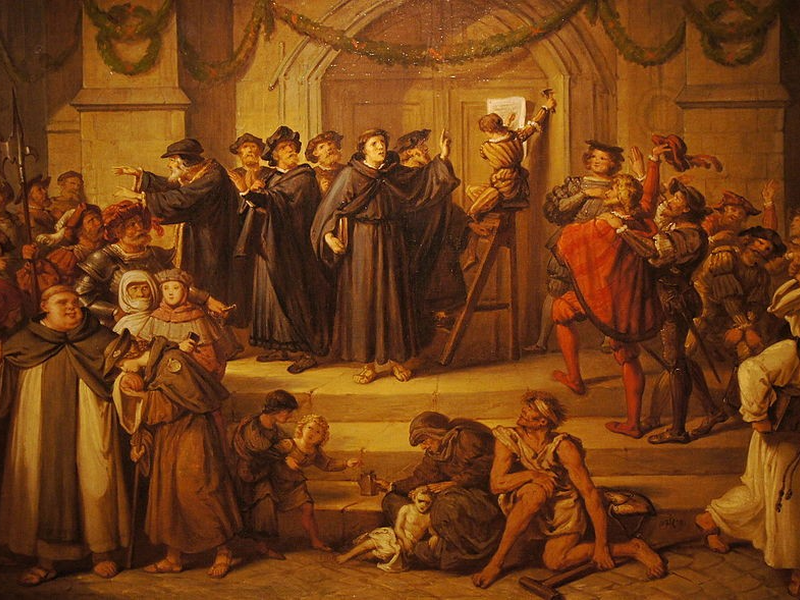
der_anschlag_von_luthers_95_thesen-1024x589
Church Calendar

Five Misconceptions of Reformation Day

For many people the date October 31 is significant not only for being the Eve of All Saints (All Hallows Eve, Halloween) but as the day in 1517 when Martin Luther nailed his 95 theses to the door of the Castle Church in Wittenburg. These theses were a list of…

by Timothy LeCroyOctober 31, 2017

sacre-bleu-r__kixb0i5m-unsplash
Church Calendar

Concerning Halloween

It has become routine in October for some Christian schools to send out letters warning parents about the evils of Halloween, and it has become equally routine for me to be asked questions about this matter. "Halloween" is simply a contraction for All Hallows’ Eve. The word "hallow" means "saint,"…

by James B. JordanOctober 26, 2017
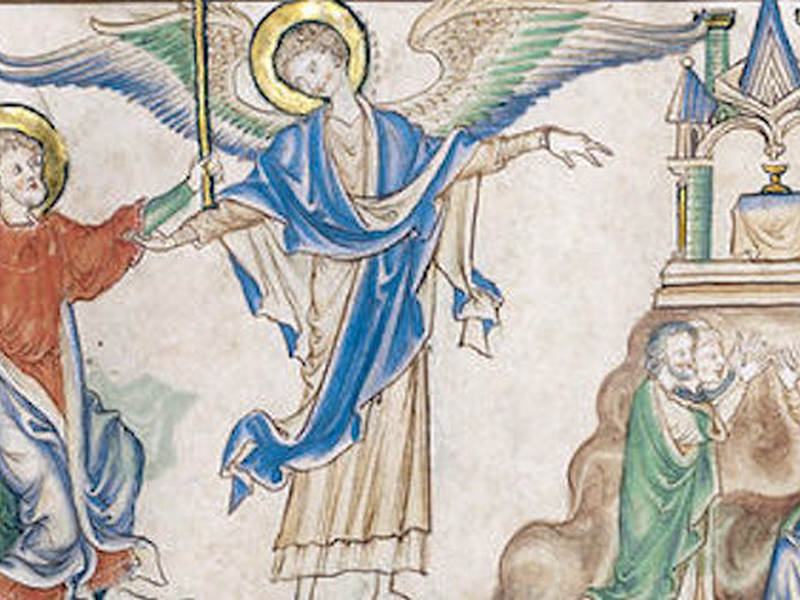
revelation-john-with-rod
Revelation

Preaching, An Art of Division

The following is an excerpt from Peter Leithart's forthcoming two-volume commentary on Revelation (T&T Clark). Y ou must prophesy again concerning many peoples and nations and tongues and kings,” a voice tells John (Rev. 10:11). Then someone gives him a “reed like a rod” and instructs him to measure (11:1).…

by Peter LeithartOctober 24, 2017
josiah-death

Back To Egypt

Josiah is an ideal Davidic king in many ways. He not only “did right,” but he “walked in the ways of his father David” and “did not turn aside to the right or to the left” (2 Chronicles 34:2). At the age of 16, he began to seek Yahweh, and…

by Peter LeithartOctober 19, 2017
augustine
Augustine

Augustine and the Music of Time

One of the best discussions of Augustine’s views on time comes from Jeremy Begbie’s Theology, Music, and Time (ch. 3). Following Paul Ricoeur, Begbie claims that Augustine’s distentio “is conceived as the three-fold present, and the threefold present as distentio . The distentio consists in the non-coincidence of the mind’s…

by Peter LeithartOctober 17, 2017
img_1043
How to Worship

The Psalter Should be Woven into the Fabric of Worship

This has always been the position of the Christian Church, and from an historical perspective the present situation in evangelicalism is appalling. The early liturgies of the Church, which are still used in Episcopal and Lutheran worship, are laced with psalm phrases. The early hymns, such as the Te Deum…

by James B. JordanOctober 12, 2017

Showing page 104 of 309

See all
See all

Ideology of the Picturesque

In The Historical Austen , William Galperin notes that Austen understood that certain kinds of realistic art or aesthetics could naturalize and “realize” what is really only an ideological construct. And he notes the somewhat surprising political ramifications of such aesthetic theories. He points to the theory of the picturesque,…

August 11, 2007

Root of bitterness

Watch that no root of bitterness grow up, Hebrews 12:15 warns. What’s a root of bitterness? Sounds like someone who’s bitter in the church. But Deuteronomy 29:18 uses a similar phrase to describe those who turn aside from Yahweh to serve other gods. This fits the context of Hebrews very…

August 9, 2007

Cursed joylessness

Yahweh curses Israel for breaking covenant. More specifically, Israel will become a sign and wonder to the nations “because you did not serve Yahweh your God with joy and a glad heart, for the abundance of all things” (Deuteronomy 28:47). What satisfies God is not just obedience, but joyful obedience.

August 9, 2007
Literature

Austen and the Stuarts

In her history of England, written at 15, Austen declares her favor toward the Stuart dynasty. She writes comically, but beneath the fun she is in earnest. Irene Collins notes that her mother, Cassandra Leigh “liked to remember that her ancestor Thomas Leigh had received a baronetcy for welcoming Charles…

August 7, 2007
Literature

Jane Austen and the Presbyterians

Austen was a life-long Anglican, born to a C of E clergyman, with many C of E ministers in her extended family and ancestry and circle of acquaintances. Irene Collins notes, “Her maternal grandfather and her great uncle had been clergymen; so were her godfather, one of her uncles, two…

August 7, 2007
Literature

Christian politeness

Vicesimus Knox (1752 - 1821) - English minister, essayist, and campaigner for the end of war - was educated at St. John’s Oxford, where George Austen (1731-1805), Jane’s father, was a student and tutor in classics, and Knox later became Headmaster of Tonbridge School, which George Austen had attended as…

August 7, 2007

Showing page 1650 of 2212

Browse by Category

In Medias Res

Your weekly digest for all things Theopolis.

Donate

Theopolis is nearly 100% donor-supported. Consider joining us on our mission.