Theopolis Logo

Writing

Explore our collection of theological essays, biblical studies, and reflections on faith and culture.

See all
rembrandt-main
Art

The Second Word V: On Images and Art, Part 3

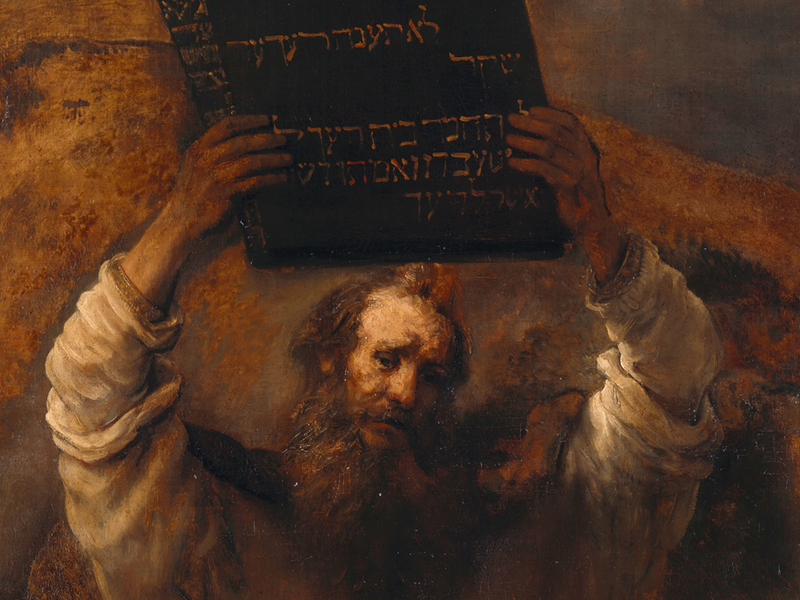
The Failure of the Church Yet a third factor played an important role in this historical development, in addition to the imperial adoption of icons and the rise of the icons of the holy man. Brown writes: "The great Christian basilicas of the previous centuries tended to stand empty, except…

by James B. JordanSeptember 4, 1998

screenshot-2023-09-11-at-11-34-45-am
Biblical Horizons

Patriarchal Dominion

The three large patriarchal narratives of Genesis concern the three aspects of the cosmos: matter, space, and time. Over these three is man given dominion. Lucifer was originally appointed to train man in this dominion, but he chose to lead man into rebellion instead. Thus, the Angel of Yahweh replaced…

by James B. JordanAugust 4, 1998
trnava-university-beeyeib-am8-unsplash
Biblical Horizons

The Case Against Western Civilization, Part 6

Part 6: Living in a Dying World (continued) The "Trivium" (continued) The five stages of education are simply the five stages of the covenant as God administers it in human life and history, and in the liturgy of covenant renewal: First, God announces Himself. "I am Yahweh Your God." He…

by James B. JordanAugust 4, 1998
screen-shot-2022-05-12-at-12-07-23-pm
Biblical Studies

Re-creation in the Ascension Offering

The following essay is tentative and exploratory, offered for your consideration. It seems to me that the ritual of the Ascension Offering (incorrectly translated as Burnt Offering) of Leviticus 1 is a symbolic recapitulation of Genesis 1, which thereby portrays the sacrificial ritual as way of moving from a fallen…

by James B. JordanJuly 4, 1998
Biblical Horizons

The Framework Hypothesis: A Gnostic Heresy

Just as the vast majority of evangelical Christians in America today are Arminian and Baptist, so the vast majority do not believe in a creation around 4000 BC. I don’t expect any of these three situations to change anytime soon. Powerful presuppositions are at work in all three instances, along…

by James B. JordanJuly 4, 1998
picture-mosaic-cathedral-jesus-christ-cefalu-italy-copy
Art

The Second Word V: On Images and Art, Part 2

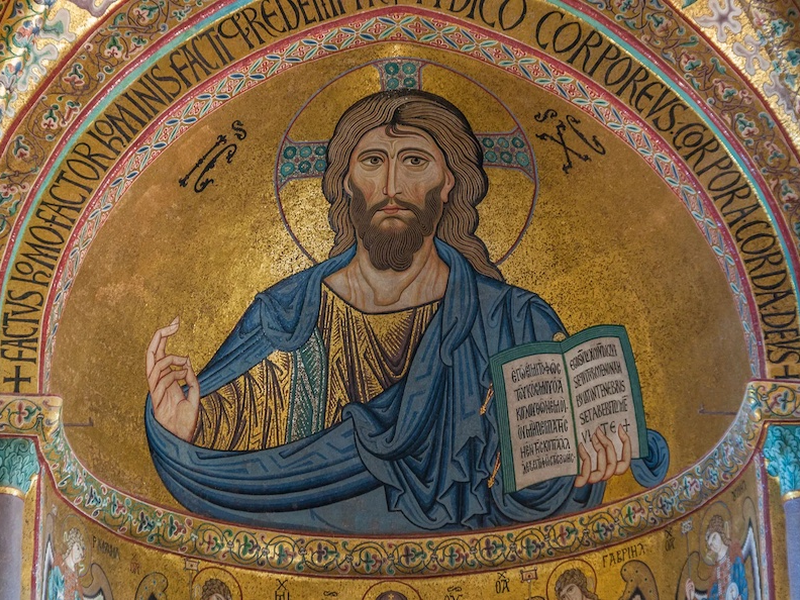
The Iconoclastic Controversy Continuing Pagan Influence How did images creep in? To begin with, there was in the post-Constantinian Church a concerted effort on the part of the semi-pagans to interpret Christianity in essentially pantheistic terms. The heretics put God and man on a continuum of "being," so that God…

by James B. JordanJuly 4, 1998

Showing page 248 of 309

See all
See all

Ideology of the Picturesque

In The Historical Austen , William Galperin notes that Austen understood that certain kinds of realistic art or aesthetics could naturalize and “realize” what is really only an ideological construct. And he notes the somewhat surprising political ramifications of such aesthetic theories. He points to the theory of the picturesque,…

August 11, 2007

Root of bitterness

Watch that no root of bitterness grow up, Hebrews 12:15 warns. What’s a root of bitterness? Sounds like someone who’s bitter in the church. But Deuteronomy 29:18 uses a similar phrase to describe those who turn aside from Yahweh to serve other gods. This fits the context of Hebrews very…

August 9, 2007

Cursed joylessness

Yahweh curses Israel for breaking covenant. More specifically, Israel will become a sign and wonder to the nations “because you did not serve Yahweh your God with joy and a glad heart, for the abundance of all things” (Deuteronomy 28:47). What satisfies God is not just obedience, but joyful obedience.

August 9, 2007
Literature

Austen and the Stuarts

In her history of England, written at 15, Austen declares her favor toward the Stuart dynasty. She writes comically, but beneath the fun she is in earnest. Irene Collins notes that her mother, Cassandra Leigh “liked to remember that her ancestor Thomas Leigh had received a baronetcy for welcoming Charles…

August 7, 2007
Literature

Jane Austen and the Presbyterians

Austen was a life-long Anglican, born to a C of E clergyman, with many C of E ministers in her extended family and ancestry and circle of acquaintances. Irene Collins notes, “Her maternal grandfather and her great uncle had been clergymen; so were her godfather, one of her uncles, two…

August 7, 2007
Literature

Christian politeness

Vicesimus Knox (1752 - 1821) - English minister, essayist, and campaigner for the end of war - was educated at St. John’s Oxford, where George Austen (1731-1805), Jane’s father, was a student and tutor in classics, and Knox later became Headmaster of Tonbridge School, which George Austen had attended as…

August 7, 2007

Showing page 1650 of 2212

Browse by Category

In Medias Res

Your weekly digest for all things Theopolis.

Donate

Theopolis is nearly 100% donor-supported. Consider joining us on our mission.