Theopolis Logo

Writing

Explore our collection of theological essays, biblical studies, and reflections on faith and culture.

See all
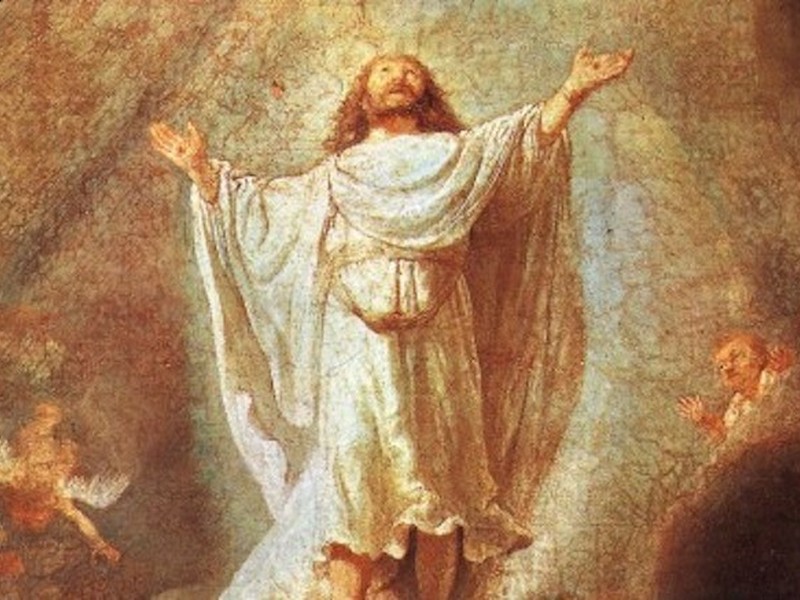
ascension-rembrandt
Ascension

Ascension and Eucharist

It’s a simple point, obviously biblical and creedal: Jesus of Nazareth ascended into heaven as the God-man, and He remains the God-man in all his specific particularity from now to the end. He is Jesus the Christ, the same yesterday, today, and forever. Duh! But Douglas Farrow shows in his…

by Peter LeithartMay 27, 2013

markus-winkler-aid-xyrtlec-unsplash
Theopolis News

Register for Trinity Term Class

You can now register for the very first Trinity House intensive class, "How to Read the Bible," taught by James Jordan and Peter Leithart. There will be a kick-off welcome for students on the evening of Sunday, August 25, and the class will be held at Trinity Presbyterian Church ,…

by Peter LeithartMay 22, 2013
chris-bair-ndczc5739ck-unsplash
Deuteronomy

Deuteronomy as Narrative-Law

This series of essays will address the food laws in Deuteronomy 14:1-21. To some, this may seem like a work of supererogation. After all, why should a Christian be interested in outdated “laws” from the book of Deuteronomy? I hope to show that meditation on this portion of Scripture is…

by Ralph Allan SmithMay 20, 2013
venice-la-distruzione-del-tempio-di-gerusalemme-francesco-hayez-gallerie-accademia-venice
Isaiah

Apocalyptic Patience

This essay was first published in 2011 in Credenda/Agenda . Isaiah 24 begins the section of Isaiah known as the “little apocalypse.” It’s a good name for this chapter. It’s a text of terror. The world is coming apart at the seams. The earth is emptied; and not only that,…

by Peter LeithartMay 15, 2013
sixteen-miles-out-al48tflf4e8-unsplash
Biblical Studies

Anti Anti-Supercessionism

This article was first published in 2010 in Credenda/Agenda . In recent years, mainstream theology has begun to recognize the disaster that followed from the Marcionism of classical liberalism. R. Kendall Soulen is a leading figure in efforts to restore the importance of the Old Testament to Christian theology. In…

by Peter LeithartMay 13, 2013
skyler-gerald-akljfvj5ym4-unsplash
Deuteronomy

Law and History: How to Read the Law of Moses

This is the last in a series of studies on Deuteronomy 22:30-23:8. In this series, I have offered an interpretation of Deuteronomy 22:30-23:8 which suggests that a simple surface reading of the text does not do justice to Moses’ or God’s intention, that the larger historical and legal context in…

by Ralph Allan SmithMay 8, 2013

Showing page 194 of 309

See all
See all
History

Chinese and Hebraic thought

In his fascinating Faith of Our Fathers , Chan Kei Thong points to many biblical images embedded in Chinese characters. His argument could be made even stronger by looking at Hebrew terminology. For instance, he says of the character “zui,” which means sin, that “The top part is . .…

May 11, 2007
History

Chinese Creation

At the beginning of the Great Sacrifice performed by the Chinese emperor for centuries, singers sang the song of creation, addressed to the “Sovereign Lord” known as “Shang Di”: “Of old in the beginning, there was the great chaos, without form and dark. The five planets had not begun to…

May 11, 2007

Perichoretic imagination

One of the differences between those associated with “Federal Vision” theology and those opposed to it is a difference of theological imagination. The opponents operate with a theological imagination that distinguishes and clarifies; ontology is distinguished from relationality, nature from supernature, ecclesiology from soteriology. On the other side are theologians…

May 11, 2007
History

Bos and Bobos

According to Adolf Loos, a turn of the 20th-century Viennese architect and critic, modern style combines beauty and practicality. Both are necessary: “By beautiful, what we mean is that something has achieved fullness, completion. But no useless, impractical object can really be described as ‘full’ or ‘complete.’” One can imagine…

May 8, 2007

Kiuchi on Leviticus

Some initial observations on Nobuyoshi Kiuchi’s recent commentary on Leviticus in the Apollos series from IVP. 1) Kiuchi intriguingly translates hata and hatta’t , traditionally rendered in terms of “sin” or “purification” in terms of “hiding”: ” hata and hatta’t mean ‘to hide oneself’ and the condition of ‘hiding oneself,’…

May 8, 2007

The Spoken Son

A student points out that Hebrews 1-2:4 contains seven quotations from the Old Testament. Through these seven words, God speaks His Son as the new creation.

May 7, 2007

Showing page 1682 of 2212

Browse by Category

In Medias Res

Your weekly digest for all things Theopolis.

Donate

Theopolis is nearly 100% donor-supported. Consider joining us on our mission.









