Theopolis Logo

Writing

Explore our collection of theological essays, biblical studies, and reflections on faith and culture.

See all
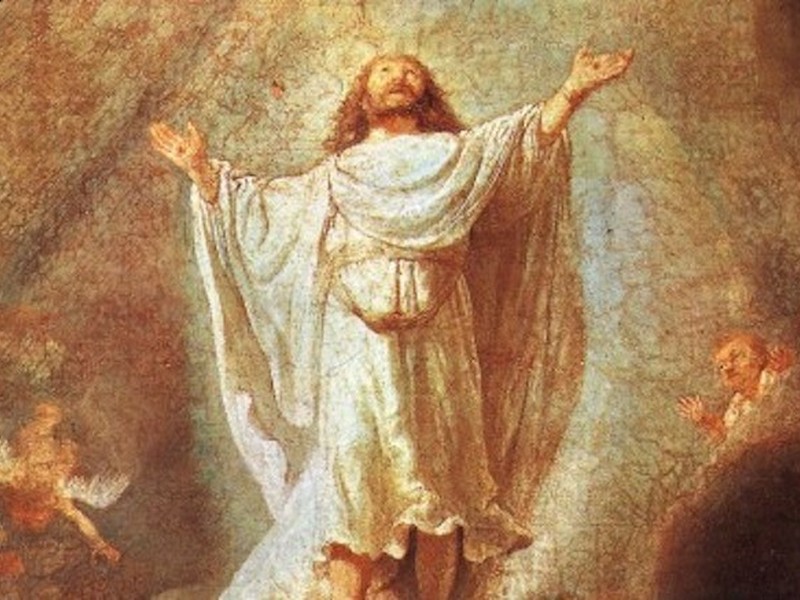
ascension-rembrandt
Ascension

Ascension and Eucharist

It’s a simple point, obviously biblical and creedal: Jesus of Nazareth ascended into heaven as the God-man, and He remains the God-man in all his specific particularity from now to the end. He is Jesus the Christ, the same yesterday, today, and forever. Duh! But Douglas Farrow shows in his…

by Peter LeithartMay 27, 2013

markus-winkler-aid-xyrtlec-unsplash
Theopolis News

Register for Trinity Term Class

You can now register for the very first Trinity House intensive class, "How to Read the Bible," taught by James Jordan and Peter Leithart. There will be a kick-off welcome for students on the evening of Sunday, August 25, and the class will be held at Trinity Presbyterian Church ,…

by Peter LeithartMay 22, 2013
chris-bair-ndczc5739ck-unsplash
Deuteronomy

Deuteronomy as Narrative-Law

This series of essays will address the food laws in Deuteronomy 14:1-21. To some, this may seem like a work of supererogation. After all, why should a Christian be interested in outdated “laws” from the book of Deuteronomy? I hope to show that meditation on this portion of Scripture is…

by Ralph Allan SmithMay 20, 2013
venice-la-distruzione-del-tempio-di-gerusalemme-francesco-hayez-gallerie-accademia-venice
Isaiah

Apocalyptic Patience

This essay was first published in 2011 in Credenda/Agenda . Isaiah 24 begins the section of Isaiah known as the “little apocalypse.” It’s a good name for this chapter. It’s a text of terror. The world is coming apart at the seams. The earth is emptied; and not only that,…

by Peter LeithartMay 15, 2013
sixteen-miles-out-al48tflf4e8-unsplash
Biblical Studies

Anti Anti-Supercessionism

This article was first published in 2010 in Credenda/Agenda . In recent years, mainstream theology has begun to recognize the disaster that followed from the Marcionism of classical liberalism. R. Kendall Soulen is a leading figure in efforts to restore the importance of the Old Testament to Christian theology. In…

by Peter LeithartMay 13, 2013
skyler-gerald-akljfvj5ym4-unsplash
Deuteronomy

Law and History: How to Read the Law of Moses

This is the last in a series of studies on Deuteronomy 22:30-23:8. In this series, I have offered an interpretation of Deuteronomy 22:30-23:8 which suggests that a simple surface reading of the text does not do justice to Moses’ or God’s intention, that the larger historical and legal context in…

by Ralph Allan SmithMay 8, 2013

Showing page 194 of 309

See all
See all
History

Hospitality

For us, hospitality usually means entertaining. It means having our friends and neighbors and church members into the home. Sometimes, in our world, it involves jockeying for position and power by showing hospitality to the right kinds of people. That’s how the rich and famous create and sustain the aura…

March 24, 2007

Obscene dancing

The London Times fulminates: “It is quite sufficient to cast one’s eyes on the voluptuous intertwining of the limbs, and close compressure of the bodies, in this dance, to see that it is far indeed removed from the modest reserve which has hitherto been considered distinctive of English females. So…

March 22, 2007

Christ and Horrors

Marilyn McCord Adams ( Christ and Horrors , Cambridge, 2006) proposes to demonstrate the coherence of Christology not by starting with sin and explaining how Christ has dealt with sin, but by starting with “horrors” and asking, What must Christ be and do if He is going to rescue us…

March 22, 2007
History

The Alexandrian West

In her book on medieval Bible scholarship, Beryl Smalley notes that “Alexandrian exegesis penetrated to the Latin middle ages, when knowledge of Greek had declined, by two main channels: indirectly through the Latin Fathers and directly through translations of Origen’s works. Rufinus’ translations of some of his homilies were used…

March 22, 2007

Allegory and empire

Philo thought of allegory as a means for universalizing Jewish history and law, analogous to the way the Roman world had fused all peoples into a single empire. Literalists are “citizens of a petty state,” while allegorists are “on the roll of citizens of a greater country, namely, this whole…

March 21, 2007

Androgynous numbers

Why did God create the world in six days? Philo said that 6 is the perfect number, both the sum and the product of its factors, which happen to be the first three integers (1, 2, 3). But there’s more: “We may say that [6] is in its nature both…

March 21, 2007

Showing page 1703 of 2212

Browse by Category

In Medias Res

Your weekly digest for all things Theopolis.

Donate

Theopolis is nearly 100% donor-supported. Consider joining us on our mission.









