Theopolis Logo

Writing

Explore our collection of theological essays, biblical studies, and reflections on faith and culture.

See all
ryan-loughlin-a8cewc-qgq-unsplash
Baptism

Baptism Unto Priesthood: Historical Notes

In a recent article in Biblical Horizons , I argued that the imagery of James 1:21 alludes to baptism, and particularly to baptism as an ordination and incorporation into the holy priesthood. This understanding of baptism as ordination to priesthood is not, I have since discovered, original, but in fact…

by Peter LeithartMarch 27, 1995
702827ansdl
Biblical Studies

The Counsel of Peace

He will be a priest on his throne, and the counsel of peace will be between the two of them (Zechariah 6:13b). A prime difficulty in the interpretation of this verse is the antecedent of the pronoun "them." A number of alternatives have been offered. Some suggest that the "two"…

by Peter LeithartMarch 27, 1995

james-coleman-heksmrnfajk-unsplash
How to Worship

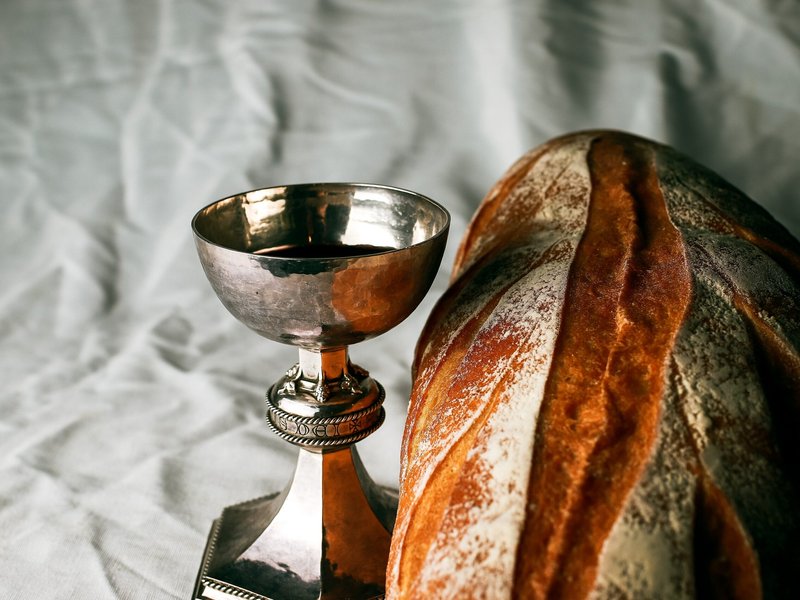
Why Sacraments?

Like certain kinds of music, the unchanging rhythm of Aquinas's Summa gets into your bones. Read a few sections and it begins to run through your head. You start drumming your fingers, humming, swaying gently to the rhythm of Videtur-Sed Contra-Responsio, Videtur-Sed Contra-Responsio, “It seems-On the contrary-I answer.” The only…

by Peter LeithartMarch 14, 1995
skyler-gerald-akljfvj5ym4-unsplash
Revelation

The Hymn of the Revelation

The Book of Revelation is a gold mine of liturgical information. The various hymns and exclamations in Revelation have always been used in Christian worship. As I have been studying Revelation this year, it occurred to me that make a complete hymn out of the various hymns in the book.…

by James B. JordanMarch 7, 1995
ben-white-w8qqn1pmqh0-unsplash
Revelation

The Angelic Triads in Revelation

In the book of Revelation we find a triad of Strong Angels, and another triad of Other Angels. The purpose of this essay is to explore the Biblical background of these two sets, and thus fill out their meaning. The first triad of angels we encounter in the Bible comes…

by James B. JordanFebruary 7, 1995
aaron-burden-h8s0pf2rcqs-unsplash
Revelation

The Angels of Revelation (continued)

In Revelation, the term aggelos means messenger, of course, but with a special emphasis on messenger as covenant administrator. This is immediately obvious from the fact that the angels are constantly acting to enforce the covenant one way or another: sealing people, bringing judgment, calling for repentance, etc. They are…

by James B. JordanFebruary 7, 1995

Showing page 272 of 309

See all
See all

You shall know them by their fear

Stott notes that 1 John 4:19 indicates that the church’s great characteristic is love, not fear. That is, it should be. Is it? Hardly. Read the next piece of direct mail you get from a Christian advocacy group. Look at the listings in a Christian book catalogue or bookstore. Analyze…

January 20, 2007

Fear and fear

Perfect love casts out fear, John says. But the Bible repeatedly exhorts us to fear God. There’s fear, then there’s fear. How do we tell the difference? The difference is in the direction our fear moves us. Adam feared God, and hid in the garden. Wrong fear drives us away…

January 20, 2007

Kantian modalism?

Post-Kantian thought cannot make room for undistorted revelation of God in history. History, creation, is necessarily a distorting medium. Is this just a form of modalism? Doesn’t this just create an unbridgeable modalist gap between God-in-Himself and God-as-revealed? Isn’t this just saying that God is not what He appears to…

January 20, 2007

God’s body

Time was when you could despise the body and love God, or despise God and love the body. One could be an ascetic or a hedonist. Then God got Himself a body. Despite efforts to retain this choice (Nietzsche, flagellants), the incarnation made the ancient choice of ascetic or hedonist…

January 19, 2007

Dionysus and the crucified

Shaftesbury recognized the stark difference between his own rational Deity and the vulgar bodily and crucifiable Christ. Francis Hutcheson, building on Shaftesbury, tried to conflate the two. Hutcheson was a Christian, a Presbyterian professor of moral theology. Shaftesbury loathed Christ. But which of the two was the better friend of…

January 19, 2007

Showing page 1732 of 2212

Browse by Category

In Medias Res

Your weekly digest for all things Theopolis.

Donate

Theopolis is nearly 100% donor-supported. Consider joining us on our mission.