Theopolis Logo

Writing

Explore our collection of theological essays, biblical studies, and reflections on faith and culture.

See all
timothy-eberly-djj49s6ud2o-unsplash
Leviticus

Yahweh's War Against Death

Stories, frankly all human stories are practically always about one thing aren’t they? Death. The inevitability of death. . . . “There is no such thing as a natural death. Nothing that happens to man is ever natural, since his presence calls the whole world into question. All men must…

by Brian MarrApril 14, 2014

screenshot-2023-09-21-at-4-52-42-pm
Matthew

Inescapable Blood

Matthew is organized around 5 discourses, which trace out the history of Jesus as a recapitulation of the history of God and Israel in the Old Testament. Jesus first speaks as a new Moses, instructing His disciples on a mountain about a righteousness that surpasses the righteousness of the scribes…

by Peter LeithartApril 10, 2014
screen-shot-2022-05-12-at-12-07-23-pm
Angels

Did Angels Marry People? The Sin of Cultural Intermarriage

The fall of the Sethites in Genesis 6 is the third fall of mankind, or the third degree of Adam’s original fall. Adam sinned in a Garden against his Father by stealing something he was supposed to wait to obtain. (“Every tree shall be food for you” Genesis 1:29.) Cain…

by James B. JordanApril 7, 2014
sixteen-miles-out-al48tflf4e8-unsplash
Angels

Did Angels Marry People? The Sons of God in Genesis 6

The recent fantasy film Noah and a slightly related blog comment by my friend Douglas Wilson have stirred up again the question of whether the “sons of God” in Genesis 6 who married the “daughters of men” were fallen angels or the priestly line of Seth. Doug argues for angels,…

by James B. JordanApril 4, 2014
kiwihug-l4gw27xzn1i-unsplash
Angels

The Angels of Jude

The prophecy of Jude concerns apostasy. An illustration of apostasy and its consequences is found in verse 6, which the New American Standard Bible translates this way: "And angels who did not keep their own domain, but abandoned their proper abode, He has kept in eternal bonds under darkness for…

by James B. JordanApril 3, 2014
screenshot-2023-09-21-at-4-22-42-pm
Matthew

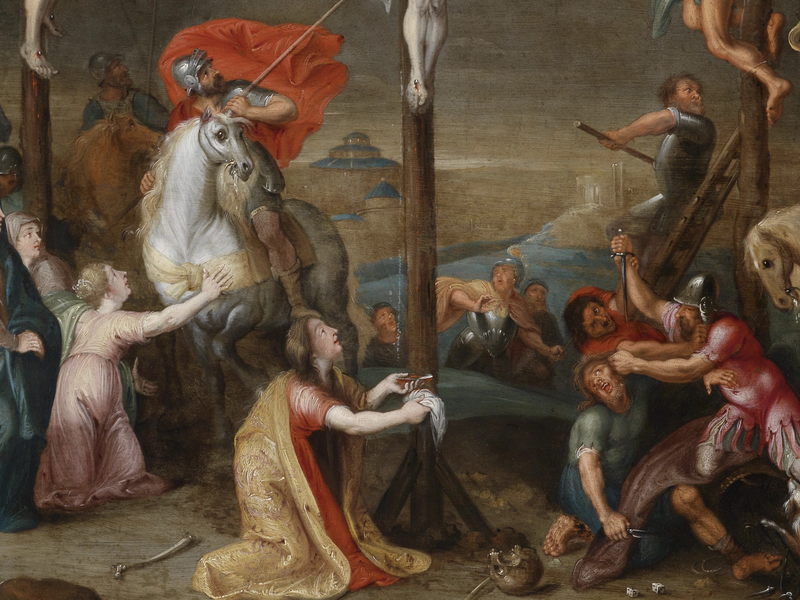
Women at the Cross

At His death, Jesus is surrounded by a Roman centurion and his cohort of Gentile solders. Matthew doesn't say that any disciples are there. But women are, and so is Joseph of Arimathea, identified as a “disciple” but, as John tells us, a “secret disciple for fear of the Jews,”…

by Peter LeithartMarch 31, 2014

Showing page 176 of 309

See all
See all
Literature

Living in fictions

In a discussion of King Lear , David Bevington suggests that Edgar saves his father at the cliffs of Dover by constructing a cosmology in which the gods are merciful and perform miracles: “Edgar stages his fiction in this particular way because he knows his father well enough to realize…

December 27, 2006
Literature

Tyranny of gratitude

Many of Shakespeare’s plays explore the moral and political consequences of ingratitude, but Shakespeare is also cognizant of the tyrannical uses to which the demand for gratitude may be put. Lear is certainly about ingratitude, the “marble-hearted fiend” that infects and distorts the monsters of ingratitude Goneril and Regan, as…

December 27, 2006
Theology

In praise of Pietism

Friedrich Oetinger was a leading German pietist intellectual and theologian, deeply interested in the science of his day. And critical of science and rationalist philosophy as well. Against thinkers who placed a primacy on reason, Oetinger argued that sheer logical clarity is insufficient “for living knowledge.” Living knowledge takes form…

December 26, 2006

Communion in humor

I tell a joke, and you get it. I include a veiled allusion to, say, Faust in a casual conversation; you catch it; and we exchange a mental wink. Humor provides a pathway into the hermeneutics of texts and communication. It also seems to provide a pathway into the sociology…

December 26, 2006

Keeping in mind

Gadamer notes the ambiguity of “keeping something in mind.” We sometimes hold something in our mental “gaze” in order to knock into it head on. We watch it carefully until we can grab it. But keeping in mind can also be a form of forgetfulness. We might also keep something…

December 26, 2006
History

Mysticism and culture

Gadamer notes that the concept of Bildung (culture) has its origins in medieval and baroque mysticism, and continues to carry a mystical connotation when it begins to be used of the cultivated humanness. Von Humboldt, for instance, says “when in our language we say Bildung, we mean something both higher…

December 26, 2006

Showing page 1747 of 2212

Browse by Category

In Medias Res

Your weekly digest for all things Theopolis.

Donate

Theopolis is nearly 100% donor-supported. Consider joining us on our mission.