Theopolis Logo

Writing

Explore our collection of theological essays, biblical studies, and reflections on faith and culture.

See all
lili-popper-lu15z1m_kfm-unsplash
John

Jesus is the Way to the Tree of Life

When Jesus says in the farewell discourse that his disciples know the way to where He is going, Thomas replies: “We do not know where you are going. How can we know the way?” Jesus answers Thomas, but He gives Thomas more than he asked : “I am the way,…

by Josh JensenMay 24, 2023

jordan-wozniak-xp_agmeea6s-unsplash-2
Luke

Beware of the Infection of Hypocrisy

Through the pandemic we learned a lot about infections, how to catch them, what’s contagious, how to protect yourself from getting the infection. I learned a lot of new terms, like “social distancing,” “ppe” (personal protective equipment), N95 masks, and so on. We’ve seen that people are willing to go…

by John CarpenterMay 16, 2023
noah
Biblical Theology

Noah: Man of the Soil

In Genesis 9:20, Noah is called “a man of the soil”. This phrase is a bit of a shock in the Hebrew; though it’s made up of two very common words - 'ish is “man” and 'adamah is “soil” or “ground” - these two words are never used together before…

by Donald LinnemeyerMay 9, 2023
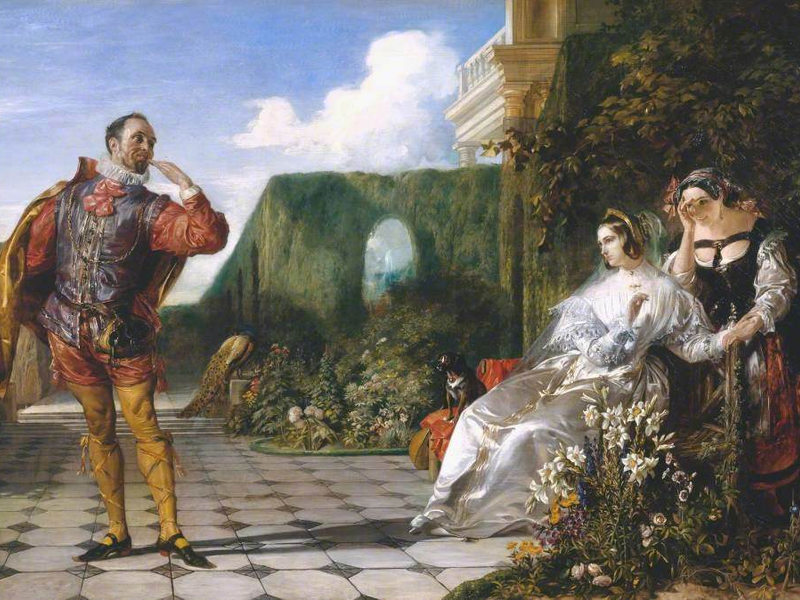
maclise-daniel-1806-1870-scene-from-twelfth-night-malvolio-and-the-countess
Literature

Twelfth Night

Harold Bloom’s discussion of Twelfth Night in his Shakespeare: The Invention of the Human is, as would be expected, insightful. It displays his deep love of poetry, and includes some truly eloquent descriptions of Orsino: “that sublimely outrageous lover of love” and “amiable erotic lunacy.” Bloom is worth reading just…

by Ralph Allan SmithMay 4, 2023
screen-shot-2023-05-02-at-1-14-25-pm
James

A Quadrigatic Reading on Marian Intercession

There have been times when Evangelicals, in an attempt to be clear about the errors of Rome and Constantinople concerning Mary, have been so denigrating of the mother of our Lord that they sounded more like cut and pasted lines from the Babylonian Talmud than they did disciples of Mary’s…

by Garrett SoucyMay 2, 2023
mike-l-8qr1ixi-rmu-unsplash-2
Theology

Awe and the Sensus Divinitatus

Awe is the phenomena experienced when one looks up and lights upon the height, majesty, and mystery of the California Redwoods. It appears the trees pierce heaven itself. Among these giant organisms are the Sequoia–while they are shorter in form, they reserve a width that spans an automobile. These trees…

by Charles JacobiApril 25, 2023

Showing page 31 of 309

See all
See all
History

Smokin’ like a Christian

English fairs in earlier centuries displayed wares and displays from all over the world. At one there was an animal described as “a noble creature, which much resembled a Wild Hairy man” whose main skill was to doff his hat and show “his respects to the Company, and smoaks a…

October 14, 2006
Literature

The Moral of Henry V

Much of the moral and political import of Shakespeare’s Henry V is left to the audience’s or reader’s judgment. Is Henry a “pig” or is he the mirror of Christian kings? Is his invasion of France fair or foul? Shakespeare doesn’t show his hand, or not much; and one is…

October 14, 2006
Literature

The climax of Coriolanus

George Barnam notes the careful structure of Act 5 of Shakespeare’s Coriolanus: “Shakespeare had used this scene structurally to build the tension toward the climactic moment when Volumnia should appeal to her son and prevail. Three appeals are made to Marcius, and Shakespeare’s presentation of them matches in structure the…

October 14, 2006
History

Sports and the sacred

A reader wrote to respond to my suggestion that high culture is “sacred” and pop culture “profane,” citing the example of sports. Here’s my response: A football game often is a quasi-religious experience, but I’m not sure we use the same language to describe it. If someone slashed da Vinci’s…

October 14, 2006
Literature

Desacralized drama

In their “cultural history” of English drama, Simon Shepherd and Peter Womack summarize the argument of Glynne Wickham concerning the divorce of stage and sacred: “The English stage - so the argument runs - was predominantly a religious one until Elizabethan Protestantism forced a separation between theatre and the central…

October 14, 2006
History

Civil war and criticism

As Marsden describes it, the growth of neoclassical literary sensibilities developed in part in reaction to the chaos and disorder of the English civil war - following in this regard the development of late 17th century political theory. Orderliness, definiteness, clarity became virtues, while ambiguity, double entendres, and inconclusiveness became…

October 13, 2006

Showing page 1777 of 2212

Browse by Category

In Medias Res

Your weekly digest for all things Theopolis.

Donate

Theopolis is nearly 100% donor-supported. Consider joining us on our mission.