Theopolis Logo

Writing

Explore our collection of theological essays, biblical studies, and reflections on faith and culture.

See all
laura-nyhuis-vg_b61t8efs-unsplash
Advent

5 Reasons I Don't Like Advent

First, I love my Christmas songs. This is how I think of it: the season of Advent gets in the way of singing what I want to sing. How can you not listen to Nat King Cole in December? Or Bing Crosby, Harry Connick Jr., and Amy Grant? Even though…

by Caleb SkogenDecember 16, 2021

johnny-cohen-oxoxqlawve0-unsplash
Covenant

Grandparenting and the Transcendent Summons

Introduction Imagine the stereotypical American grandparents. Once you have the outline, start filling in the details. What picture emerges? Maybe something like what Ogden Nash said, “When grandparents enter the door, discipline flies out the window.” Or maybe the oft-repeated assertion that it’s the grandparent’s job description “to spoil the…

by Jason CherryDecember 14, 2021
guillaume-de-germain-z_br8toccpe-unsplash
Deuteronomy

The Audacity of Lament

Hundreds of generations of ancient Israelites grew up as children of Abraham, inheritors of the covenant—the promises of God. These promises were more than nice bumper stickers or framed photos to cover empty space in their homes–these promises were at the heart of their very identity–individually and collectively. Genesis “I…

by Zach MccartneyDecember 9, 2021
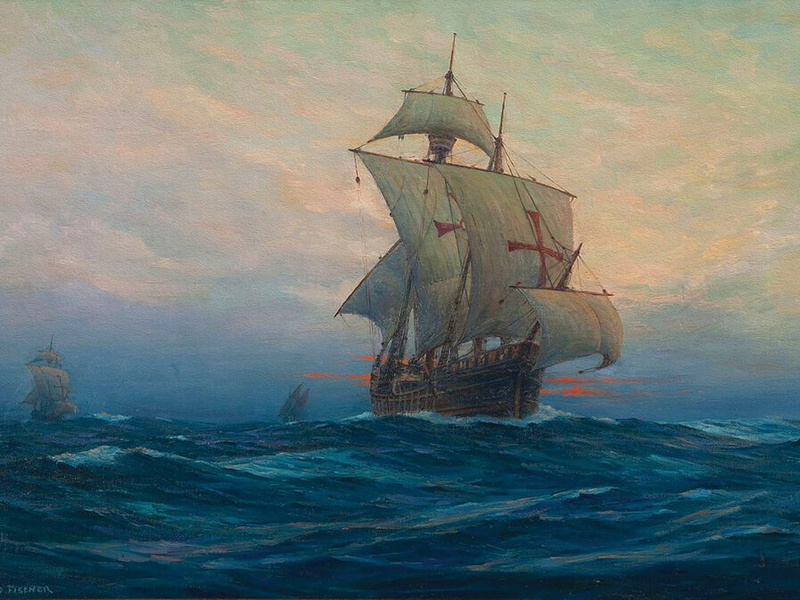
fischer-fleet-of-columbus-edit
Hermeneutics

Barren Worlds

Aliens and Sojourners When the question “Is there life on other planets?” is asked, even the best theologians can only reply, “The Bible doesn’t tell us.” Well, in truth, the Bible does tell us, but only if we are paying attention. …and there was not a man to till the…

by Mike BullDecember 7, 2021
vino-li-j4jjsfjkhpi-unsplash
John

Jesus’ Search for a Wife

John runs a theme throughout his gospel that bubbles under the surface—Jesus is searching for, and finding, a wife. John launches into the narrative proper with a statement of where he’s going. “On the third day there was a wedding” (John 2.1) is about as good an example of flash…

by Tim SuffieldNovember 30, 2021
jackson-david-cicbinoyb7u-unsplash

Touch

I have come to believe that a great many people are almost too weak to repent in any very open way. There must first be some level of healing. In some cases, including biblical ones, there is not even any evidence of faith on the part of the recipients of…

by Richard BledsoeNovember 23, 2021

Showing page 49 of 309

See all
See all
History

Smokin’ like a Christian

English fairs in earlier centuries displayed wares and displays from all over the world. At one there was an animal described as “a noble creature, which much resembled a Wild Hairy man” whose main skill was to doff his hat and show “his respects to the Company, and smoaks a…

October 14, 2006
Literature

The Moral of Henry V

Much of the moral and political import of Shakespeare’s Henry V is left to the audience’s or reader’s judgment. Is Henry a “pig” or is he the mirror of Christian kings? Is his invasion of France fair or foul? Shakespeare doesn’t show his hand, or not much; and one is…

October 14, 2006
Literature

The climax of Coriolanus

George Barnam notes the careful structure of Act 5 of Shakespeare’s Coriolanus: “Shakespeare had used this scene structurally to build the tension toward the climactic moment when Volumnia should appeal to her son and prevail. Three appeals are made to Marcius, and Shakespeare’s presentation of them matches in structure the…

October 14, 2006
History

Sports and the sacred

A reader wrote to respond to my suggestion that high culture is “sacred” and pop culture “profane,” citing the example of sports. Here’s my response: A football game often is a quasi-religious experience, but I’m not sure we use the same language to describe it. If someone slashed da Vinci’s…

October 14, 2006
Literature

Desacralized drama

In their “cultural history” of English drama, Simon Shepherd and Peter Womack summarize the argument of Glynne Wickham concerning the divorce of stage and sacred: “The English stage - so the argument runs - was predominantly a religious one until Elizabethan Protestantism forced a separation between theatre and the central…

October 14, 2006
History

Civil war and criticism

As Marsden describes it, the growth of neoclassical literary sensibilities developed in part in reaction to the chaos and disorder of the English civil war - following in this regard the development of late 17th century political theory. Orderliness, definiteness, clarity became virtues, while ambiguity, double entendres, and inconclusiveness became…

October 13, 2006

Showing page 1777 of 2212

Browse by Category

In Medias Res

Your weekly digest for all things Theopolis.

Donate

Theopolis is nearly 100% donor-supported. Consider joining us on our mission.