Theopolis Logo

Writing

Explore our collection of theological essays, biblical studies, and reflections on faith and culture.

See all
screen-shot-2020-07-28-at-7-12-05-am
John

A Conversation at the Sheep Pool (John 5)

One evening at dusk two men met under a portico near the North wall in Jerusalem. They greeted one another cordially and sat down on a stone bench. They were both Pharisees. One of the men appeared to be uncomfortable and kept looking around nervously. The other said, “Don’t worry,…

by Jeff MeyersJuly 28, 2020
screen-shot-2020-07-21-at-10-29-59-am
Christology

Real Union or Legal Fiction? | Nevin’s Controversy With Charles Hodge Over the Imputation of Adam’s Sin

John Williamson Nevin’s Controversy With Charles Hodge Over the Imputation of Adam’s Sin (with a Comparison to Robert L. Dabney) If one is blessed to discover George P. Hutchinsons’s monograph on Original Sin in nineteenth-century Reformed thought, 1 no student of American presbyterianism can fail to be fascinated. What once…

by Mark HorneJuly 21, 2020
thijs-van-diessen-ihhert2uh5y-unsplash-2
Biblical Theology

Fire on the Mountain

If you stop people on the street and ask them, “Where is God?” you’ll get a range of responses from a vague sense that He’s “up there somewhere” to a generic omnipresence (and it goes downhill from there!) What God does in Acts 2 challenges us to develop and apply…

by Tim NicholsJuly 14, 2020
jonah
Matthew

The Sign of Jonah

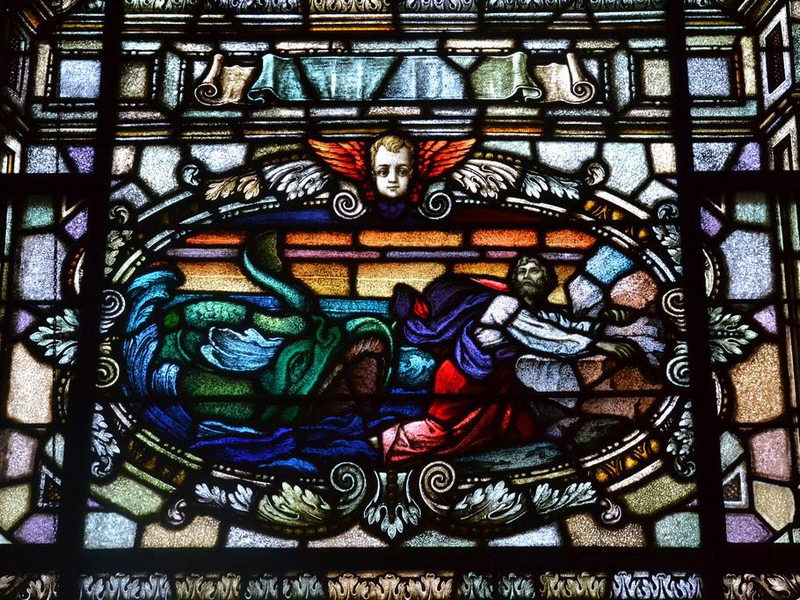
Then some of the scribes and Pharisees answered him, saying, “Teacher, we wish to see a sign from you.” But he answered them, “An evil and adulterous generation seeks for a sign, but no sign will be given to it except the sign of the prophet Jonah. For just as…

by Ken HicksJuly 7, 2020
tanner-mardis-xuxghzhibn4-unsplash-2
Genesis

Lost Worlds?

John Walton believes that modern Christians have lost multiple worlds: The Lost World of Genesis One; The Lost World of Adam and Eve; The Lost World of Scripture; The Lost World of the Israelite Conquest; The Lost World of the Flood; The Lost World of the Torah. I believe this…

by Ralph Allan SmithJuly 2, 2020
stephanie-leblanc-z4lxu7niii4-unsplash
Interview

N.T. Wright on How the Church Should Respond to the Pandemic

How should the church respond to the pandemic? N.T. Wright has written a book which searches the depths of Scripture to answer this question. Our challenge is that we do not yet understand the pandemic, at least not with any degree of consensus. We don't know whose fault it is,…

by Jerry Bowyer & N.T. WrightJune 30, 2020

Showing page 65 of 309

See all
See all
History

Smokin’ like a Christian

English fairs in earlier centuries displayed wares and displays from all over the world. At one there was an animal described as “a noble creature, which much resembled a Wild Hairy man” whose main skill was to doff his hat and show “his respects to the Company, and smoaks a…

October 14, 2006
Literature

The Moral of Henry V

Much of the moral and political import of Shakespeare’s Henry V is left to the audience’s or reader’s judgment. Is Henry a “pig” or is he the mirror of Christian kings? Is his invasion of France fair or foul? Shakespeare doesn’t show his hand, or not much; and one is…

October 14, 2006
Literature

The climax of Coriolanus

George Barnam notes the careful structure of Act 5 of Shakespeare’s Coriolanus: “Shakespeare had used this scene structurally to build the tension toward the climactic moment when Volumnia should appeal to her son and prevail. Three appeals are made to Marcius, and Shakespeare’s presentation of them matches in structure the…

October 14, 2006
History

Sports and the sacred

A reader wrote to respond to my suggestion that high culture is “sacred” and pop culture “profane,” citing the example of sports. Here’s my response: A football game often is a quasi-religious experience, but I’m not sure we use the same language to describe it. If someone slashed da Vinci’s…

October 14, 2006
Literature

Desacralized drama

In their “cultural history” of English drama, Simon Shepherd and Peter Womack summarize the argument of Glynne Wickham concerning the divorce of stage and sacred: “The English stage - so the argument runs - was predominantly a religious one until Elizabethan Protestantism forced a separation between theatre and the central…

October 14, 2006
History

Civil war and criticism

As Marsden describes it, the growth of neoclassical literary sensibilities developed in part in reaction to the chaos and disorder of the English civil war - following in this regard the development of late 17th century political theory. Orderliness, definiteness, clarity became virtues, while ambiguity, double entendres, and inconclusiveness became…

October 13, 2006

Showing page 1777 of 2212

Browse by Category

In Medias Res

Your weekly digest for all things Theopolis.

Donate

Theopolis is nearly 100% donor-supported. Consider joining us on our mission.