Theopolis Logo

Writing

Explore our collection of theological essays, biblical studies, and reflections on faith and culture.

See all
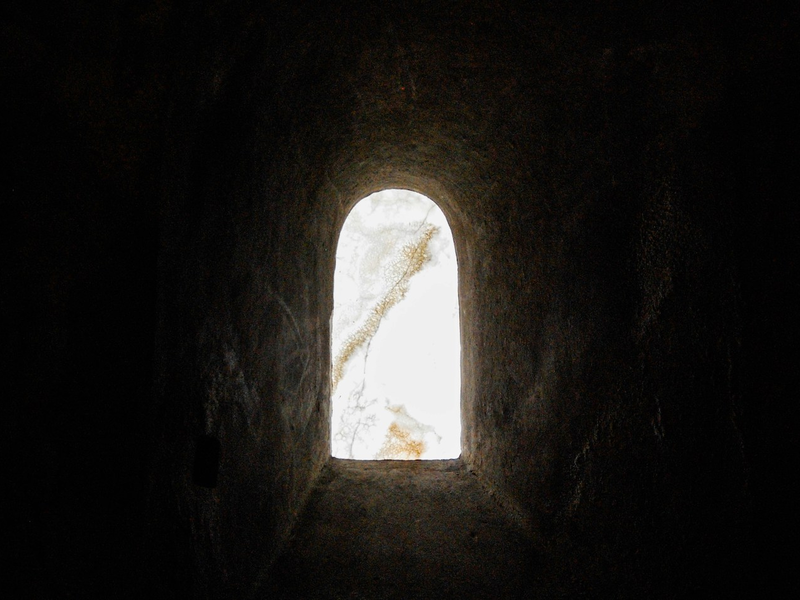
sony-dsc
Leviticus

Cathedral Offerings

Interwoven within Leviticus’ opening offerings is a redemptive storyline meant to be rehearsed. Each offering makes a particular contribution to the retelling of the Exodus deliverance. Like learning a dance, Israel’s opening rituals recount their steps from Egypt to Sinai in a fashion meant to perpetually imprint its experience on…

by Ben LoveladyMay 15, 2025

patrick-fore-rm5dtbswzay-unsplash
Mark

Mark 7 in Color

In Capernaum, the leaders of Israel questioned Jesus in their hearts. Beside the sea, they questioned his disciples about their rabbi’s practices. They challenged Jesus in the grain fields, sought to trap him in the synagogue, tried to seize him, thinking he was mad, and accused him of being possessed.…

by George EdemaMay 13, 2025
ksenia-kudelkina-wvas_uto8wq-unsplash
Psalm-singing

Rascals in a Cave

An essay on ministry taken from recent notes for a ‘solemn charge’ I gave our pastoral team (together with their spouses) at All Saints Honolulu, a church-plant that enters its fifth year. I. After receiving the sword of Goliath from Ahimelech at Nob, and after fleeing first to and then…

by Mark BriansMay 6, 2025
lexi-laginess-zfvr_8hdngc-unsplash
Biblical Theology

A Theology of Tombs: Burial and the Promises of God

When thinking about the book of Genesis, we often think of beginnings, the beginning of the world, humanity, the elect people of God. The word “genesis” itself means beginning. Genesis is also known as the book of promises. Genesis contains three of the major Old Testament covenants: Adamic, Noahic and…

by Matthew DarbyApril 30, 2025
michael-parulava-o2zbdcbtu8g-unsplash
Luke

Mountain, Tomb, Table: Moses and Elijah as the First Witnesses at the Empty Tomb

A Theological and Typological Commentary on Luke 24:4 In Luke 24:4, we are told that as the women arrived at the tomb on Easter morning, they encountered “two men in dazzling apparel” standing beside them. This description, on its own, may not immediately provoke questions. The traditional interpretation identifies these…

by Bruce GrimmetApril 29, 2025
Acts

Easter Meditation (Part 2)

For Part 1, click HERE . The four Gospel accounts give us their strange and wonderful historical accounts of the resurrection of Jesus. The rest of the New Testament, either explicitly or by suggestion, refers to the resurrection in every book except 3 John. Unlike the Gospel accounts, however, most…

by Ralph Allan SmithApril 22, 2025

Showing page 10 of 309

See all
See all

Exhortation, Third Epiphany

According to what has become the “traditional” interpretation of the Constitution, every American woman has the right to kill her unborn baby. Since the Roe v. Wade decision in January of 1973, over 45 million babies have been killed, and, though the abortion rate has slowed since 1990, more than…

January 22, 2006
Philosophy

Same and Other

Evaluating Levinas and his criticisms of Husserl, Derrida probes the coherence of Levinas’ notion of “infinitely other.” Contrary to Levinas, who argues that we are incorrectly seduced by everyday life to think of the other as an “alter ego,” Derrida says: “The other as alter ego signifies the other as…

January 21, 2006
Media

Art for Art

Adorno points out in an essay on television that “it would be romanticizing to assume that formlerly art was entirely pure, that the creative artist thought only in terms of the inner consistency of the artifact and not also of its effect upon the spectators. Theatrical art, in particular, cannot…

January 20, 2006

Sermons and such

Auden said, “In my opinion sermons should be a) fewer b) longer c) more theologically instructive and less exhortatory. I must confess that in my life I have very seldom heard a sermon from which I derived any real spiritual benefit. Most of them told me that I should love…

January 20, 2006

Totality and Dialogue

In “Violence and Metaphysics,” Derrida says that no “logos as absolute knowledge can comprehend the dialogue and the trajectory toward the other” because “the other is the other” and “all speech is for the other.” For Derrida, “A total logos still, in order to be logos, would have to let…

January 19, 2006
Philosophy

Eros and epistemology

For Aquinas, knowledge begins with knowledge of the effects of a thing. When faced with those effects, we naturally have a “desire to know about the cause what it is. This desire is one of wonder and causes inquiry.” The inquiry ceases when we arrive at knowledge of the essence…

January 19, 2006

Showing page 1896 of 2212

Browse by Category

In Medias Res

Your weekly digest for all things Theopolis.

Donate

Theopolis is nearly 100% donor-supported. Consider joining us on our mission.