Theopolis Logo

Writing

Explore our collection of theological essays, biblical studies, and reflections on faith and culture.

See all
aaron-burden-h8s0pf2rcqs-unsplash
Galatians

The Restoration of the Galatians

While controversies over the writings of Paul continue in various corners of the intellectual globe, the word of God given through Paul and his scribe and all of the church’s interpreters and translators over the last two millennia is still readily available to the lofty and the lowly. Paul, as…

by Grace LangnessMarch 25, 2013

kiwihug-l4gw27xzn1i-unsplash
Deuteronomy

Law and History: How to Read the Law of Moses (Part 2)

The second in a series of studies in Deuteronomy. Deuteronomy 22:30: A man shall not take his father’s wife, and shall not uncover his father’s wing (Hebrew: kanaf ). There are a number of unusual features in this law that mark it out from the previous context, indicating that it…

by Ralph Allan SmithMarch 20, 2013
200403-moss-pilate-tease_pncfq5
History

Victimhood and the Gospel

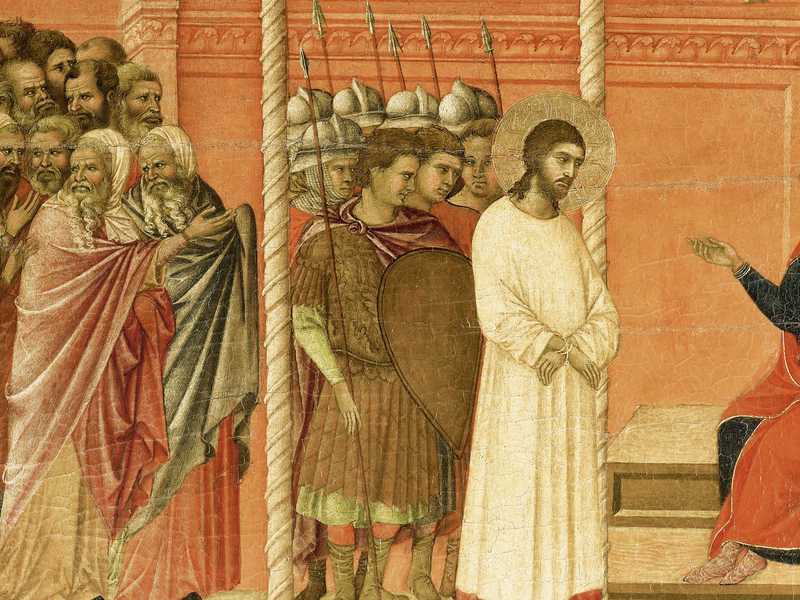
The texts of Christianity have been slowly at work, under the power of the Holy Spirit for 2000 years now. If we could be magically transported back into the world of two millennia ago, modern Americans would be shocked at the cruelty of that world. There was no concern for…

by Richard BledsoeMarch 18, 2013
aaron-burden-1ebsmyrau-s-unsplash
Luke

The Dysfunctional Family of the Gadarene Madman

The Story of the Gadarene Madman is told in all three synoptic Gospels (Matthew 8:28-34, Mark 5:1-20, Luke 8:26-37). Jesus ventures into a Gentile area when He passes over the Sea of Galilee. Upon disembarking from his boat, he is immediately met by a demon-possessed madman. Upon meeting Jesus, he…

by Richard BledsoeMarch 13, 2013
aaron-burden-1ebsmyrau-s-unsplash
Deuteronomy

Law and History: How to Read the Law of Moses

Part 1 of a multi-part series of studies on Deuteronomy 22:30-23:8. Eric Auerbach, in his classic work on Western literature, devotes his first chapter to contrasting Homer with the Bible. Of Homer, he writes of the “need of Homeric style to leave nothing which it mentions half in darkness and…

by Ralph Allan SmithMarch 12, 2013
markus-winkler-aid-xyrtlec-unsplash
Theopolis News

James Jordan in Korea, Japan

Trinity House Fellow James B. Jordan will be a speaker at an International Conference on Biblical Symbolism that will be held in Seoul on Monday, May 27 in 2013. He will address "The Importance of Biblical Symbolism and Symbolic Interpretation of the Bible." The conference will have three other speakers…

by Peter LeithartMarch 9, 2013

Showing page 197 of 309

See all
See all

Proverbs 12:8-14

INTRODUCTION This section of Proverbs focuses on issues of image, wealth, work, and treatment of employees (vv. 8-12), and ends with two verses that deal again with the use of the tongue (vv. 13-14). The final verses connect this section to the preceding section of this chapter (12:1-7). Thus, the…

January 6, 2006
Literature

Hamlet in Prufrock

The influence of Hamlet, the play and the character, on modern literature is vast. Consider Hamlet as model for Prufrock: Zulfikar Ghose says the “I am not Hamlet” in Eliot’s Prufrock may be literal or ironic, but then adds: “the more one ponders the language of ‘Prufrock’ and of Hamlet…

January 5, 2006
Literature

Pierre

Herman Melville’s Pierre (1852) was, to put it mildly, not warmly received by critics. One newspaper headlined its review with “HERMAN MELVILLE CRAZY” and another reviewer complained that Melville’s fancy was diseased. Critics are divided over whether it is a grand failure or simply a failure. Updike caught the tone…

January 5, 2006

Schleiermacher

Bauman distinguishes between the “legislative” notion of reason found in Kant and other Enlightenment figures and the “interpretive” rationality that characterizes much postmodern thought. The shift from the former to the latter was not accomplished all at once. Schleiermacher, for all importance in the rise of hermeneutics, was still aiming…

January 5, 2006
Philosophy

Foundations and Tribunals

The architectural model of building a structure of thought on “foundations” is among the metaphors employed by modern thinkers, and in this as in other areas there was a close alliance of philosophy and political action. Bauman notes that this was particularly evident in various utopian writers of the modern…

January 5, 2006
History

Postmodern critique, postmodern re-enchantment

“Postmodernity,” writes Zygmunt Bauman in his 1992 Intimations of Postmodernity , “means many different things to many different people. It may mean a building that arrogantly flaunts the ‘orders’ prescribing what fits what and what should be kept strictly out to preserve the functional logic of steel, glass and concrete.…

January 5, 2006

Showing page 1903 of 2212

Browse by Category

In Medias Res

Your weekly digest for all things Theopolis.

Donate

Theopolis is nearly 100% donor-supported. Consider joining us on our mission.