
Theopolis Logo

Writing

Explore our collection of theological essays, biblical studies, and reflections on faith and culture.

See all
kiwihug-l4gw27xzn1i-unsplash
Hermeneutics

Beginning and New Beginning in Luke

Although the events are, of course, not perfectly parallel, Luke in his gospel intends us to connect Jesus’ birth from the womb and His re-birth from the tomb. Luke 1:27 introduces us to Joseph and in verse 30 we learn that his betrothed wife was named Mary. An angel appeared…

by James B. JordanDecember 28, 1996
screenshot-2023-08-30-at-11-50-23-am
Matthew

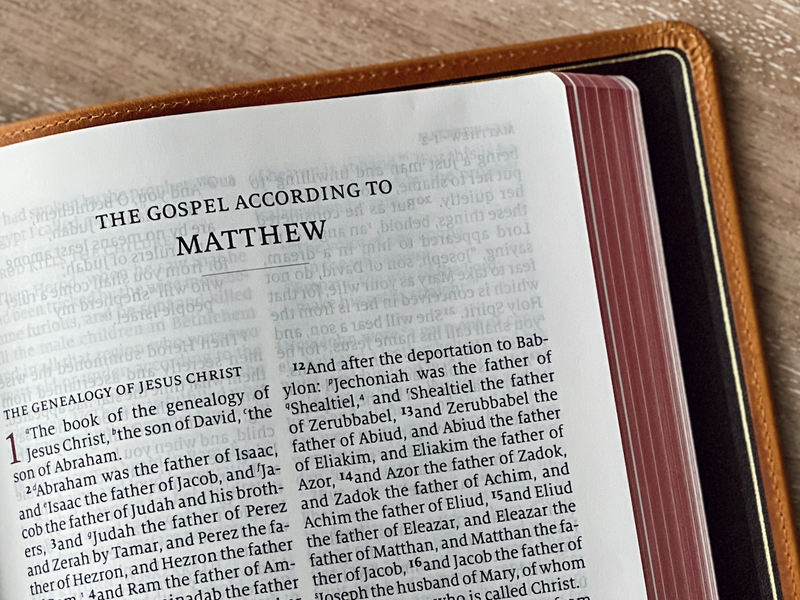
A Note on Matthew

The apostle Matthew is also known as Levi son of Alphaeus. While not much is said about this man, the few things that are told us are significant. Matthew in Greek is Matthaios and comes from the Hebrew name Mattithiah, or Mattith-Yah, "Gift of Yah(weh)." Matthew’s other name is Levi,…

by James B. JordanDecember 28, 1996

aaron-burden-qjdzyt_k8xg-unsplash
Biblical Horizons

Twelve Fundamental Avenues of Revelation (Part 1)

Theologians often speak of "special" and "general" revelation, or of "natural" and "supernatural" revelation, or of "word" and "deed" revelation. While there are many worthwhile insights in these discussions, particularly in the discussions in Cornelius Van Til’s Introduction to Systematic Theology , I have not found any that satisfied my…

by James B. JordanDecember 28, 1996

jan-kahanek-g3o5ztrk2e4-unsplash
Ezekiel

Countdown to Exile IV: Ezekiel and the Structure of History

Ezekiel’s 430 Years In Ezekiel 4, the prophet is told to begin his ministry by setting up a model of Jerusalem and lying on his side and prophesying against it. He is to do this for 430 days, a day for a year. 390 days are against "Israel," and 40…

by James B. JordanDecember 28, 1996

img_7664
Biblical Horizons

The Oddness of the Feast of Booths

The Feast of Ingathering in the seventh month of the Sinaitic calendar is also called the Feast of Sukkoth, of Booths, also called Feast of Tabernacles. I have usually called it by that last phrase, and it is the most common today; but there is a problem: A tabernacle is…

by James B. JordanDecember 28, 1996

sixteen-miles-out-ki3hr9t8t7a-unsplash
Ezekiel

Countdown to Exile III: Warnings Against False Hopes

The End of Jehoiakim’s Reign We have seen that Jehoiakim rejected Jeremiah’s prophetic warnings at the beginning of his reign. Let us now make a year-by-year survey of his reign down to its end. In the spring of 605 BC, Nebuchadnezzar defeated the Egyptians at Carchemish. In the summer, he…

by James B. JordanNovember 28, 1996

Showing page 261 of 309

See all
See all

Baptism and personhood

In his recently re-released Bioethics: A Primer for Christians , Gilbert Meilaender discusses baptism to formulate a Christian understanding of the person. Baptism, he points out, is a communal act but also individualizing: “the first thing to note about baptism is that it is a deeply individualizing act. Our parents…

December 21, 2005
Art

Allegory with Venus and Cupid

In his book, Erotic Faith , Robert M. Polhemus offers an intriguing analysis of Bronzino’s Allegory with Venus and Cupid . The allegory suggests that “worship of Venus . . . blinds one to the menace of time and death.” Seeking sexual fulfillment means “betraying self, God, and humankind as…

December 21, 2005
Philosophy

Mirror and Lamp

In his classic study of romanticism and literary theory, The Mirror and the Lamp , MH Abrams points out the crucial change in images of the mind - from the mind as a “mirror” of outside reality to the mind as a “lamp” or a “fountain” that determines what it…

December 21, 2005
History

Consumption v. Culture

Hannah Arendt claimed that “An object is cultural depending on the duration of its permanence: its durable character is opposed to its functional aspect, that aspect which would make it disappear from the phenomenal world through use and wear and tear . . . . Culture finds itself under threat…

December 20, 2005
Literature

Shakespeare and the Law

At the climactic moment of reversal in the court scene in Merchant of Venice , Portia tells Shylock: “This bond doth give thee here no jot of blood.” “Jot” comes to English through the Greek iota , which is linked to the Hebrew YOD through Jesus’ usage in Matthew 5.…

December 20, 2005

Not quite haiku

spectral rime-frosted trees in early morning moonlight cast shadows on the pasture

December 18, 2005

Showing page 1910 of 2212

Browse by Category

In Medias Res

Your weekly digest for all things Theopolis.

Donate

Theopolis is nearly 100% donor-supported. Consider joining us on our mission.