Theopolis Logo

Writing

Explore our collection of theological essays, biblical studies, and reflections on faith and culture.

See all
trnava-university-beeyeib-am8-unsplash
Biblical Horizons

Puritans v. Reformed Worship: (Part Two of a Book Chapter Review)

Continuing through The Worship of the English Puritans by Horton Davies: The author gives some of his own appraisals rather than immediately quoting Durel, even though that is how he began his chapter. In Davies’ opinion, while the Puritans would invoke their own interpretation of Scripture in order to condemn,…

by Mark HorneFebruary 9, 2008
kelly-sikkema-gpoh17dxqdm-unsplash
Ephesians

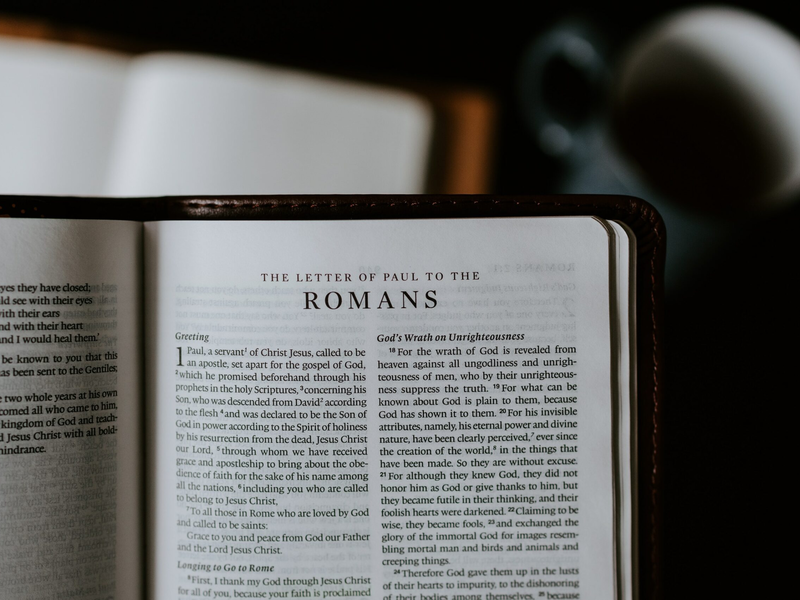
Luther Should Have Inserted “Alone” a Second Time in Romans

What follows are from a couple of posts on my blog. I hoped to do a series. If I do follow up, I will probably want to do it here on the BH blog rather than my own. Feedback welcome: It is no secret that some have been scathingly critical…

by Mark HorneFebruary 9, 2008

jim-jordan-teaching-2
Baptism

Jesus’ Baptism and ours

Jeremy Sexton wrote this in an earlier line of discussion: “Along those lines, I think what we most often miss in our theology of baptism (though Calvin didn’t miss this) is that Christian baptism — if it “is” anything that came before — is Jesus’ water baptism. In our baptism,…

by James B. JordanFebruary 8, 2008
sixteen-miles-out-d40gdcd_-he-unsplash
Numbers

Israel was not (all of) the Church

Jeff pointed out that baptism is not Christian circumcision . Looking at the comments, I think it might be helpful to point out that Israel was not the Church . In the new creation, the idea of an “unbaptized Christian” is either very temporary or an anomaly. Those who came…

by Mark HorneFebruary 6, 2008
aaron-burden-h8s0pf2rcqs-unsplash
Parables

Parables, Part I

Once a upon a time, one Sunday morning, a pastor mounted his pulpit for the sermon and said the following: A troubled young man walked into a downtown high-rise building. As he approached the directory on the wall, he took out a small booklet and looked back and forth from…

by Jeff MeyersFebruary 5, 2008
sixteen-miles-out-al48tflf4e8-unsplash
Exodus

What is a Prophet? (Friendship and Justification)

If you are, say, leading a Bible study in Genesis, you might notice that right after the covenant is renewed and circumcision is established (ch 17) that we see Abraham eating and drinking with God (ch 18). After that meal, God makes a point of saying the he should share…

by Mark HorneFebruary 3, 2008

Showing page 216 of 309

See all
See all

Mediated fellowship

1 John 1:1-3 describes how those who never saw, heard, or handled the incarnate word of life can come to have fellowship with the Father through Jesus. First, the apostles (“we”) witnessed the Word in flesh directly. Second, they proclaim that testimony. Third, through believing their testimony, we come to…

December 3, 2005

Feast of Booths

John Kleinig suggests that Luke’s account of the Transfiguration alludes to the feast of booths: Luke “alone of the Gospel writers relates that the transfiguration occurred on the eighth day after Peter’s confession of faith (Lk 9:28). The transfiguration was the epiphany of Jesus as God’s Son. It showed Peter,…

December 1, 2005
History

Modern heroism

Zygmunt Bauman, in the book mentioned above, traces the shifts in Western cultural imagination from the ancient hero through the Christian martyr, to the revival of the ancient heroic ideal in the early modern period, to our current cult of celebrity. According to Bauman, the modern hero was born “or…

November 29, 2005
History

Conservator

An etymology of “conservative” from the online Dictionary of the History of Ideas (http://etext.lib.virginia.edu/DicHist/dict.html): In Latin conservare means to protect, preserve, save; the noun of agency, conservator, appears as a synonym for the substantives custos, servator. Just as the Greek S?ter (“Savior”) was adopted from the religious realm by the…

November 29, 2005
History

Modern sacralization

Still on Bauman: “In most of its descriptions, modernity is presented as a time of secularization (‘everything sacred was profaned,’ as young Marx and Engels memorably put it) and disenchantment. What is less often mentioned, however, though it should be, is that modernity also deified and enchanted the ‘nation,’ the…

November 29, 2005
History

Desire and resistance

More on Bauman, since that last post was getting too long: Consumerism, we (especially Christians) tend to think, is driven by desire; if so, perhaps the solution is to limit or suppress desire. Bauman points out that the goal of consumer economies is to render desires irrelevant to consumption. Desires…

November 29, 2005

Showing page 1918 of 2212

Browse by Category

In Medias Res

Your weekly digest for all things Theopolis.

Donate

Theopolis is nearly 100% donor-supported. Consider joining us on our mission.