Theopolis Logo

Writing

Explore our collection of theological essays, biblical studies, and reflections on faith and culture.

See all
kelly-sikkema-gpoh17dxqdm-unsplash
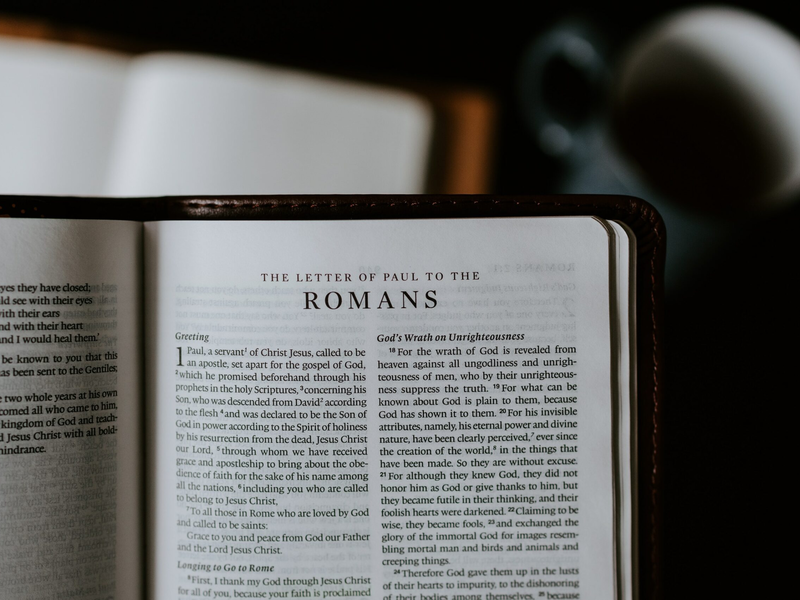
Romans

Paul’s Gospel & the Theme of Romans

Paul, a bond-servant of Christ Jesus, called as an apostle, set apart for the gospel of God, which He promised beforehand through His prophets in the holy Scriptures, concerning His Son, who was born of a descendant of David according to the flesh, who was declared the Son of God…

by Mark HorneJune 6, 2003

screenshot-2023-07-27-at-10-25-35-am
History

The Nelda Boswell Scroll: The Apostle Paul’s Town Hall Meeting in Iconium

With the surprising discovery of the Nelda Boswell scroll historians have deciphered its contents and concluded that the apostle Paul returned to the region of Galatia shortly after he wrote the letter that we call Galatians. The evidence suggests that a number of local pastors, elders, and deacons, along with…

by Jeff MeyersJune 6, 2003
aaron-burden-qjdzyt_k8xg-unsplash
Jonah

Jonah, the Judaizers, and the Gospel

Second Temple Judaism was a form of covenantal nomism, according to E. P. Sanders’ terminology. This means that Torah-observance was a way of expressing loyalty to the Lord of the covenant who had graciously elected Israel. I think Sanders’ view (taken up in bits and pieces and with some modifications…

by Rich LuskJune 6, 2003
Theologia

Gratitude or Faith?

We often hear that the key to Christian obedience is thankfulness for what God has done. But the Bible stresses faith and hope much more than gratitude. The Baptist pastor and author John Piper has written, “Nowhere in the Bible is gratitude connected explicitly with obedience as a motivation. We…

by Mark HorneJune 6, 2003
aaron-burden-qjdzyt_k8xg-unsplash
Federal Vision

God’s Righteousness & Our Justification

One of the questions that is commonly asked about Tom Wright regards his teaching about how Paul uses the term “the righteousness of God.” Since Wright’s interpretation of the term in Paul’s epistles is commonly mentioned in passing but rarely analyzed, it seems like a good idea to explicitly spell…

by Mark HorneJune 6, 2003
jordan-wozniak-xp_agmeea6s-unsplash
Genesis

Forever Means Forever: God’s Promises to the Jews

If God promised a certain land to the seed of Abraham, saying that it would be theirs “forever” (Gen. 13:15), why do Reformed churches teach that the Jews permanently lost their right to the land? What about all these Old Testament “forever” promises and prophesies made to the Jews? How…

by Jeff MeyersJune 6, 2003

Showing page 230 of 309

See all
See all

Mediated fellowship

1 John 1:1-3 describes how those who never saw, heard, or handled the incarnate word of life can come to have fellowship with the Father through Jesus. First, the apostles (“we”) witnessed the Word in flesh directly. Second, they proclaim that testimony. Third, through believing their testimony, we come to…

December 3, 2005

Feast of Booths

John Kleinig suggests that Luke’s account of the Transfiguration alludes to the feast of booths: Luke “alone of the Gospel writers relates that the transfiguration occurred on the eighth day after Peter’s confession of faith (Lk 9:28). The transfiguration was the epiphany of Jesus as God’s Son. It showed Peter,…

December 1, 2005
History

Modern heroism

Zygmunt Bauman, in the book mentioned above, traces the shifts in Western cultural imagination from the ancient hero through the Christian martyr, to the revival of the ancient heroic ideal in the early modern period, to our current cult of celebrity. According to Bauman, the modern hero was born “or…

November 29, 2005
History

Conservator

An etymology of “conservative” from the online Dictionary of the History of Ideas (http://etext.lib.virginia.edu/DicHist/dict.html): In Latin conservare means to protect, preserve, save; the noun of agency, conservator, appears as a synonym for the substantives custos, servator. Just as the Greek S?ter (“Savior”) was adopted from the religious realm by the…

November 29, 2005
History

Modern sacralization

Still on Bauman: “In most of its descriptions, modernity is presented as a time of secularization (‘everything sacred was profaned,’ as young Marx and Engels memorably put it) and disenchantment. What is less often mentioned, however, though it should be, is that modernity also deified and enchanted the ‘nation,’ the…

November 29, 2005
History

Desire and resistance

More on Bauman, since that last post was getting too long: Consumerism, we (especially Christians) tend to think, is driven by desire; if so, perhaps the solution is to limit or suppress desire. Bauman points out that the goal of consumer economies is to render desires irrelevant to consumption. Desires…

November 29, 2005

Showing page 1918 of 2212

Browse by Category

In Medias Res

Your weekly digest for all things Theopolis.

Donate

Theopolis is nearly 100% donor-supported. Consider joining us on our mission.