
Theopolis Logo

Writing

Explore our collection of theological essays, biblical studies, and reflections on faith and culture.

See all
giammarco-zeh-ljawhtg-unsplash
Biblical Horizons

OPEN BOOK: Views and Reviews

Isaac E. Mozeson, The Word: The Dictionary that Reveals the Hebrew Sources of English (Northvale, NJ: Jacob Aaronson Inc., 1995), 310 pp. Reviewed by James B. Jordan. Once there was only one language in the world, the language God spoke to Adam. At the Tower of Babel, there came to…

by James B. JordanJune 28, 1996
tim-wildsmith-j6jv-mkdzqs-unsplash
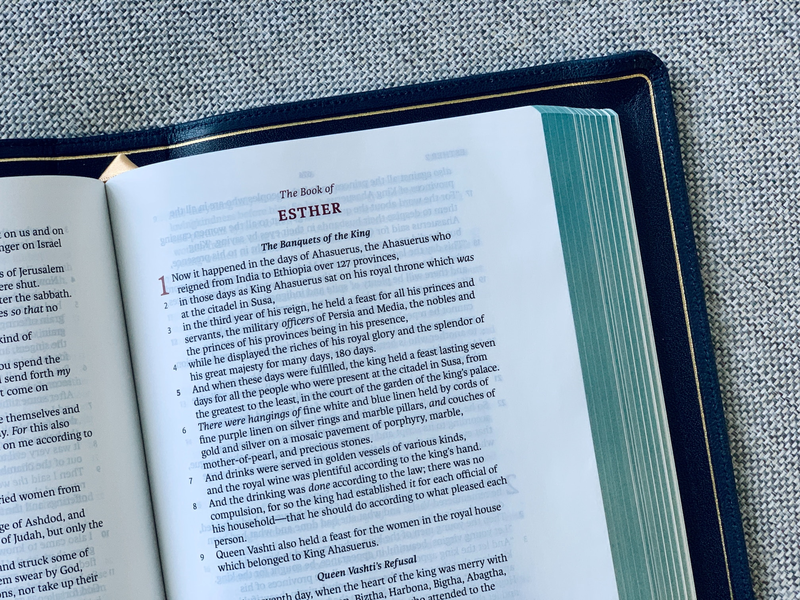
Esther

Esther: Historical & Chronological Comments (IV)

2. The Setting of the Book of Esther A. Xerxes (continued from previous issue) Ezra 6:14 says that the Jews finished building "according to the command of the God of Israel and the decree of Cyrus and Darius and Artaxerxes king of Persia." The problem with this verse is that…

by James B. JordanJune 28, 1996

ales-krivec-4mibe6zg5r0-unsplash
Acts

Jesus and Amalek

This essay goes with our previous study of the Amalek pattern back in Biblical Horizons No. 2. Since many do not have this essay, entitled "The Battle of Gog and Magog," let me cite the relevant paragraphs: Note in Genesis 12-15 that Abram moves into the land after escaping Pharaoh…

by James B. JordanJune 28, 1996

aaron-burden-1ebsmyrau-s-unsplash
Proverbs

The Strange Woman

Proverbs 7:6-23 is one of several passages early in the Proverbs in which Solomon warns his son about the wiles and dangers of the "strange woman." It is certainly quite proper to take these as straightforward warnings against sexual sins, and these are certainly warnings that need to be impressed…

by Peter LeithartJune 27, 1996
jan-kahanek-g3o5ztrk2e4-unsplash
Biblical Studies

Some Observations

1. In Luke 4:20 we read that after Jesus finished reading from Isaiah, "the eyes of all in the synagogue were fixed upon Him." This is usually taken in a psychological sense: They were amazed at Jesus somehow. I suggest that, as always, a merely psychological reading is a modern…

by James B. JordanMay 28, 1996
tim-wildsmith-j6jv-mkdzqs-unsplash
Esther

Esther: Historical & Chronological Comments (III)

2. The Setting of the Book of Esther Up to now we have assumed what we must prove, that the king in Esther is Darius the Great. While Biblical chronologists have usually taken this position, commentators on the book of Esther have often taken others as the king. One view,…

by James B. JordanMay 28, 1996

Showing page 265 of 309

See all
See all

Exhortation, October 2

The church is the body and bride of Christ, the people of God and the new Israel, the temple of the Spirit and the house of prayer for all nations. In our sermon text (Eph 6), we learn that the church is also an army. Like soldiers, we must be…

October 2, 2005

Proverbs 10:17-26

INTRODUCTION Proverbs 10 begins a long central section of Proverbs. This is largely a collection of sayings, labeled “The Proverbs of Solomon” in 10:1. The organization is not random, but it is not obvious. At least one can discern topical categories in this section: speech, wealth, expectations for the future.…

October 1, 2005
Philosophy

Philosophy and Theology

Some reflections on a lecture by Mitch Stokes, a new fellow at NSA, concerning the differences between philosophy and theology. Ultimately, I don’t believe there is any room for an absolute distinction of theology and philosophy. This is what Stokes said: He defined both theology and “philosophy broadly construed” in…

October 1, 2005

Idolatry and Comparative Religion

In its origins, the study of comparative religion in the West arose within a Christian context. Many of the early writers in this field emphasized the imperfections of other world religions, and attempted to show how those imperfections were realized or corrected in Christianity. In an 1871 volume entitled Ten…

September 30, 2005

Pillars

Why so much attention to the pillars of Solomon’s temple in 2 Kings 25? It is likely that these were the last major items left. Ahaz had already dismantled the bronze sea and the water chariots. King after king plundered the temple for bribe money. When Nebuchadnezzar came, not much…

September 30, 2005
History

American empire

Fred Anderson and Andrew Clayton suggest a revisionist, imperial reading of American history: “At least from the middle of the eighteenth century to the present, American wars have either expressed a certain kind of imperial ambition or have resulted directly from successes in previous imperial conflicts. ‘Imperialism’ is, of course,…

September 30, 2005

Showing page 1938 of 2212

Browse by Category

In Medias Res

Your weekly digest for all things Theopolis.

Donate

Theopolis is nearly 100% donor-supported. Consider joining us on our mission.