Theopolis Logo

Writing

Explore our collection of theological essays, biblical studies, and reflections on faith and culture.

See all
tanner-mardis-xuxghzhibn4-unsplash-1-2
Biblical Studies

Tweets-turned-Notes on the Bible’s Chronology

Summary In what follows, I will consider the “year-stamps” employed in Scripture, i.e., statements of the form, “Such-and-such an event took place in the Xth year of Y.” In the process, I will suggest some ways in which the Biblical narrative might relate to events in the extra-Biblical world, though…

by James BejonJuly 16, 2019
durer-prodigal-son-2
Luke

Perspectives on the Prodigal, (Part 2)

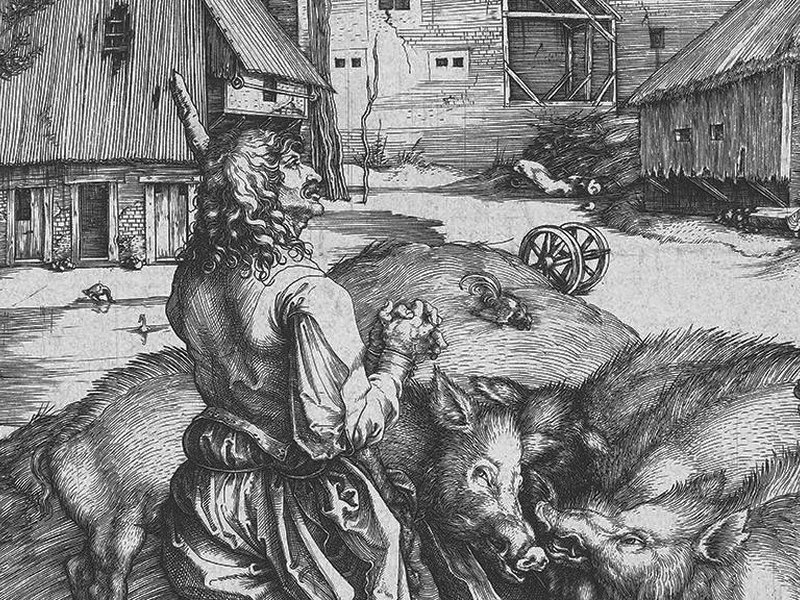
In the first essay on the parable of the Prodigal Son, I suggested that the problems commentators and others encounter in interpreting Jesus three-part parable are not accidental. These are not just problems in our ignorance of cultural background. They are intentional features of the stories —stories designed to poke…

by Ralph Allan SmithJuly 11, 2019
durer-prodigal-son-2
Luke

Perspectives on the Prodigal, (Part 1)

The story of the Prodigal Son is perhaps the most well-known story in the Bible. As others have observed, it may also be one of the most misunderstood. In two short essays, I will point out features of this story that are commonly neglected, aspects of Jesus’ parable that might…

by Ralph Allan SmithJuly 9, 2019
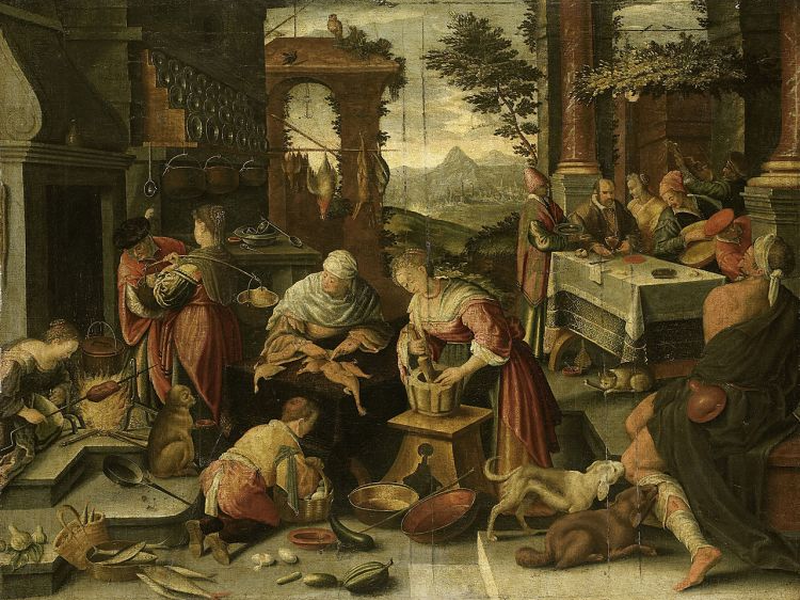
de-rijke-man-en-de-arme-lazarus-by-jacopo-da-ponte-16th-century
Luke

Lazarus and the Rich Man

The parable of Lazarus and the nameless rich man is not an independent story. It is part of a long context that begins in Luke 15:1, where Jesus is eating with tax collectors and sinners and the scribes and Pharisees grumble. In response to their hardheartedness, Jesus tells a three-part…

by Ralph Allan SmithJuly 4, 2019
aaron-burden-uynrnfdkjwg-unsplash
Luke

Everybody has Dropsy - Luke 14:1-24

The Bible is written so that even when a reader cannot pick up on what might be deeper or more detailed aspects of a text, there is virtually always a message to be heard. In the ancient world, where the “reader” of Scripture would likely be a church official facing…

by Ralph Allan SmithJuly 2, 2019
communion
Biblical Theology

Fruit Trees and Grain Plants

The distinction between garden (or vineyard) and field begins in Genesis 2. This relates to the ordering of the formless world. Plants of the field are contrasted with the garden planted by God in Genesis 2:5&8. Later on, under the Old Covenant the Israelites will be required to keep their…

by James B. JordanJune 27, 2019

Showing page 77 of 309

See all
See all
Music

Music and communion

Ian McEwan’s Saturday is from one angle a novelization of Arnold’s “Dover Beach,” which also figures prominently (if improbably) into the plot. The book begins with neurosurgeon Henry Perowne looking out a window early on a February morning on a world where ignorant armies clash by night, and ends with…

September 5, 2005
Politics

Covenant Idea

I recently came across the work of Daniel Judah Elazar, a political scientist at Temple University who has devoted much of his working life to tracing the impact of biblical ideas of covenant on the development of Western politics. This comes out most fully in a four-volume work on the…

September 2, 2005

Holy Trinity

Holiness is separation, or so we are told. Let’s accept what we’re told. How then is God eternally and unchangeably holy? From what is He separated? If we say “the world,” then prior to the world’s existence God was potentially but not really holy. Of course, this can be resolved…

August 30, 2005
Literature

Hamlet the Calvinist?

John Alvis suggests that in Hamlet, Shakespeare alligns himself with Machiavelli at least to the extent that he sees Christianity (or certain forms of Christianity) as a comfort to tyrants. Christians, Machiavelli says, are unresistant to tyranny because they have been taught to wait for the justice of God, to…

August 29, 2005
Literature

Hamlet and Society

Despite the distracting use of the opposition of of “authenticity” and “responsibility,” Terry Eagleton has some thoughtful observations on the tragic dilemma in Hamlet ( Shakespeare and Society , 1967). Hamlet’s is a society of “reciprocal human definitions,” that is to say, a man’s identity is mirrored to him by…

August 29, 2005

Eucharistic meditation, August 28

Ephesians 4:15-16: Speaking the truth in love, we are to grow up in all aspects into Him, who is the head, even Christ, from whom the whole body, being fitted and held together by that which every joint supplies, according to the proper working of each individual part, causes the…

August 28, 2005

Showing page 1950 of 2212

Browse by Category

In Medias Res

Your weekly digest for all things Theopolis.

Donate

Theopolis is nearly 100% donor-supported. Consider joining us on our mission.