Theopolis Logo

Writing

Explore our collection of theological essays, biblical studies, and reflections on faith and culture.

See all
sixteen-miles-out-al48tflf4e8-unsplash
Food

Gluttony In The Bible (As Opposed To Gluttony In The American Church)

In the Bible, fatness is such a blessing, that it is especially hard to understand why wicked men are permitted to enjoy such a state. It requires a theodicy and faith in God. Thus: “For they have no pangs until death; their bodies are fat and sleek . They are…

by Mark HorneAugust 12, 2013

jeremy-yap-j39x2xx_8cq-unsplash
How to Worship

Biblical Worship (Video with James B. Jordan)

[fve]http://vimeo.com/71901553[/fve]

by Peter LeithartAugust 8, 2013
chris-bair-ndczc5739ck-unsplash
Deuteronomy

Holy Things for Holy People

The allusion to the Exodus story is contained in the first words of Deuteronomy 14:1 — “ye are the sons of Yahweh your God” — as well as in 14:2 in the use of the technical term translated “treasured possession,” “His own possession,” “peculiar people,” “precious people,” and so forth.…

by Ralph Allan SmithAugust 5, 2013
adam-and-eve-in-the-garden-of-eden-wenzel-peter
Deuteronomy

Forbidden Foods

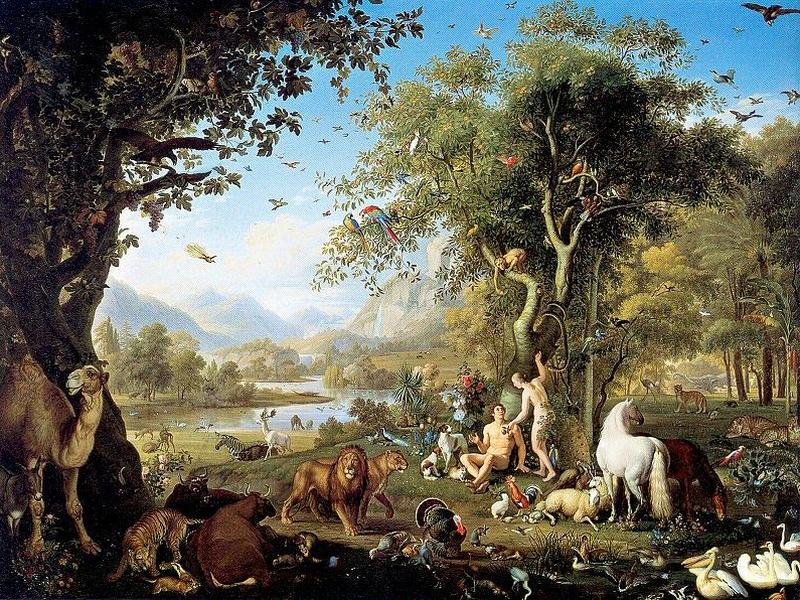
I have argued that Deuteronomy 14:1-21 is an independent literary unit that applies the Third Word to the lives of Israelites from the time of Moses and Joshua. In this short pericope, Moses suggests broad and deep meaning by means of literary allusion to the stories of the creation and…

by Ralph Allan SmithJuly 31, 2013
david-weber-fwuo_zluhnw-unsplash
How to Worship

Pro-Sacramental Reformation

In his recently republished The New Creation , the late, delightful Herbert McCabe defends the priesthood of the plebs as roundly as anyone could want. Citing Hebrews, he claims that "there is an essential difference between the Christian community and the community of the Old Law, or any other religious…

by Peter LeithartJuly 29, 2013
eric-ward-7kqe_8meex8-unsplash
Augustine

Sexual Idolatry

Augustine famously prayed, “Our hearts our restless until they rest in You.” True indeed. Being creatures, we inherently sense our ontological poverty—our innate condition of dependence—and are compelled to find a sense of security. And it is also true—as Augustine’s own narrative painfully illustrates—that one of the things we most…

by Gerald HiestandJuly 24, 2013

Showing page 190 of 309

See all
See all
Literature

Wormwood and Rotten Denmark

During the staging of his play before the king, Hamlet mutters the word “Wormwood.” Why? Irwin Matus suggests the following: “Rarely glossed in editions of the play, wormwood is accepted as meaning only something bitter, from the taste of the plant of that name. However, the plant was also used…

August 22, 2005
Literature

Sacral politics in Shakespeare

Shakespeare’s two tetrologies on English history trace the shift from a sacrally based political order (Richard II) to a “Machiavellian” one (Richard III). That is the sequence of actual history. But the sequence of Shakespeare’s composition is different. Shakespeare wrote the historically later tetrology (2 Parts of Henry VI and…

August 22, 2005

Proving grace

Markus Barth highlights the judicial cast of Paul’s statement in Ephesians 2:7 that we “show the surpassing riches of His grace.” The verb “show” or “prove” is a lawcourt term, pointing to the presentation of evidence or a judicial demonstration. God has raised us up in Jesus to the heavenly…

August 21, 2005

Communion meditation, August 21

Ephesians 2:14: He Himself is our peace. Jesus is the one who brings peace between God and man. He has reconciled us to God, and brought near those who have been far off. But in our sermon text Paul is chiefly concerned with the peace that Jesus has brought between…

August 21, 2005

Exhortation, August 21

According to Paul, the church is being built into a holy dwelling, a temple in which the Spirit dwells. This has many implications, but let me highlight one. According to the Old Testament, temples were holy places whose holiness had to be guarded and defended. Levites guarded the tabernacle and…

August 21, 2005

Wise as serpents

From Francis Bacon’s De Augmentis Scientiarum , 7.1: “For as the fable goes of the basilisk, that if he sees you first, you die for it, but if you see him first, he dies; so itis with deceits, impostures, and evil arts, which, if they be first espied, they lose…

August 20, 2005

Showing page 1953 of 2212

Browse by Category

In Medias Res

Your weekly digest for all things Theopolis.

Donate

Theopolis is nearly 100% donor-supported. Consider joining us on our mission.