
Theopolis Logo

Writing

Explore our collection of theological essays, biblical studies, and reflections on faith and culture.

See all
kiwihug-l4gw27xzn1i-unsplash
Hermeneutics

Beginning and New Beginning in Luke

Although the events are, of course, not perfectly parallel, Luke in his gospel intends us to connect Jesus’ birth from the womb and His re-birth from the tomb. Luke 1:27 introduces us to Joseph and in verse 30 we learn that his betrothed wife was named Mary. An angel appeared…

by James B. JordanDecember 28, 1996
screenshot-2023-08-30-at-11-50-23-am
Matthew

A Note on Matthew

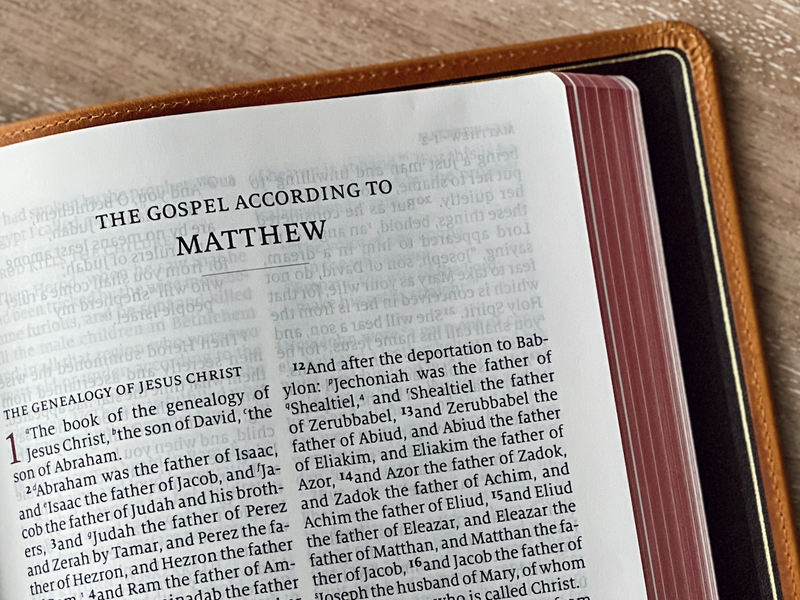
The apostle Matthew is also known as Levi son of Alphaeus. While not much is said about this man, the few things that are told us are significant. Matthew in Greek is Matthaios and comes from the Hebrew name Mattithiah, or Mattith-Yah, "Gift of Yah(weh)." Matthew’s other name is Levi,…

by James B. JordanDecember 28, 1996

aaron-burden-qjdzyt_k8xg-unsplash
Biblical Horizons

Twelve Fundamental Avenues of Revelation (Part 1)

Theologians often speak of "special" and "general" revelation, or of "natural" and "supernatural" revelation, or of "word" and "deed" revelation. While there are many worthwhile insights in these discussions, particularly in the discussions in Cornelius Van Til’s Introduction to Systematic Theology , I have not found any that satisfied my…

by James B. JordanDecember 28, 1996
jan-kahanek-g3o5ztrk2e4-unsplash
Ezekiel

Countdown to Exile IV: Ezekiel and the Structure of History

Ezekiel’s 430 Years In Ezekiel 4, the prophet is told to begin his ministry by setting up a model of Jerusalem and lying on his side and prophesying against it. He is to do this for 430 days, a day for a year. 390 days are against "Israel," and 40…

by James B. JordanDecember 28, 1996

img_7664
Biblical Horizons

The Oddness of the Feast of Booths

The Feast of Ingathering in the seventh month of the Sinaitic calendar is also called the Feast of Sukkoth, of Booths, also called Feast of Tabernacles. I have usually called it by that last phrase, and it is the most common today; but there is a problem: A tabernacle is…

by James B. JordanDecember 28, 1996

sixteen-miles-out-ki3hr9t8t7a-unsplash
Ezekiel

Countdown to Exile III: Warnings Against False Hopes

The End of Jehoiakim’s Reign We have seen that Jehoiakim rejected Jeremiah’s prophetic warnings at the beginning of his reign. Let us now make a year-by-year survey of his reign down to its end. In the spring of 605 BC, Nebuchadnezzar defeated the Egyptians at Carchemish. In the summer, he…

by James B. JordanNovember 28, 1996

Showing page 261 of 309

See all
See all

Day of Wrath (Romans 2)

What about taking “day of wrath” in Romans 2 as AD 70? Some arguments: 1) Dunn lists the verses that use similar phrases for “wrath and indignation” and “tribulation and distress,” and most of them are about historical judgments on Israel. There’s a cluster of uses in Deut 28:55ff, which…

November 7, 2003
Theology

Intellectualism and Voluntarism both arise

Intellectualism and voluntarism both arise from the same theological error: from the assumption that there is some realm that is independent and autonomous. This is most obvious with intellectualism: For intellectualists, things have indepdendent value that God recognizes and evaluates. Voluntarists are, however, making the same error. They assume that…

November 6, 2003

Studebaker on Pauw

Steve Studebaker writers in the Scottish Journal of Theology (56:3) about Edwards’s trinitarian theology, and includes an extended critique of Amy Plantinga Pauw’s treatment of Edwards’s incipient “social trinitarianism.” According to Studebaker, Pauw’s analysis only works if one assumes that the history of Trinitarian theology can be sketched out as…

November 5, 2003

The Olive Tree (Romans 11)

In the same issue of JSNT, Philip Esler examines ancient oleiculture to illumine Paul’s use of the olive tree image in Romans 11. When he describes branches being grafted into an olive tree, Paul refers to a common practice. But the normal practice is to graft cultivated olive branches onto…

November 5, 2003

Acts 20:20

Jerome Neyrey has an interesting article on Acts 20:20 in the current issue of JSNT. He examines the cultural background to Paul’s use of the phrase “in public and from house to house” by examining various expressions in Greek and Latin writers that correspond to modern “public” and “private.” These,…

November 5, 2003
Literature

Modernity

To what extent is modernity merely a recovery of the tragic? Tragedy, to my knowledge, simply didn’t exist in the medieval world. Drama revived late in the medieval period, but tragedy was reintroduced by the Renaissance. In Shakespeare, the tragic is set in a larger Christian comic setting, with profoundly…

November 5, 2003

Showing page 2170 of 2212

Browse by Category

In Medias Res

Your weekly digest for all things Theopolis.

Donate

Theopolis is nearly 100% donor-supported. Consider joining us on our mission.





