Theopolis Logo

Writing

Explore our collection of theological essays, biblical studies, and reflections on faith and culture.

See all
528977ldsdl
Theologia

Reflections on the Importance of Predestination in the Christian Mindset

But I say to you who hear, love your enemies, do good to those who hate you, bless those who curse you, pray for those who mistreat you. Whoever hits you on the cheek, offer him the other also; and whoever takes away your coat, do not withhold your shirt…

by Mark HorneJune 4, 1998

aaron-burden-1ebsmyrau-s-unsplash
Biblical Horizons

The Case Against Western Civilization, Part 5

Part 5: Laying New Foundations in a Dying World As I mentioned above, the history of Israel involved several centuries as a church-without-a-culture, and then several centuries as a culture-without-a-city. To be sure, there was an informal culture around the church of the Patriarchs, but the civilization of free farmers…

by James B. JordanJune 4, 1998
yucar-studios-cfr-v1quekw-unsplash-1
Baptism

Why Do We Baptize?

In the Reformation Tradition we baptize both professing believers and their children. In the case of infants it is now commonly insisted that this is done because the children are already in covenant with God. Baptism is a sign and seal of a previously existing reality. Despite the popularity of…

by Mark HorneJune 3, 1998
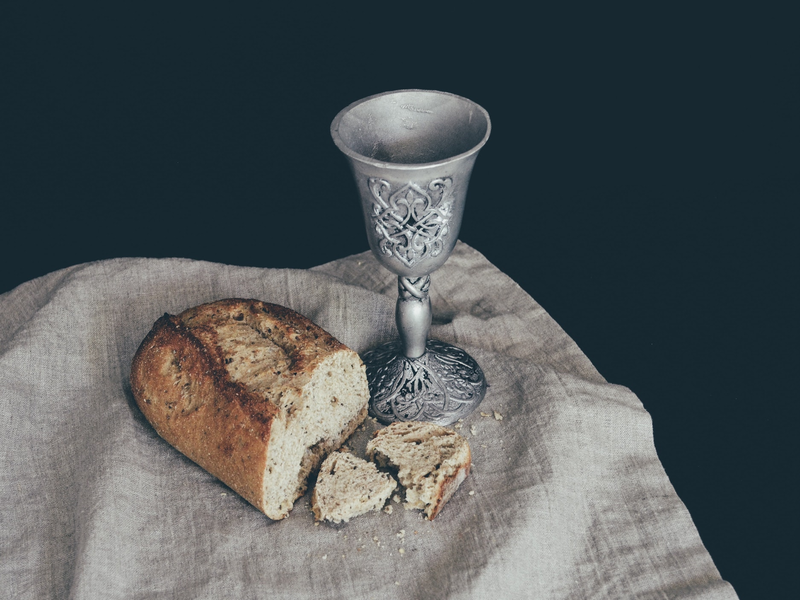
aaron-burden-qjdzyt_k8xg-unsplash
Eucharist

This Is What We Are:

Concerning Sex & the Sacrament of the Lord’s Supper Is not the cup of blessing which we bless a sharing in the blood of Christ? Is not the loaf of bread which we break a sharing in the body of Christ? Since there is one loaf, we who are many…

by Mark HorneJune 3, 1998
debby-hudson-qa74yh6-xlc-unsplash
Baptism

Sacramental Efficacy

Protestant-Catholic debates about the sacraments have usually taken the form of debates about sacramental efficacy. Protestants claim that Catholics believe that sacraments work ex opere operato, virtually a magical view of the sacraments. A priest goes through the motions and says the mumbo-jumbo and — presto! — the sacraments confer…

by Peter LeithartJune 3, 1998
aaron-burden-qjdzyt_k8xg-unsplash
Baptism

Baptism and the Church

In 27.2, the Westminster Confession says that because of the “spiritual relation” between sacraments and the things they represent, “the names and effects of the one are attributed to the other.” Applied to baptism, this means that when the Bible says that we are baptized into Christ (Rom. 6), it…

by Peter LeithartMay 29, 1998

Showing page 249 of 309

See all
See all
Philosophy

Smith on Derrida

James Smith’s conclusions regarding Derrida express more clearly than I’ve been able to do my own sense of Derrida. These are scattered quotations from The Fall of Interpretation , pp. 127-129: “Derrida is honest about not challenging for a moment Rousseau’s and Levi-Strauss’s reading of violence; his own analysis is…

October 15, 2003

Interpretation and the Fall

James K. A. Smith has a neat scheme for summarizing different view of interpretation in terms of the categories of creation and fall. For some thinkers, interpretation and the possibility of misinterpretation are results of the Fall; for others, interpretation and misinterpretation is inherent in created life, though there is…

October 15, 2003
Philosophy

Another Benefit of Derrida: Because

Another benefit of Derrida: Because he puts philosophical issues in mythological and metaphorical terms, he moves philosophy into the field of theology. As I’ve pointed out in a number of posts, Derrida (following Plato) speaks of the relationship between speaker and speech (or sometimes between speech and writing) as a…

October 14, 2003
History

Writing and Democratization

JP Vernant points out the connection between writing and democratization: “In the kingdoms of the New East, writing was a privilege and specialty of scribes. Writing enabled the royal administration to control the economic and social life of the State by keeping records of it. Its purpose was to constitute…

October 14, 2003
Philosophy

Pharmakos

Well, here’s an interesting coincidence (pointed to by Derrida, still in “Plato’s Pharmacy”): Derrida is discussing the ritual of the pharmakos , which he is connecting to Plato’s various uses of pharmak - words in discussions of knowledge, language, and other issues. The pharmakos rite was a scapegoat ritual, annually…

October 14, 2003
Philosophy

Why is Derrida Fun?

What is it that makes Derrida so stimulating and fun to read? At least for his treatment of standard philosophical works (I’m reading “Plato’s Pharmacy” in Disseminations ), I think it’s mainly that he shows that philosophy is not about what undergraduate courses in philosophy teach you it is about.…

October 14, 2003

Showing page 2183 of 2212

Browse by Category

In Medias Res

Your weekly digest for all things Theopolis.

Donate

Theopolis is nearly 100% donor-supported. Consider joining us on our mission.