Theopolis Logo

Writing

Explore our collection of theological essays, biblical studies, and reflections on faith and culture.

See all
or
Abortion

Political Hermeneutics: The Argument From Silence, Part 2

Click HERE for part 1. III This leads to a further question. I have argued that silence cannot by itself establish a Scriptural principle, but does Scripture’s silence carry any weight in itself? Does the fact that something is unbiblical in a weak sense tell us anything at all? In…

by Peter LeithartMarch 13, 1990
hebrew-manuscript-6
Biblical Chronology

Groping Through the Gaps

Although nowadays gap theories are associated with dispensationalism, it was not always so. In the nineteenth century, scholars from a variety of backgrounds (Anglican, Reformed, and proto-fundamentalist) seem to have become fascinated by gaps. If you are not familiar with what I am talking about, this newsletter will acquaint you…

by James B. JordanFebruary 26, 1990
or
Abortion

Political Hermeneutics: The Argument from Silence, Part 1

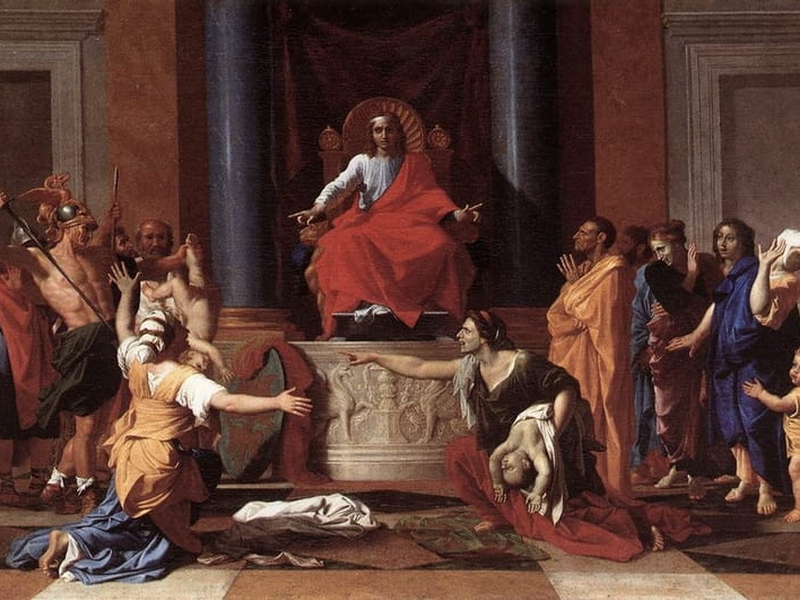
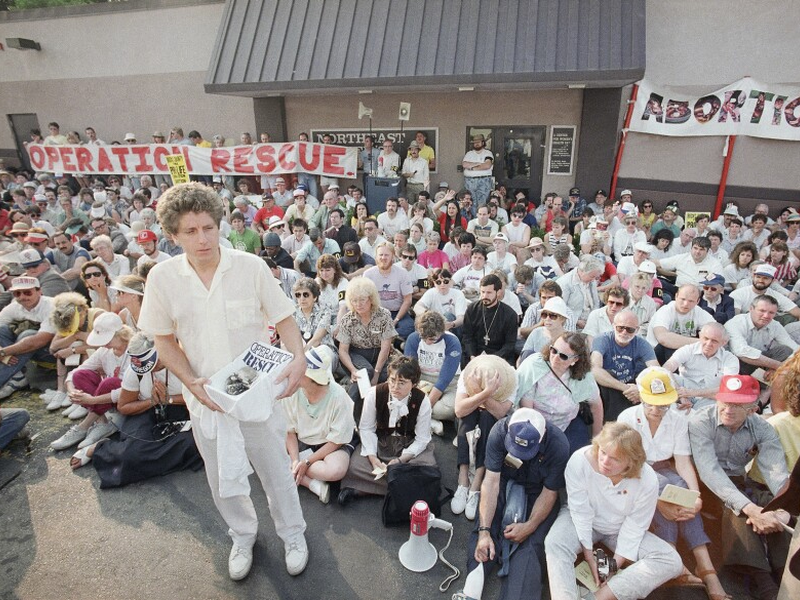
If the debate over Operation Rescue has proven anything, it has proven that there is absolutely no consensus among evangelicals in general, or among "reconstructionists" in particular, about how to use the Bible to judge political actions and movements. Each side of the debate claims biblical authority for its position,…

by Peter LeithartFebruary 13, 1990
49980-nicolas_poussin_-_the_judgment_of_solomon_-_wga18330-800w-tn
Biblical Studies

Advice From a Sojourner, Part 4

Two things I asked of Thee, Do not refuse me before I die: Keep deception and words of falsehood far from me, Give me neither poverty nor riches, Feed me with the food that it my portion, Lest I be full and deny Thee, And say, "Who is the LORD?"…

by James B. JordanFebruary 2, 1990
image-2
Biblical Horizons

Foucault’s Pendulum

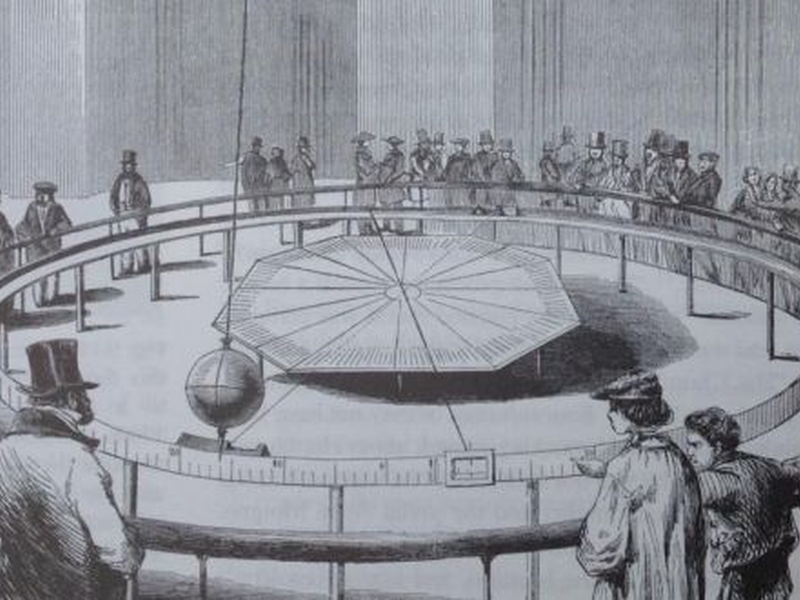
Umberto Eco’s "The Name of the Rose" was certainly one of the best literary works of the past decade, though the film version hardly measured up to it. Now Eco has given us a new novel, "Foucault’s Pendulum." Like Rose, Foucault’s Pendulum reflects on the limitations of human knowledge, and…

by James B. JordanJanuary 26, 1990
tanner-mardis-xuxghzhibn4-unsplash-1-2
Biblical Studies

What Is “Interpretive Maximalism”?

From time to time people ask me about "interpretive maximalism." They want to know what it is, and sometimes want to know if it represents some departure from the Reformed grammatico-historical, Biblico-theological approach to the Bible. I have something of a problem with these questions, because "interpretive maximalism" is not…

by James B. JordanJanuary 26, 1990

Showing page 305 of 309

See all
See all

Classifying God

The “do Muslims and Christians worship the same God?” controversy surges on, reported most recently in the Economist . It's worth revisiting. In an earlier post, I charged that the claim that Muslims and Christians worship the same God (what I will call the “identity theory”) implicitly denies a central…

January 15, 2016

Empire with the Soul of a Church

In an article on Revelation, J. Daryl Charles observes that the Roman Empire “had brought about the ‘solution' - ‘salvation' for the human race - and was thus worthy of popular adoration. Empire-adoration necessitated a personal symbol which the ancient city-state could not generate. In the Imperial cult resided the…

January 15, 2016

Spaces of Apocalyptic

In his packed little book, Theology and the Spaces of Apocalyptic , Cyril O'Regan observes that “there seems to be a binary opposition in the modern world between apocalyptic and the discipline of theology” (15). Heterodox apocalyptic is everywhere, in Milton and Blake and Romanticism, among Hegelians, especially those on…

January 15, 2016

The Great City

G. Biguzzi asks whether the city “Babylon” (Revelation 17-18) represents Rome or Jerusalem. The first option was presented early, by Victorinus. He “(i) gives the circumlocution, ‘city of Rome,' as toe equivalent of Babylon: . . . ruina Babylonis, id est civitatis Romanae, (ii) identifies the seven mountains of Rev…

January 14, 2016

Anagogy in Modernity

Medieval biblical scholars read Scripture through the lens of the quadriga, fourfold sense of Scripture. Texts had a literal sense, an allegorical or Christological sense, a tropological or moral sense, and an anagogical sense. In his recent study of de Lubac, Between Apocalypse and Eschaton , Joseph Flipper focuses on…

January 14, 2016

How To Write An Introduction

Here's some seasoned advice to young scholars on how to write an introduction. 1. Write the book first. You don't know what the book is about until you finish it, and you can't introduce what you don't know. This may seem backwards, but it is inevitable, because a thing is…

January 14, 2016

Showing page 332 of 2212

Browse by Category

In Medias Res

Your weekly digest for all things Theopolis.

Donate

Theopolis is nearly 100% donor-supported. Consider joining us on our mission.