Theopolis Logo

Writing

Explore our collection of theological essays, biblical studies, and reflections on faith and culture.

See all
night-sky
Astral imagery

The Lady and Her Jewels: An Epiphany Meditation

And a great portent appeared in heaven, a woman clothed with the sun, with the moon under her feet, and on her head a crown of twelve stars; she was with child and she cried out in her pangs of birth, in anguish for delivery (Revelation 12:1-2). Then Joshua spoke…

by Richard BledsoeJanuary 6, 2015
extreme-unction
Anointing

Fattening Our Suffering

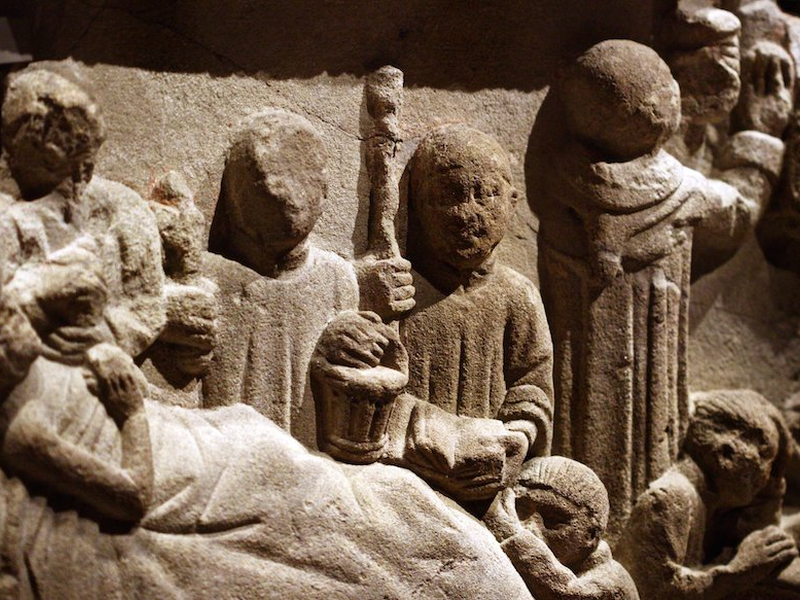
In his post asking Ought we Anoint the Dying? Peter Leithart makes an excellent and important point about our suffering as members of Christ. However, he only parenthetically mentions that the verb in question in James 5 is not chrio but aleipho . By assuming that these words are interchangeable,…

by Robert MaddoxDecember 30, 2014
sacre-bleu-r__kixb0i5m-unsplash
James

Death as Frenemy

We spend a lot of time in the church talking about what it means to live like a Christian. But what does it mean to die like a Christian? If we are to follow Christ in life, what does it mean for us to follow him in death as well?…

by Rich LuskDecember 23, 2014
giammarco-zeh-ljawhtg-unsplash
Literature

Was Shakespeare A Christian?

How would one go about answering the question posed by my title? That depends on what the question means. Obviously, different definitions of the question would require different approaches to an answer. Right off hand, I can think of at least three possible — though not necessarily mutually exclusive —…

by Ralph Allan SmithDecember 23, 2014
day-2-ferguson-protests-nationwide
American Culture

Phobophobia

In recent weeks and months, we have seen events that are not the event. The drama around these events is not the events themselves, but the anxiety about the events, and then even the anxiety about the anxiety about the events. That is the real event. The events in Ferguson,…

by Richard BledsoeDecember 22, 2014
anointing-david
Anointing

Ought We Anoint the Dying?

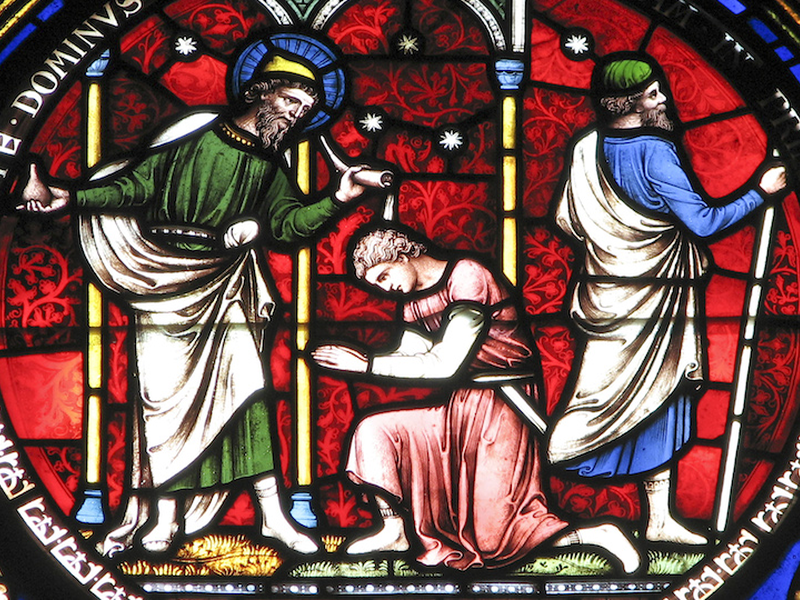
Anointing the sick, including the dying, is one of the traditional seven sacraments of the Catholic Church. The Reformers denied that the rite qualified as a sacrament. Formally, this was because anointing did not have a direct authorization from Jesus; more theologically, it was not one of the marks that…

by Peter LeithartDecember 18, 2014

Showing page 163 of 309

See all
See all

Figures, reality, figures

Christ’s death fulfills the figures of Israel’s sacrificial system ( ST III, 48, 3). It exceeds them in being the sacrifice of human flesh for humanity. But it’s not just reality in relation to figure, but is itself a figure, a “sign for of something to be observed by us.”…

March 12, 2013

Sacrificium non maleficium

How could Christ’s death be a sacrifice, since “those men who slew Christ did not perform any sacred act but rather wrought a great wrong”? ( ST , III, 48, 3). Christ’s passion is no sacrificium but a maleficium . Thomas answers by stressing the voluntary character of Christ’s death.…

March 12, 2013

The Creditor Pays

Did Christ effect salvation by way of redemption? Thomas asks ( ST III, 48, 4). It’s a question about salvation as payment . The first objection states that Christ could not have saved by way of redemption because no one buys or buys back ( emit vel redimit ) what…

March 12, 2013

One seed

NT Wright has argued for some time, beginning with The Climax of the Covenant: Christ and the Law in Pauline Theology , that the “one seed” who is Christ (Galatians 3:16) refers to a corporate reality, the single family of Abraham who are collectively called Christ. He points out that…

March 12, 2013
Media

Unforgetful

In Delete: The Virtue of Forgetting in the Digital Age ,Victor Mayer-Schonberger explores the reversal of memory and forgetfulness in the digital age: “Since the beginning of time, for us humans, forgetting has been the norm and remembering the exception. Because of digital technology and global networks, however, this balance…

March 11, 2013

Divorce and Cruelty

In his exhaustive study of Divorce and Remarriage in the Bible: The Social and Literary Context , David Instone-Brewer notes that “Cruelty and humiliation were . . . recognized as grounds for divorce and are related to emotional neglect in the Mishnah” (107). Both husbands and wives could be charged…

March 11, 2013

Showing page 778 of 2212

Browse by Category

In Medias Res

Your weekly digest for all things Theopolis.

Donate

Theopolis is nearly 100% donor-supported. Consider joining us on our mission.