Theopolis Logo

Writing

Explore our collection of theological essays, biblical studies, and reflections on faith and culture.

See all
max-kukurudziak-qbc3zmxw0g8-unsplash
History

Report from Ukraine

We lost Crimea. That is very clear. Putin proved he was not lying when he said he would place women and children ahead of his soldiers to storm Ukrainian military bases. Russian soldiers did exactly that with women (some who volunteered and some who were forced). Russia now occupies all…

by San SanychMarch 28, 2014

screenshot-2023-09-21-at-3-59-23-pm
Church Calendar

God Gone Silent

Sound is an indicator of life and energy. “Sound signals the present use of power, since sound must be in active production to exist at all.” Things don’t have to be alive to make themselves visible, and “a primitive hunter can see, feel, smell, and taste an elephant when the…

by Peter LeithartMarch 26, 2014
web-lead-image_final_dostoevsky
Books

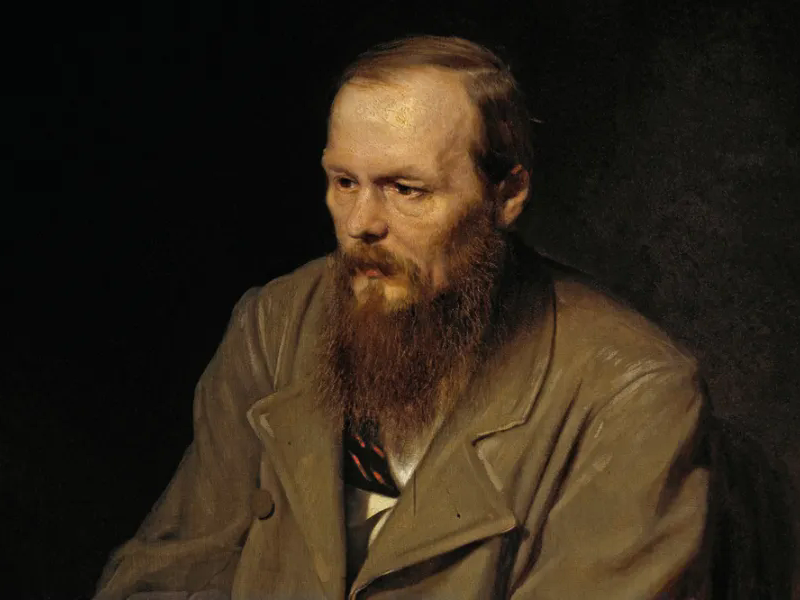
Dostoevsky the Liberal

In the most famous section of his best-known novel, Dostoevsky’s Ivan Karamazov brings forward his case against God. He opens with a horrific litany of outrages against children. Turkish soldiers make a baby laugh and then shoot a pistol into his face. A little girl is beaten, thrashed, kicked by…

by Peter LeithartMarch 24, 2014
kelly-sikkema-ggs0_g6wi-i-unsplash
Epistemology

Subsidiary-Focal Integration and Liturgy

​At the heart of Esther Lightcap Meek's splendid ​Little Manual for Knowing is a concept she picked up from Michael Polanyi, "subsidiary-focal integration." The concept begins from the insight that all our knowing, all our experience, is double. We focus on something, but we are capable of "indwelling" that focal…

by Peter LeithartMarch 19, 2014
engin-akyurt-uz9qpvbol0e-unsplash
Revelation

White Stone

Jesus promises the overcomers of Pergamum "hidden manna" and a "white stone." The hidden manna is often linked with the manna stashed away in the ark of the covenant. The white stone has proved more elusive. Exodus tells us that manna was white (Exodus 16:31) and like bdellium (Numbers 11:7),…

by Peter LeithartMarch 17, 2014
226961fgsdl
Leviticus

A Theology of Festivity

Leviticus 23 begins with a reference to “Yahweh’s appointed times” ( mo’ade-YHWH ). Mo’ed is the common term for the feasts of Israel. A few dimensions to this term. First, it means “appointed time” or “designated time.” It is a time set by Yahweh. Yahweh has claimed certain times as…

by Peter LeithartMarch 12, 2014

Showing page 177 of 309

See all
See all
Science

Science, Hope, Censorship

John Gray ( Straw Dogs: Thoughts on Humans and Other Animals , 19) argues that “Among us, science serves two needs: for hope and censorship.” It feeds hope because science is the only institution where progress is evident: “The political projects of the twentieth century have failed, or achieved much…

January 22, 2013

Superstitious liberalism

The bracing premise of John Gray’s Straw Dogs: Thoughts on Humans and Other Animals (xi-xii) is that liberal humanism is grounded in a “superstition” that is “further from the truth about the human animal than any of the world’s religions.” That superstition is a belief in progress, which outside of…

January 22, 2013
History

Puritans and Anglicans

In his 1976 study of Godly Man in Stuart England: Anglicans, Puritans and the Two Tables, 1620-70 (Historical Publications) , J. Sears McGee uses the law’s “two tables” to distinguish Anglicans from Puritans. Puritans were men of the “first table,” Anglicans of the second. Both worked with the same “palette…

January 22, 2013

The Gift of Guilt

Visser ( Beyond Fate (Massey Lectures) (CBC Massey Lecture) , 43-4) makes the commonplace observation that Christianity dislodged the honor-shame patterns of the ancient world and replaced it with a sin-guilt nexus. Unlike many, Visser views this as a tremendous gain, even a liberation: “In recognizing wrongdoing as sin, we…

January 22, 2013
History

A place at the table

In her Beyond Fate (Massey Lectures) (CBC Massey Lecture ) (15-16) , the always-stimulating Margaret Visser describes the cultural achievement of making a “place” at table. For us Westerners, “Each diner sits on an upright, separate chair drawn up to a table on which is laid his or her ‘place.’…

January 22, 2013
History

Greeks and others

In the twelfth book his Christian Topography , the sixth-century Italian known as Cosmas the Indian Navigator tries to show that biblical history is consistent with the best records of ancient pagans. “Best” means not -Greek. It’s a highly inaccurate, charming, amusing passage: “But the Chaldaeans and the Medes and…

January 21, 2013

Showing page 811 of 2212

Browse by Category

In Medias Res

Your weekly digest for all things Theopolis.

Donate

Theopolis is nearly 100% donor-supported. Consider joining us on our mission.